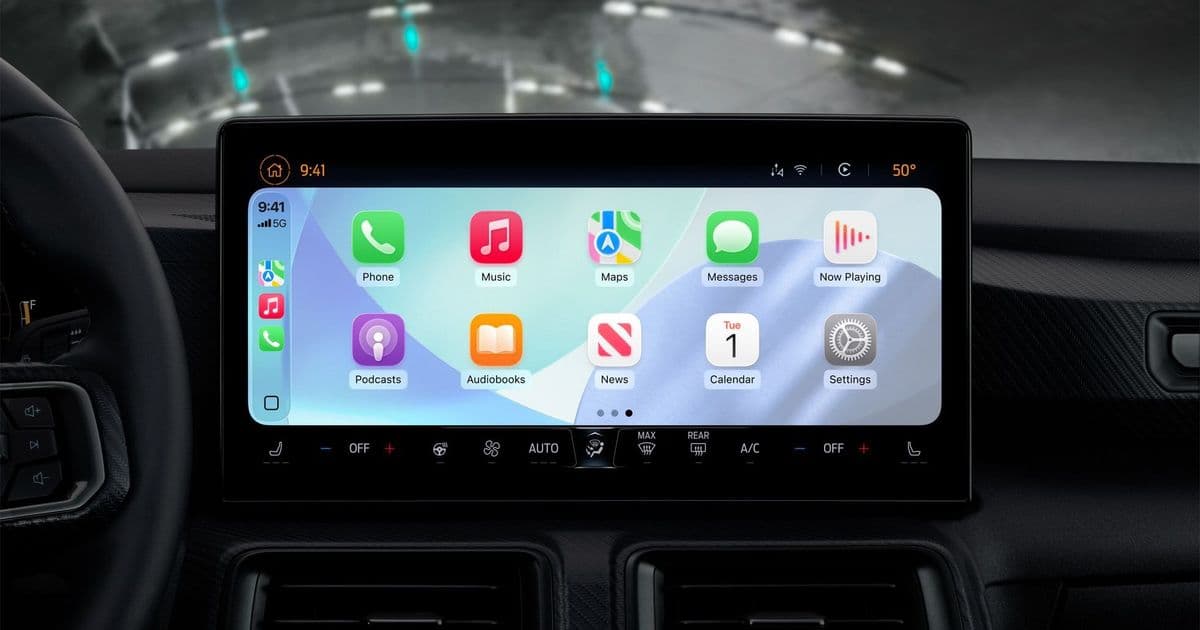
Apple is adding support for third-party voice-based conversational apps in CarPlay starting with iOS 26.4, allowing users to access AI chatbots like Claude and Gemini through their vehicle's infotainment system.
Apple is expanding CarPlay's capabilities by introducing support for third-party voice-based conversational apps in iOS 26.4, marking a significant shift in the company's traditionally closed ecosystem approach to in-car experiences.
Third-Party AI Integration in CarPlay
The upcoming iOS 26.4 update will enable CarPlay users to access AI chatbots and other conversational applications directly through their vehicle's infotainment system. This move represents Apple's acknowledgment of the growing importance of AI assistants in daily life and the need for seamless integration across all user touchpoints.
According to reports, services like Claude, Gemini, and potentially other AI chatbots will be accessible through CarPlay's interface. This integration allows drivers to interact with these AI services using voice commands while maintaining the safety and convenience that CarPlay is known for.
Strategic Implications for Apple
This decision appears to be part of Apple's broader strategy to remain competitive in the rapidly evolving AI landscape. While Apple has its own Siri assistant, the company has faced criticism for Siri's limitations compared to more advanced AI models from competitors like OpenAI, Google, and Anthropic.
By opening CarPlay to third-party AI services, Apple can offer users access to cutting-edge AI capabilities without having to develop everything in-house. This approach allows Apple to maintain its premium user experience standards while leveraging the innovation happening across the AI industry.
User Experience Considerations
The integration raises important questions about user experience and safety. CarPlay has always emphasized minimizing driver distraction, and Apple will need to ensure that third-party AI apps meet the same safety standards as native CarPlay applications.
Voice-based interaction will likely be the primary mode of engagement, which aligns with best practices for in-car technology use. The challenge will be ensuring that these third-party services can provide the same level of integration and reliability that users expect from CarPlay.
Industry Context
This move comes as the automotive industry increasingly embraces AI and connectivity features. Traditional automakers are racing to integrate advanced voice assistants and AI capabilities into their vehicles, while tech companies are looking for ways to extend their services into the automotive space.
Apple's decision to open CarPlay to third-party AI services could set a precedent for other automotive platforms. It may pressure competitors like Android Auto to follow suit, potentially leading to a more open and competitive landscape for in-car AI services.
Technical Implementation
While specific technical details haven't been fully disclosed, the integration will likely require AI service providers to develop CarPlay-compatible versions of their applications. These apps will need to adhere to Apple's design guidelines and performance requirements to ensure a consistent user experience.
The timing of iOS 26.4 suggests that Apple has been working on this capability for some time, possibly in response to user demand and competitive pressure. The update may also include new APIs and frameworks to facilitate third-party AI integration.
Market Impact
For AI companies, this represents a significant new distribution channel. Being available through CarPlay gives AI services access to millions of Apple users during a time when they're particularly receptive to assistance and information.
However, the success of these integrations will depend on how well they work within the CarPlay environment. Users will likely be quick to abandon services that don't meet their expectations for reliability and ease of use while driving.
Future Implications
This move could be a precursor to broader third-party integration in Apple's ecosystem. If successful, it might encourage Apple to open other traditionally closed aspects of its platform to external developers and services.
The automotive industry is watching closely, as this could influence how other car manufacturers approach their own infotainment systems and AI integration strategies.
User Adoption Factors
Several factors will influence how quickly users adopt third-party AI services through CarPlay:
- The quality and reliability of the integration
- The perceived value of AI assistance while driving
- Privacy and security considerations
- The learning curve for using new services in the car
- Compatibility with different vehicle models and CarPlay implementations
Competitive Landscape
This development puts additional pressure on Apple's Siri to evolve and improve. While Siri will likely remain the default assistant for many CarPlay functions, users now have alternatives for more complex queries and tasks.
The move also positions Apple as a platform rather than just a service provider, potentially creating new revenue opportunities through partnerships with AI companies or premium integrations.
Privacy and Security Considerations
Apple will need to address privacy concerns related to third-party AI services accessing user data through CarPlay. The company's strong stance on user privacy will need to extend to these new integrations, ensuring that user data is protected and that third-party services can't access more information than necessary.
Security will also be paramount, as these integrations could potentially create new attack vectors if not properly secured.
Timeline and Availability
iOS 26.4 is expected to roll out in the coming months, though Apple hasn't provided a specific release date. The update will likely be available for a wide range of iPhone models, though some older devices may not support all features.
CarPlay-compatible vehicles will need to support the updated CarPlay framework, which may require firmware updates from some manufacturers.
Industry Reactions
The automotive and tech industries are likely to respond positively to this move, as it represents a more open and collaborative approach to in-car technology. However, some may view it as Apple conceding ground in the AI assistant battle.
Traditional automakers may see this as an opportunity to offer more advanced AI capabilities without having to develop them in-house, while tech companies will view it as a valuable new channel for their AI services.
Long-term Outlook
This integration could fundamentally change how users interact with their vehicles and AI assistants. As AI technology continues to advance, the line between traditional voice assistants and more capable AI chatbots will likely blur further.
Apple's decision to embrace third-party AI services in CarPlay may be remembered as a pivotal moment in the evolution of in-car technology and AI integration.
Comments
Please log in or register to join the discussion