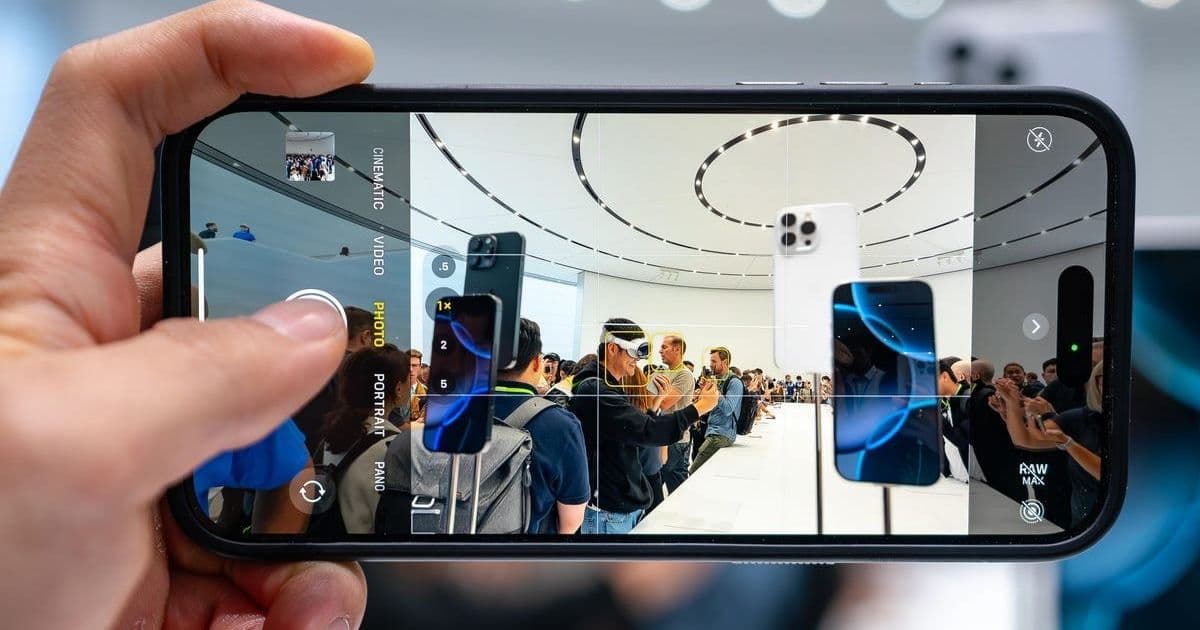
With Apple's September event imminent, leaked details on the iPhone 17's ultra-thin design, iOS 26's AI enhancements, and health-focused wearables signal a pivotal shift in consumer tech. ZDNET's live coverage reveals how these innovations could challenge Android dominance and redefine developer opportunities in AI and health integration.
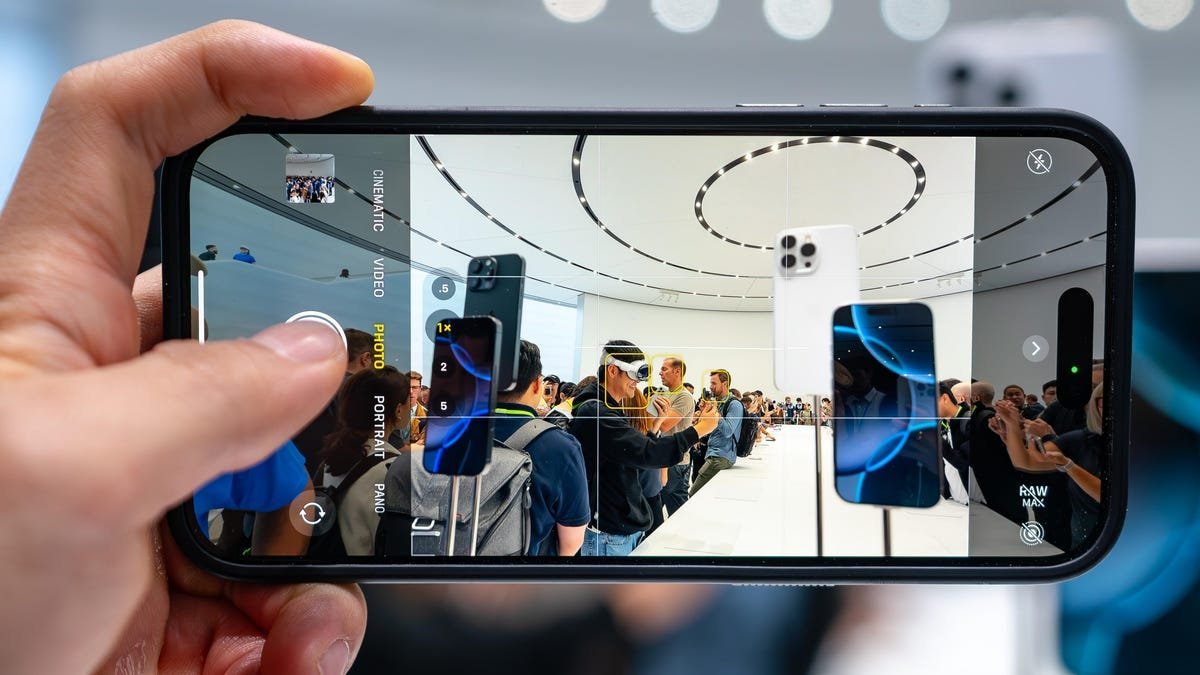
Cupertino, CA – September 9, 2025 – The air crackles with anticipation as Apple prepares to unveil its latest lineup at today's "Awe Dropping" event. For developers and tech leaders, this isn't just another product launch—it's a blueprint for the future of integrated ecosystems. ZDNET's on-the-ground reporting uncovers last-minute leaks that paint a picture of radical innovation: an iPhone 17 series reimagined for portability, AI-infused wearables advancing health monitoring, and iOS 26 features poised to close the gap with Google's AI supremacy. Here’s what the tech world needs to know.
The iPhone Revolution: Thinner, Smarter, and More Adaptive
At the heart of the buzz is the rumored iPhone 17 Air, touted as Apple's thinnest device ever at just 5.5mm. This model could replace the iPhone Plus, targeting users craving a large display without the bulk, featuring a titanium frame and a single-sensor camera. For engineers, the implications are clear: Apple is prioritizing thermal efficiency and material science to enable sleeker form factors, potentially foreshadowing foldable designs. Meanwhile, the iPhone 17 Pro and Pro Max are expected to debut a redesigned camera visor with enhanced telephoto capabilities and a two-toned back panel for wireless charging—possibly including reverse charging, a nod to Android innovations. As Kerry Wan, ZDNET's Managing Editor, notes:
"An ultra-thin iPhone 17 Air isn't just a design win; it's Apple's bet on portability driving mainstream adoption, while the Pro models could finally embrace cross-device power sharing that developers have long leveraged on Android."
Wearables Get Smarter: Health Tracking and AI Take Center Stage
Apple's wearables lineup is set for transformative updates, blending hardware ingenuity with AI. The Apple Watch Series 11 is rumored to feature a slimmer profile and advanced health metrics like sleep scoring and blood pressure monitoring, building on WatchOS 26's capabilities. The rugged Apple Watch Ultra 3 might introduce satellite connectivity and hypertension detection, powered by a new chip. Equally intriguing are the AirPods Pro 3, which could integrate heart rate monitoring—a feature already seen in Apple's Powerbeats Pro 2. For healthcare and fitness app developers, this expansion into continuous, non-invasive biometrics opens doors for real-time data integration. Nina Raemont, ZDNET's Wearables Editor, emphasizes:
"With competitors like Google advancing AI health coaches, Apple's move to embed deeper sensors across wearables isn't optional—it's essential for maintaining its $100B+ revenue stronghold in a crowded market."
iOS 26 and AI: Playing Catch-Up with Purpose
While hardware dazzles, software could be the sleeper hit. iOS 26 will roll out AI features previewed at WWDC, including Visual Intelligence for image analysis, real-time translation, and Shortcuts powered by Apple Intelligence. Crucially, these updates won't be exclusive to new devices—they'll extend to iPhone 15 Pro and iPhone 16 models, ensuring broad developer adoption. Yet, as Jason Hiner, ZDNET's Editor-in-Chief, points out, Apple trails in AI integration:
"Google's Pixel 10 currently claims the 'smartest phone' crown with features like Magic Eraser and Best Take. For Apple to lead, iOS 26 must deliver seamless, on-device AI that respects privacy while rivaling cloud-based rivals." Developers should watch for APIs enabling features like Workout Buddy or AutoMix in Apple Music, which could spur new third-party integrations.
Why This Event Matters Beyond the Hype
Today's announcements aren't just about products; they're a strategic play in a high-stakes tech war. Apple's emphasis on thinner hardware and cross-device functionality hints at a future where iPhones act as hubs for an AI-augmented lifestyle, challenging Google's ecosystem dominance. For the industry, success hinges on execution—can Apple's closed-loop approach outpace open Android innovations? And for users, the real test will be whether these advancements translate into tangible daily benefits, from health insights to productivity boosts. As the curtains rise at Apple Park, one thing is certain: the ripple effects will shape development priorities for years to come.
Source: ZDNET live updates and editorial analysis from September 8-9, 2025.
Comments
Please log in or register to join the discussion