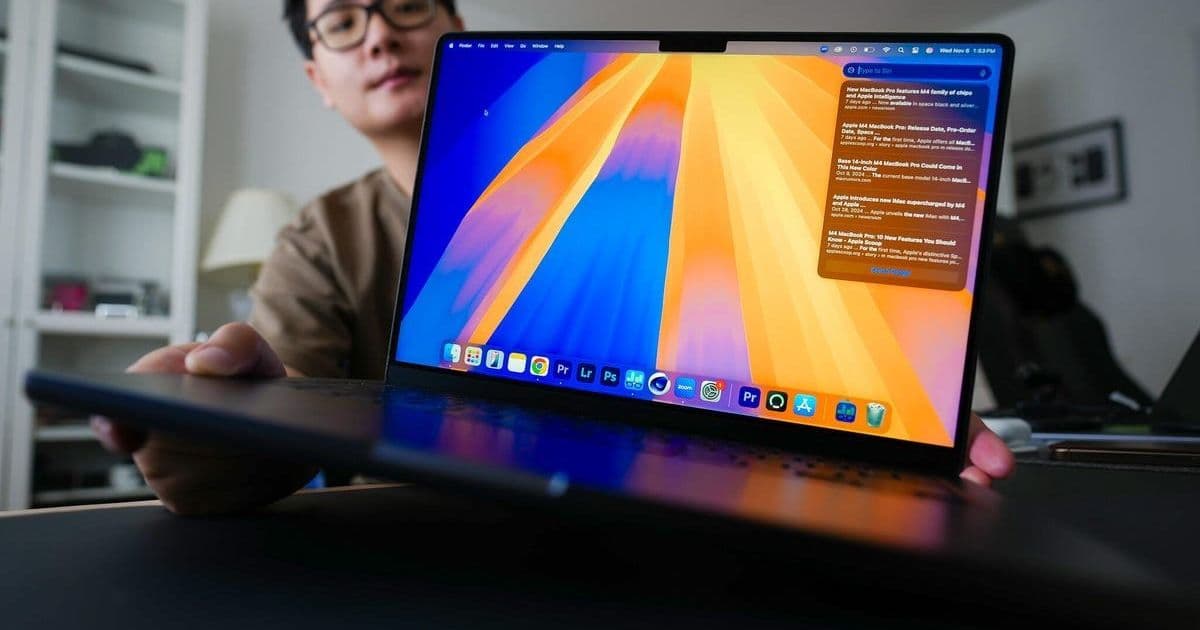
Apple is poised to launch three M5-powered devices—iPad Pro, MacBook Pro, and Vision Pro—as soon as today, following a cryptic tease from marketing chief Greg Joswiak. Leaks reveal significant performance boosts, including up to 36% faster GPU in the iPad Pro and a refined Vision Pro headset, signaling Apple's aggressive silicon ambitions. This rollout underscores Apple's strategy to dominate the premium tech ecosystem with iterative yet powerful hardware updates.
The drumroll for Apple's next hardware evolution is deafening. Marketing chief Greg Joswiak set the stage with a tantalizing X post: a blue MacBook Pro silhouette forming a 'V'—interpreted by insiders as a nod to the M5 chip—accompanied by the caption, "something powerful is coming." This isn't just hype; Bloomberg's Mark Gurman reports that three "Pro" devices are primed for an imminent launch, possibly today, without a formal event. Here's what developers and tech leaders need to know about this silicon-powered trifecta.
 Caption: Apple marketing chief Greg Joswiak's teaser for the upcoming M5 devices. (Source: Apple/X)
The M5 iPad Pro: Leaked Performance and Dual Cameras
Russian YouTubers have already unboxed the new iPad Pro, revealing Geekbench 6 scores that showcase the M5's prowess. Compared to the M4, it promises a 12% boost in multi-core CPU performance and a staggering 36% leap in GPU capabilities—critical for developers working on graphics-intensive apps or AR experiences. Beyond raw power, the device features 12GB of RAM minimum and dual front-facing cameras, strategically placed for seamless video calls in both portrait and landscape modes. The design remains familiar, though the "iPad Pro" branding on the back has vanished, hinting at Apple's minimalist refinements.
Vision Pro Reloaded: Comfort and Color, But Connectivity Lags
Apple's high-end AR/VR headset gets an M5 makeover with a new "Dual Knit Band" head strap aimed at addressing comfort complaints, alongside a sleek Space Black option. Under the hood, an R2 chip is rumored to enhance input processing, though it retains Wi-Fi 6 support instead of embracing Wi-Fi 6E or 7—a curious omission for a device positioning itself as futuristic. While the weight remains unchanged, this update signals Apple's commitment to refining the Vision Pro despite its niche adoption, potentially offering developers a more stable platform for spatial computing experiments.
The Entry-Level M5 MacBook Pro: A Stepping Stone
Gurman notes a new 14-inch MacBook Pro with the base M5 chip will debut first, serving as a stopgap before higher-end M5 Pro and Max models arrive. Externally identical to its predecessor, this iteration focuses solely on the silicon upgrade, leaving transformative changes like OLED displays, touchscreens, and cellular connectivity for the M6 generation. For engineers and creators, it’s a straightforward performance bump, but the real story is Apple's calculated pacing: this release paves the way for a broader M5 rollout, including MacBook Airs and iPads in early 2026.
Why This Matters: Silicon Strategy and Ecosystem Lock-In
Apple's M5 blitz isn't just about specs—it's a masterclass in ecosystem dominance. By staggering releases (iPad Pro now, MacBook Air later), Apple ensures sustained market buzz while giving developers time to optimize for the new architecture. The performance gains, particularly in GPU tasks, could accelerate AI/ML workloads on-device, reducing cloud dependencies. Yet, the incremental updates—like the Vision Pro's band tweak—highlight a focus on polish over revolution, possibly testing consumer patience amid rivals like Samsung's evolving XR offerings. As one industry watcher quipped, "Apple is iterating its way to inevitability."
In the shadow of these launches, Gurman hints at future products like HomePod mini and AirTag refreshes, but for now, the spotlight is on M5. For developers, this trio represents both opportunity and urgency: harness the enhanced horsepower for cutting-edge apps, or risk being outpaced in an increasingly integrated Apple universe.
Source: Based on reporting from ZDNET and Bloomberg.
Comments
Please log in or register to join the discussion