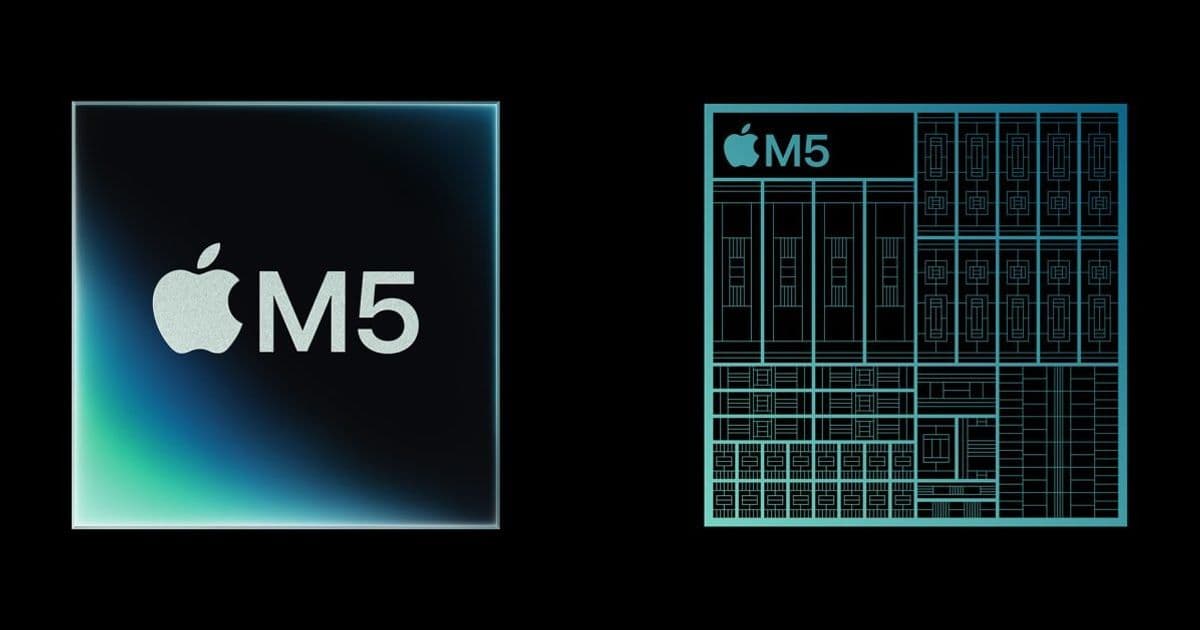
Apple is upgrading its Private Cloud Compute infrastructure to M5 chips, marking a significant step in its Apple Intelligence strategy and AI server development.
According to a new Private Cloud Compute software release this week, Apple is starting to use M5 chips in Apple Private Cloud Compute servers. This is the infrastructure that powers Apple Intelligence's cloud-based features.
There are references to something called "Private Cloud Compute Agent Worker," which run a version of iOS with a new agentic architecture for serving AI requests. iOS 26.4 includes the code for interfacing with this new Private Cloud Compute architecture, as well. The architecture runs on new hardware with the J226C model number powered by the M5 chip.
Details here remain sparse, but it's evidence that Apple continues to refine its Private Cloud Compute infrastructure ahead of more advanced Siri and Apple Intelligence features. The changes also come following Apple's deal with Google to use Gemini models to power Siri features.
Historically, Apple's Private Cloud Compute servers have used M2 Ultra chips. The M2 Ultra was first introduced in June 2023, followed by the M3 Ultra last year. Apple, however, has not updated its PCC architecture with M3 Ultra chips, though. There were reports that Apple planned to transition some of its Private Cloud Compute servers to M4 chips. It doesn't appear that this ultimately came to fruition, at least in terms of any widespread adoption.
In addition to using M5 chips in its Private Cloud Compute infrastructure, Apple is also reportedly developing dedicated AI server chips. Ming-Chi Kuo has reported that Apple is slated to begin mass production of these chips in the second half of 2026, before officially deploying them in 2027.
In October, Apple confirmed that it had started making Private Cloud Compute servers in a factory in Houston, Texas as part of its $600 billion package to invest in domestic infrastructure.
The Strategic Significance of M5 Integration
The transition to M5 chips for Private Cloud Compute represents more than just a hardware upgrade—it's a strategic move that positions Apple's AI infrastructure for the next generation of intelligent features. The M5 chip, with its enhanced neural engine and improved performance-per-watt ratio, will enable Apple to process more complex AI workloads while maintaining the privacy standards that the company has built its reputation on.
The "Private Cloud Compute Agent Worker" architecture mentioned in the code suggests Apple is building a more distributed and specialized approach to AI processing. This agentic architecture likely allows for more granular task distribution and potentially enables more sophisticated multi-step reasoning capabilities for Siri and other AI features.
The Curious Case of the M4 Skip
One interesting aspect of this transition is that Apple appears to be skipping M4 chips entirely for its cloud infrastructure. This is somewhat unusual given Apple's typical product cadence, but it may indicate that the M5 offered specific features or performance characteristics that made it particularly well-suited for AI workloads. The M5's enhanced neural processing capabilities and improved memory bandwidth could be key factors in this decision.
Domestic Manufacturing and Supply Chain Control
Apple's decision to manufacture Private Cloud Compute servers in Houston, Texas represents a significant investment in domestic production capabilities. This move not only insulates Apple from international supply chain disruptions but also aligns with broader U.S. technology policy goals around semiconductor manufacturing and AI infrastructure development.
The $600 billion investment package mentioned in the report underscores the scale of Apple's commitment to building out its AI capabilities. This level of investment suggests that Apple sees AI as a core differentiator for its products and services for years to come.
Looking Ahead: The Dedicated AI Server Chip
While the M5 transition is significant, Apple's development of dedicated AI server chips represents an even more ambitious long-term strategy. These custom silicon solutions, slated for mass production in late 2026 and deployment in 2027, could give Apple unprecedented control over its AI infrastructure performance and capabilities.
Such dedicated chips would likely be optimized specifically for the types of AI workloads that Apple Intelligence requires, potentially offering significant performance advantages over general-purpose processors. This vertical integration—from silicon design to cloud infrastructure to user experience—is characteristic of Apple's approach to product development and could provide substantial competitive advantages in the AI space.
The evolution of Apple's Private Cloud Compute infrastructure from M2 Ultra through M5 and toward dedicated AI chips illustrates the company's methodical approach to building out its AI capabilities. Each step builds upon the last, with careful attention to performance, privacy, and the seamless integration of hardware and software that Apple is known for.
Comments
Please log in or register to join the discussion