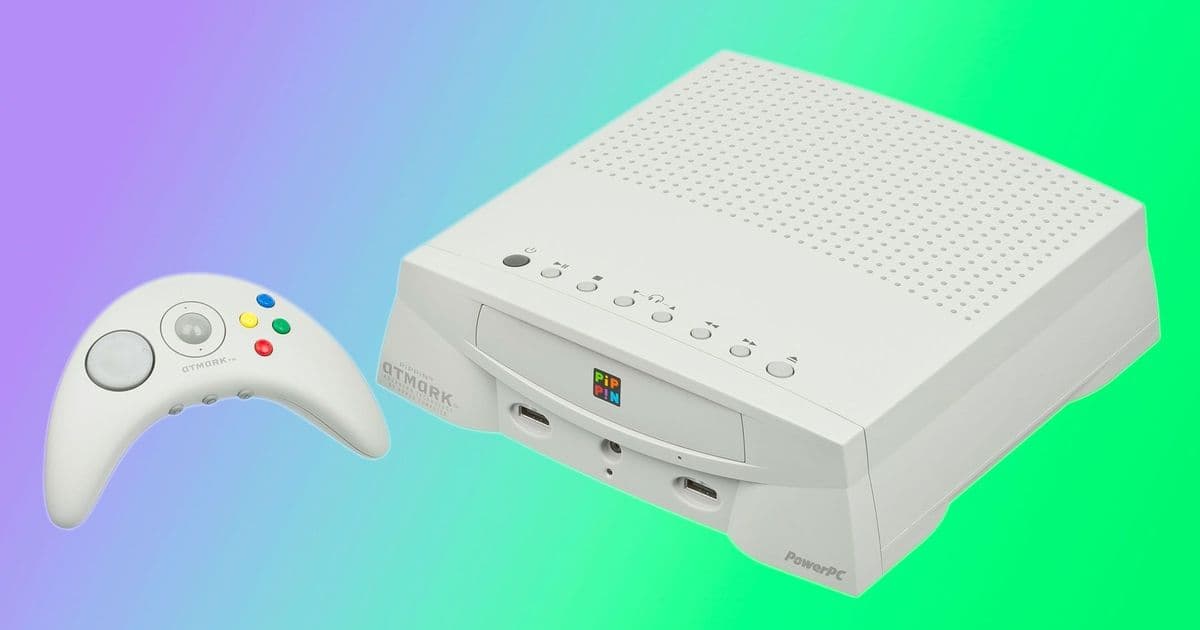
Thirty years ago, Apple launched the Pippin console, a PowerPC-based gaming system that failed spectacularly due to its high price, weak performance, and inability to compete with the PlayStation and N64 in the mid-1990s 3D gaming revolution.
Apple's Pippin was plucked from the tree 30 years ago today. But it turned out to be a rotten Apple, which failed to catch the interest of the public, despite it being heralded as an open standard for home entertainment. From its launch on April 21, 1996, this expensive device with lethargic performance only sold ~42,000 units worldwide. The Pippin was put out of its misery shortly after Steve Jobs returned to the helm in 1997.
The Promise That Never Delivered
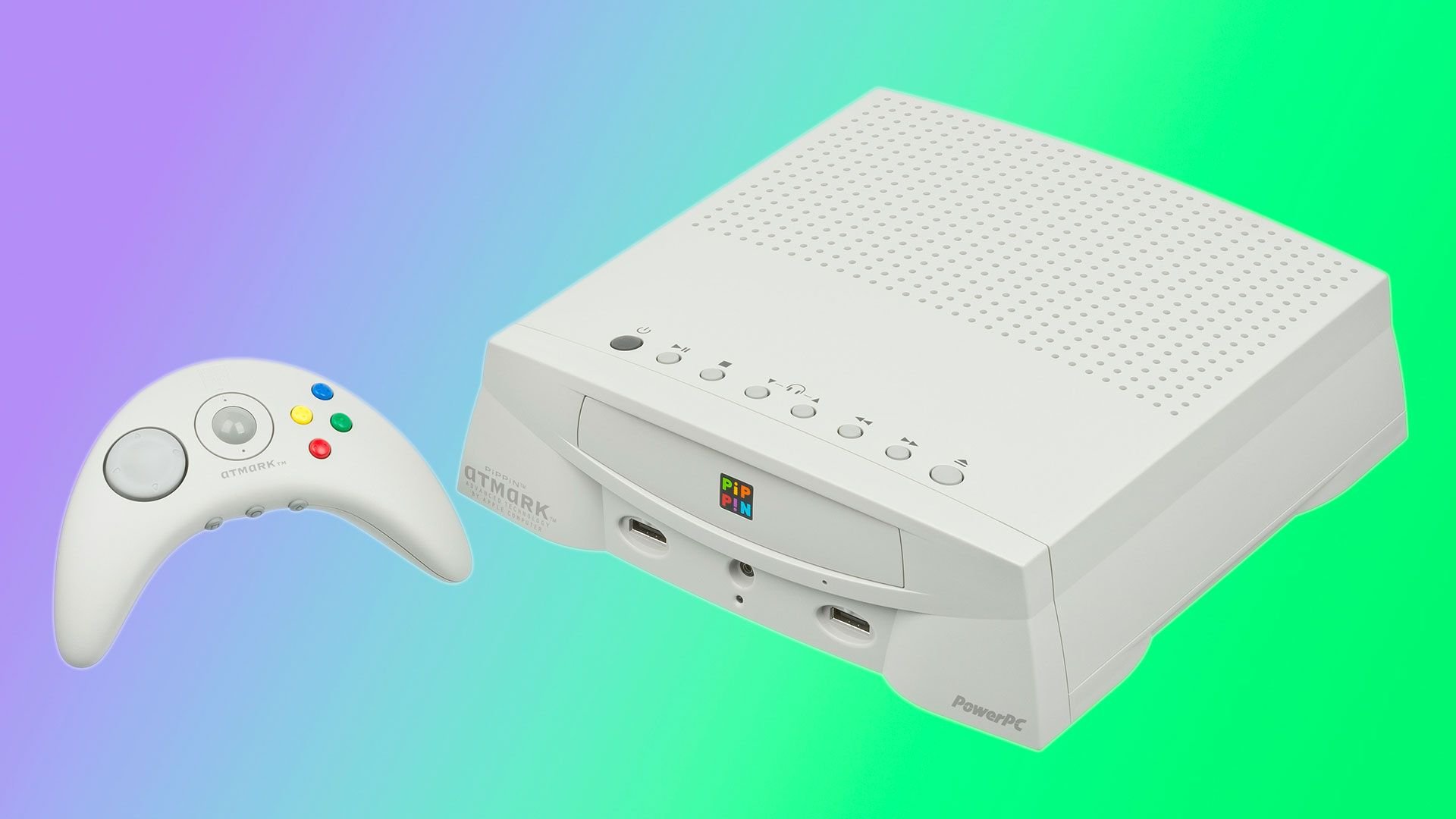
Development of the Pippin began shortly after Japanese entertainment firm Bandai approached Apple, hoping to collaborate on a CD-ROM-based living room entertainment system. According to various sources, the project expanded from a scaled-down (680X0 era) Mac that could play games directly from CD-ROMs to a much broader home entertainment device packing a PowerPC chip.
Initial marketing pitched the Pippin as "an integral part of the consumer audiovisual, stereo, and television environment." Interestingly, Apple didn't want to be the sole brand behind Pippins, and the devices were ultimately made by Bandai and Katz Media.
Perhaps Apple thought its transition from Motorola 680X0 to PowerPC chips gave its new hardware an unbeatable console performance profile for the time. But despite its computing performance, the early PowerPC chips would be outmaneuvered and outclassed by the broad swing to 3D gaming in 1995/96, which the Sony PlayStation, Sega Saturn, and Nintendo 64 all successfully capitalized on and grew.
Compared to those rivals, the Pippin looked like a rehashed version of the old guard. Like a CPU-accelerated version of the 3DO or CD32 machines that had already slid by the wayside. Thus, the Pippin definitely failed to catch the coattails of the mid-1990s zeitgeist.
Hardware That Couldn't Keep Up
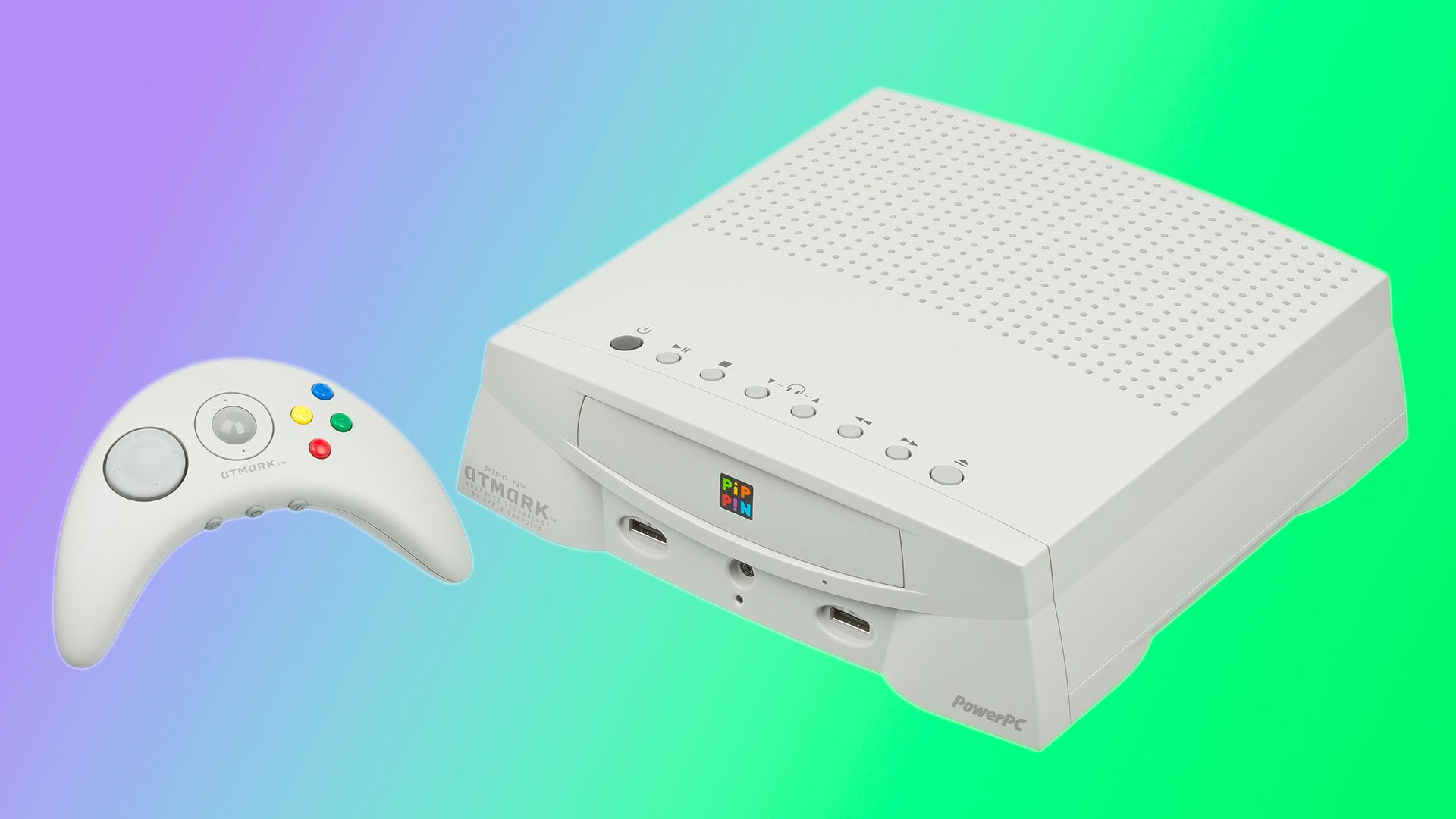
As we've said, the Pippin was based on the PowerPC architecture, which Apple had recently begun transitioning to. These new chips were doing an admirable job making Macs look computationally competitive with Wintel PC clones again, but consoles and home entertainment – and the new era of 3D gaming – would shift public desires.
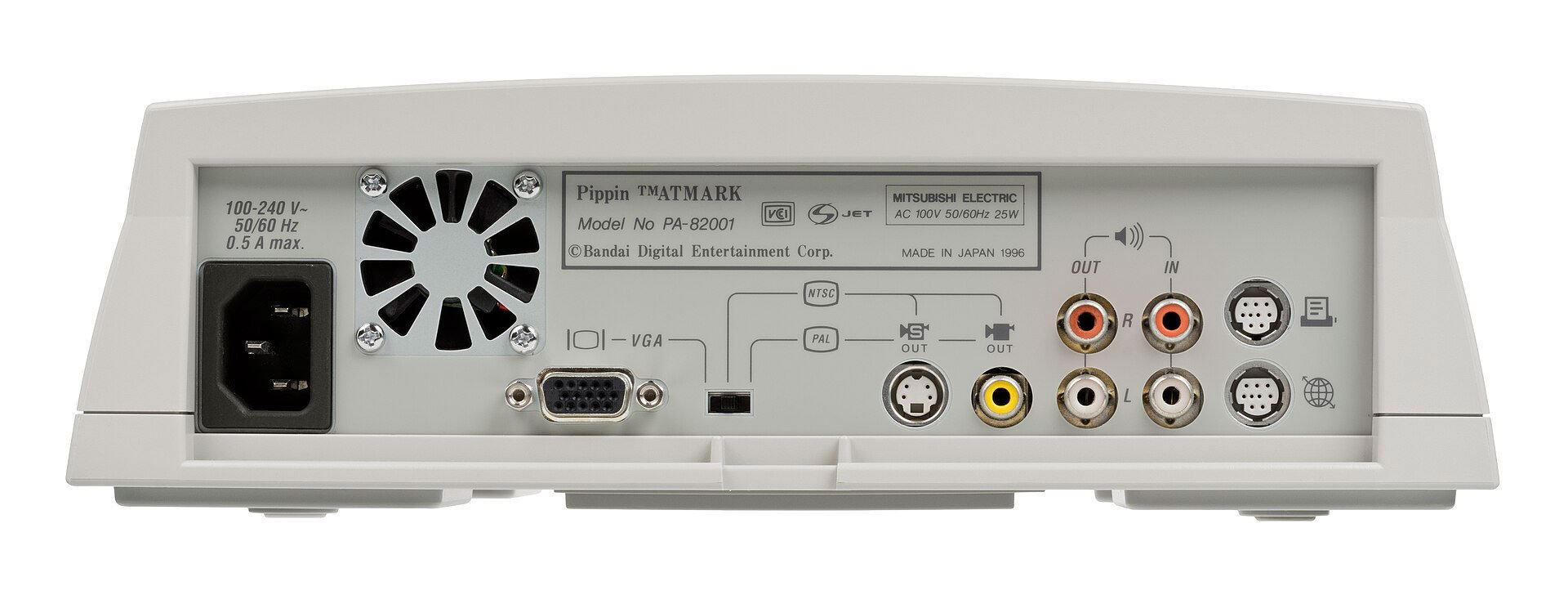
Additionally, the Pippin's chip, a low-end of the range PowerPC 603 @ 66 MHz, wasn't one of the best. Other key specs of the Pippin were its 6MB of shared memory, 128KB SRAM for saves (no HDD), and its 4x CD-ROM. There were no custom chips to offload graphics or audio processing; the single-core PPC would have to do everything.
Another drag on the Pippin was likely the chosen OS. It used a stripped-down version of Apple's old System 7.5.2 at launch. This OS was long in the tooth at the time, and was well known for its less-than-ideal cooperative multitasking, lack of protected memory, and 68K emulation overhead. It may have been tolerable on a desktop, but it wasn't ready-made for a slick home entertainment box.
The Price Problem
The Pippin also suffered from a weak entertainment software library, say sources like Wikipedia. But perhaps that issue was overshadowed by the pricing of $599 (≈$1,200 today), which was double the price of the stunning-for-the-time PlayStation (PS1) or triple the price of the aggressively priced but remarkable N64.
The Pippin platform was discontinued globally in 1997, but Japanese partners would continue to hold out, unaware that the living room entertainment war was over for Apple, until 2002.

Legacy of Failure
The Pippin's failure represents one of Apple's most significant missteps in the 1990s, a period when the company was struggling to find its identity. The console's inability to compete with dedicated gaming hardware, combined with its premium pricing and technical limitations, made it an easy target for consumers who had better options available.
What makes the Pippin's failure particularly interesting is that it occurred during a time when Apple was attempting to expand beyond its traditional computing market. The company was experimenting with different form factors and use cases, but the Pippin demonstrated that Apple's strengths in personal computing didn't automatically translate to success in the gaming market.
The console's failure also highlights the importance of timing and market positioning in the technology industry. By 1996, the gaming market had already begun its transition to 3D graphics, and consumers were looking for dedicated gaming hardware rather than general-purpose entertainment devices. The Pippin, with its general-purpose PowerPC architecture and lack of specialized gaming hardware, was simply too late to the party.
Today, the Pippin serves as a cautionary tale about the challenges of entering established markets with products that don't offer clear advantages over existing solutions. Its failure helped shape Apple's future approach to product development, contributing to the company's later focus on creating integrated hardware and software experiences that offered unique value propositions.
As we mark the 30th anniversary of the Pippin's launch, it's worth remembering that even the most successful technology companies can stumble when they venture outside their core competencies. The Pippin's failure ultimately helped pave the way for Apple's more focused and successful product strategy in the years that followed.
Comments
Please log in or register to join the discussion