Intel's IRDMA driver gains GEN4 hardware support in Linux 7.1, with Google engineers contributing the enablement code for the new RDMA-capable network controllers.
The Intel IRDMA (Integrated RDMA) driver, which serves as Intel's modern Remote Direct Memory Access solution for their high-end Ethernet network controllers, is expanding its hardware support with the upcoming Linux 7.1 kernel release. The driver, which already supported GEN3 hardware like the IPU E2000 product line, now adds enablement for Intel's next-generation GEN4 hardware.
GEN4 Support Mirrors GEN3 Implementation
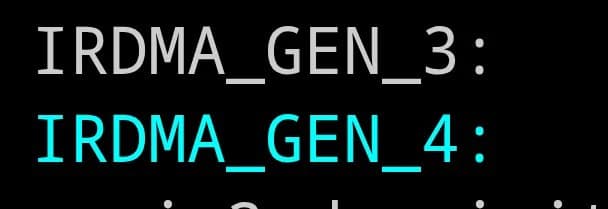
The GEN4 hardware support implementation follows a familiar pattern for kernel developers. According to the enablement patch, Intel's GEN4 hardware is "similar to GEN3" from the driver's perspective. This similarity translates to a straightforward implementation where developers primarily added "IRDMA_GEN_4" alongside existing "IRDMA_GEN_3" code paths.
This architectural consistency means the driver changes are minimal - there's "nothing different at all from the driver perspective over the GEN3 support." Such similarity in hardware design between generations typically indicates Intel's commitment to maintaining driver compatibility while advancing their networking technology.
Google's Role in GEN4 Enablement
Interestingly, the IRDMA GEN4 enablement patch originated from a Google engineer rather than Intel's own development team. This collaboration highlights the growing trend of major cloud providers contributing to core kernel infrastructure, particularly for hardware they plan to deploy at scale in their data centers.
Google's involvement suggests they may have early access to GEN4 hardware or are planning deployments that require this support in the mainline kernel. The company has a history of contributing to networking drivers and RDMA technologies, given their massive infrastructure needs.
RDMA Pull Includes Additional Improvements
The IRDMA GEN4 support landed in Linux 7.1 through the RDMA pull request, which also includes other significant networking enhancements. Notably, the pull adds PCIe TLP (Transaction Layer Packet) emulation support for the NVIDIA-Mellanox MLX5 driver.
PCIe TLP emulation is particularly important for virtualized environments where direct hardware access might be limited. This feature allows RDMA operations to function more efficiently in cloud and container environments, expanding the use cases for high-performance networking.
Product Line Mystery
One notable gap in the current information is the lack of details about which specific products fall under the GEN4 designation. While GEN3 was clearly associated with the IPU E2000 series, Intel hasn't yet disclosed which network controllers will carry the GEN4 branding.
Given Intel's networking portfolio and the timing of this driver support, GEN4 likely represents their next wave of high-performance data center network adapters. These would be targeted at applications requiring ultra-low latency and high throughput, such as AI training clusters, high-frequency trading systems, and large-scale cloud infrastructure.
Implications for Linux Users
For Linux users and administrators, this driver update means improved support for cutting-edge Intel networking hardware in the upcoming kernel cycle. Organizations planning to deploy new Intel network controllers will benefit from mainline kernel support without relying on out-of-tree drivers or backports.
The collaboration between Intel, Google, and the broader Linux kernel community demonstrates the ecosystem's strength in rapidly adapting to new hardware. As data center networking demands continue to grow with AI and cloud computing workloads, such driver developments become increasingly critical for maintaining performance and compatibility.
Linux 7.1 is currently in development, with the final release expected in the coming months. System administrators and hardware vendors can begin testing the IRDMA GEN4 support in the current development kernels to prepare for production deployments.
Comments
Please log in or register to join the discussion