
Apple will pay Google for cloud-based access to Gemini AI models under a multibillion-dollar agreement, while OpenAI reportedly declined to become Apple's custom model provider due to infrastructure constraints.
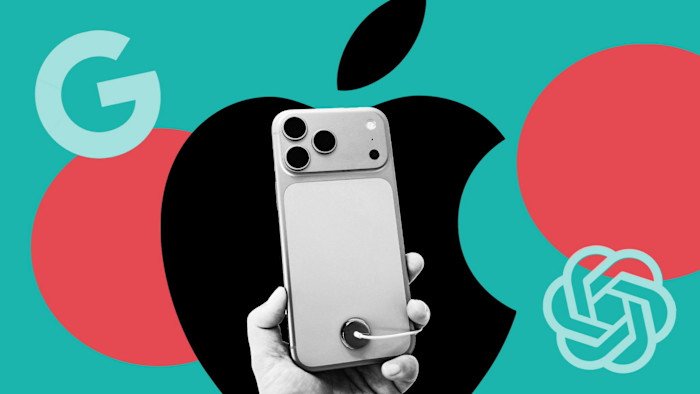
Apple's long-anticipated move into generative AI will rely on Google's Gemini models through a cloud services agreement rather than proprietary model development, according to internal sources cited by the Financial Times. The deal structures Gemini access as a pay-per-use cloud contract where Apple compensates Google for computational resources consumed by AI features. Simultaneously, OpenAI reportedly declined an offer to become Apple's custom model provider, citing infrastructure limitations and strategic misalignment.
Deal Structure and Strategic Implications
The cloud contract model represents a deliberate choice by Apple to avoid massive upfront investments in AI infrastructure. Rather than building proprietary foundation models or operating data centers at scale, Apple will leverage Gemini's capabilities through Google Cloud's infrastructure. Industry analysts note this approach aligns with Apple's historical pattern of partnering for cloud services (as with iCloud's Google Cloud backend) while maintaining hardware-centric profitability. Financial terms remain undisclosed, but sources describe it as a "multibillion-dollar" agreement spanning multiple years.
OpenAI's reported refusal to become Apple's custom model provider reveals deeper industry dynamics. Sources indicate OpenAI declined because it couldn't dedicate sufficient computational resources to support Apple's massive user base while maintaining its own product roadmap. This decision underscores the extreme computational costs of serving generative AI at global scale and highlights how infrastructure constraints influence partnerships.
Technical Implementation and Privacy Safeguards
Gemini integration will likely follow a hybrid architecture:
- On-device processing: Core system functions handled by Apple's in-house models (like Ajax)
- Cloud augmentation: Complex queries requiring larger models routed to Gemini via Google Cloud
- Privacy layer: Apple's Private Cloud Compute framework to anonymize requests and filter sensitive data
Early implementations may resemble Google's Gemini integration in Android, where feature access depends on task complexity. Apple's focus remains on implementing AI features that enhance existing services like Siri, Spotlight, and automated photo organization while avoiding standalone chatbot interfaces.
Market Context and Limitations
This partnership emerges during strategic shifts across the AI industry:
- Computational scarcity: Nvidia H100/H200 GPU shortages force even tech giants to ration resources
- Regulatory pressure: Apple avoids training foundation models partly due to unresolved copyright and privacy litigation
- Revenue diversification: Google monetizes its AI research beyond consumer products via enterprise cloud contracts
Significant limitations persist:
- Dependency risk: Prolonged reliance on Google creates vendor lock-in for core functionality
- Latency concerns: Cloud-dependent features may underperform in low-connectivity scenarios
- Business model conflict: Gemini-powered features could clash with Apple's privacy-first branding if data handling isn't transparent
Industry observers note the arrangement resembles Microsoft's Azure OpenAI Service but with reversed roles—Apple becomes the client rather than the infrastructure provider. This reflects Apple's cautious approach to generative AI investment while competitors like Microsoft and Meta spend billions on proprietary infrastructure.
Strategic Alternatives and Future Projections
Despite the Gemini deal, Apple continues developing smaller on-device models like Ajax. Internal documents suggest a "tiered AI strategy" where:
- 80% of features use on-device models
- 15% leverage cloud-augmented systems
- 5% access specialized third-party models
The OpenAI rejection indicates Apple may pursue multiple model providers long-term. Potential candidates include Anthropic (despite its Microsoft partnership) and open-source leaders like Meta's Llama—though neither currently offers enterprise-ready cloud services at Google's scale.
As Apple prepares to unveil its AI roadmap at WWDC 2026, this deal represents a pragmatic but transitional solution. It provides immediate access to cutting-edge AI while buying time to develop proprietary solutions—a calculated hedge in an industry where building competitive foundation models now requires expenditures exceeding $10 billion annually.
Comments
Please log in or register to join the discussion