
This article presents a comprehensive framework for decentralizing architecture in large organizations, enabling teams to make autonomous decisions while maintaining system coherence. It draws parallels to natural systems like ant colonies and outlines a progression from centralized control to distributed decision-making through clear boundaries, shared principles, and guardrails rather than gates.
Architecting Autonomy at Scale: Raising Teams Without Creating Dependencies
Decentralized decision-making is far from a new paradigm; it has shaped systems in nature, economics, and human societies for centuries. A classic example is the Red Harvester Ant colony - a system that exhibits remarkably sophisticated and efficient behavior without any single ant directing day-to-day activity. Each ant operates using limited, local information: the rate of antennal contact, pheromone intensity, and environmental signals. From these simple inputs, complex patterns emerge. If ant colonies can coordinate thousands of agents without a central commander, can large-scale engineering organizations do the same? Or are we doomed to rely on architectural "ivory towers" to keep chaos at bay?
The Architecture Bottleneck
Centralized architectural decisions are much like a centralized lock in a distributed system: they work at low scale but become bottlenecks as complexity grows. While effective in small organizations or early engineering setup, centralized decision-making introduces several problems as organizations scale:
- Slower time to market: When every significant decision must pass through central authority, delivery pipelines turn into queues
- Context blindness: Central architects may not possess deep, fast-evolving domain knowledge held by individual teams
- The ivory tower effect: When teams perceive architectural decisions as detached from real constraints, trust erodes
As domain complexity grows, centralization becomes harder to sustain. For example, in industries like insurance, claims, billing, policy administration, and underwriting operate under different constraints and workflows. No central group can maintain deep expertise across all domains.
Decentralization does not mean anything goes. It is a progression: from dependence on central approval, to independence within shared principles and platforms, and ultimately to interdependence, where central and domain teams collaborate as peers to shape architectural direction.
The Parental Metaphor: A Framework for Growth
A useful way to frame this is to view architects like parents. Effective parenting is not about controlling every move, but about setting boundaries, cultivating judgment, creating safe spaces to learn, and gradually transferring responsibility. Growth applies not only to teams, but to the organization — and to architects themselves.
As organizations scale, both the system and the architectural role evolve through stages:
- Infancy (startups / early products): Strong central guidance establishes patterns and standards
- Adolescence (scaling teams and domains): Teams gain independence within clear guardrails
- Adulthood (mature enterprise): Autonomy becomes essential, with architecture focusing on enabling systems
 Figure 1: The evolution of architectural governance from centralized "Infancy" to decentralized "Adulthood"
The real risk is not decentralization, but remaining stuck in a control mindset after the system has outgrown it. This article proposes a structured framework for progressing toward responsible decentralization built around core elements:
- Clearly defined guardrails
- Explicit decision scopes and boundaries
- Well-articulated architectural principles and guidelines
- A disciplined practice of preserving architectural decision history
- Architecture alignment forums as platforms for scale and velocity
- Outcome-based KPIs and fitness functions
- Cultural adoption of the architect's role as coach rather than commander
Guardrails in Practice: Enabling Autonomy Responsibly
In centralized models, architecture often acts as a gatekeeper. Clear architectural standards prevent analysis paralysis and eliminate costly distractions. When that gate becomes slow, distant, or overly controlling, teams respond predictably: they bypass processes, duplicate solutions to reduce dependency, introduce undocumented patterns, and accumulate hidden technical debt.
This is why the architect's role must shift from enforcement to friction removal. In a healthy decentralized model, teams are allowed to "fall in the backyard" — to experiment within defined safety boundaries. The aim is not to eliminate failure, but to prevent catastrophic failure. Trust is built not through control, but through clear guardrails, transparency, and reliable feedback loops.
Decision Boundaries: Autonomy at Each Architectural Level
One practical way to decentralize responsibly is to align architectural authority with levels of abstraction. Using the C4 model as reference:
- Context (System): Enterprise/Portfolio Architect
- Containers: Senior Solution/Software Architect
- Components: Solution Engineer/Junior Architect
- Code: Tech Lead and Development Teams
This reflects a simple reality: local teams often understand low-level intricacies best, while portfolio architects better understand cross-domain integration, strategy, and enterprise constraints.
Architecture Principles and Guidelines: Autonomy Without Anarchy
Architecture principles and guidelines enable distributed decision-making by acting as a shared social contract within the engineering organization. They clarify values, trade-offs, and boundaries — allowing teams to operate autonomously without constant central approval.
Consider the principle: "Data is a strategic organizational asset and must be managed, protected, and governed accordingly." From this follow practical guidelines:
- Every dataset must have a defined owner
- Owners are accountable for quality, lifecycle, and access control
- Critical data elements must define measurable quality metrics
- Schema changes must follow versioning rules
Guidelines translate intent into behavior. By making expectations explicit, accountability shifts to teams — and architectural alignment no longer depends on centralized decision-making.
Architecture Decision Records (ADRs): Preserve Intent
Architectural decisions often present multiple viable paths, each with trade-offs. An Architecture Decision Record (ADR) provides a structured way to document that choice. ADRs are lightweight documents that capture decisions alongside their context, rationale, alternatives, and consequences.
Their purpose is to preserve intent — to make explicit why a particular path was chosen at a specific moment in time. As systems evolve, decisions are revisited, refined, or superseded. ADRs create a living record of those choices, supporting both active development and long-term maintenance.
Maintained at the team or domain level, ADRs provide traceability that enables safe experimentation and informed autonomy. Without them, context fades and architectural reasoning becomes tribal knowledge. Teams inherit decisions without context, making safe experimentation harder and reversibility impossible to assess.
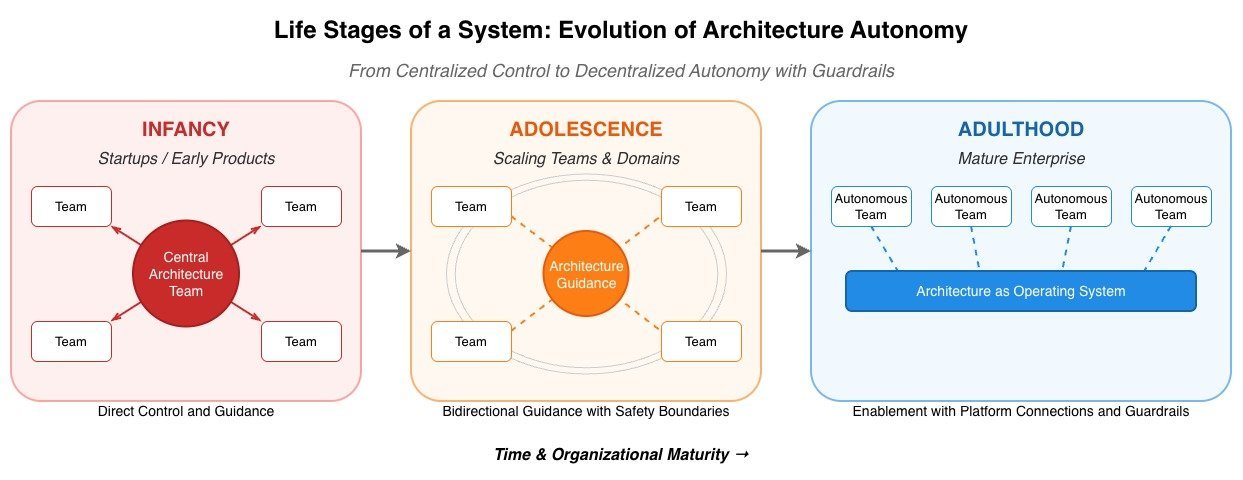 Figure 2: Architecture Governance Evolution: From Control to Enablement
The Collaborative ADR Review
ADRs are most valuable not as approval checkpoints, but as forums for thoughtful discussion. When approached well, the review process resembles a family meeting more than a compliance exercise — guided by mentorship rather than authority. Its purpose is not to grant permission, but to strengthen architectural judgment.
Review questions might include:
- What trade-offs were considered?
- How would this decision behave under scale or failure?
- What risks does it introduce for adjacent domains?
- How reversible is it?
Such dialogue builds decision-making muscle. Engineers learn to internalize architectural reasoning rather than defer to central authority. Over time, dependence on senior architects decreases as teams gain confidence in evaluating complexity themselves.
Architecture Governance Forum: Escalation and Alignment, Not Permission
An Architecture Governance Forum brings together IT, data, and business stakeholders to coordinate strategy and execution. It acts as a bridge between strategic intent and technical delivery. While it may appear centralized, a well-designed forum enables decentralization.
Rather than controlling decisions, it provides alignment, guardrails, and a clear escalation path when cross-domain trade-offs arise. When operating effectively, the forum helps teams move faster and with greater confidence. It creates space for constructive challenge, surfaces risks early, and ensures decisions align with enterprise principles and long-term direction.
Importantly, the forum should not function as an approval gate or an ivory tower. Its role is to clarify constraints, context, and the organization's North Star — empowering teams to innovate while remaining aligned with shared standards and strategic direction.
Build the Platform - Scale the Autonomy
Decentralized autonomy does not scale by intention alone. It requires deliberate investment in shared capabilities. Without a strong platform, autonomy leads to duplication, fragmentation, and hidden risk.
A well-designed platform turns constraints into reusable building blocks and guardrails into embedded defaults. The operating model is straightforward:
- Centralize cross-cutting capabilities — security, data privacy, shared infrastructure, developer tooling, and governance automation
- Decentralize domain decisions — service design, integrations within defined constraints, and localized delivery
Platform teams create the technological foundation — the "paved road" of reusable infrastructure, CI/CD pipelines, observability, and identity controls. When teams are under delivery pressure, they will naturally choose the path that feels fastest and least obstructive. If the platform is designed well, that path is also the safest one.
This logic extends beyond engineering. Functions such as Data Governance can operate as shared platforms, offering tooling for data quality, metadata, and stewardship, while domain teams retain ownership of their data within enterprise standards.
Outcome-based KPIs and Fitness Functions
In a decentralized model, the shift is subtle but important: instead of controlling how teams work, the focus moves to validating what they produce. As decision-making moves closer to teams, the system still needs something that preserves coherence.
Those boundaries — the guardrails — must be clearly articulated, objectively verifiable, and embedded into the platform so they apply consistently across teams. This is where fitness functions become essential.
A fitness function is an automated check that continuously validates a system property, ensuring architectural characteristics remain intact as the system evolves. Rather than reviewing architecture only at design time, fitness functions evaluate it during build, deployment, and runtime. Examples include:
- Failing deployments when security vulnerabilities exceed defined thresholds
- Enforcing measurable data quality targets for critical datasets
- Monitoring adherence to SLO and availability commitments
- Validating compliance with data classification or encryption policies
While KPIs define intent, fitness functions verify that intent continuously in practice. When guardrails are encoded into pipelines, platform tooling, and observability systems, alignment shifts from periodic review to ongoing validation.
Ceremonies of Connection: Moving from Commander to Coach
Decentralized models fail when teams drift into silos. They succeed when shared rituals preserve context and trust. As discussed earlier, ADR reviews and Architecture Forums function less as approval gates and more as collaboration rituals.
The Socratic Architect
In a decentralized organization, the architect's role shifts from approver to coach — guiding teams through trade-offs, constraints, and long-term consequences. Rather than sitting atop a decision hierarchy, the architect works alongside teams, helping sharpen reasoning.
Instead of prescribing solutions, the Socratic architect asks questions:
- What trade-offs are being optimized?
- What assumptions underlie this design?
- How does it behave under failure or scale?
- How reversible is it?
- Who bears the operational burden?
Such questions build decision-making muscle, helping teams internalize architectural discipline rather than rely on central authority. Over time, dependence decreases as judgment becomes distributed.
The Village Effect
Decentralization does not remove the need for connection — it heightens it. As authority disperses, shared memory becomes essential to coherence. Communities of practice, cross-domain forums, and recurring exchanges allow patterns and lessons to circulate across teams.
While ADRs document decisions, communities preserve the experience behind them. As knowledge spreads, reinvention declines and autonomy gains context. Teams operate independently, yet remain aware of the broader system. At scale, this connective rhythm becomes critical.
AI Enabling Decentralized Architecture
AI is often associated with code generation, yet its deeper value lies in strengthening architectural autonomy. When used within clear guardrails and responsible governance, AI helps teams make informed local decisions while maintaining organizational coherence.
Design and Decision Support
AI can act as a design-review copilot, surfacing gaps across security, resilience, privacy, and compliance based on established principles and patterns. It can suggest alternatives, structure trade-offs, and assess alignment with internal standards. It also accelerates common architectural comparisons — distilling vendor documentation, summarizing internal runbooks, and generating structured inputs or draft ADRs for refinement.
Organizational Memory and Dependency Awareness
By analyzing ADRs, repositories, roadmaps, and release notes, AI can surface decisions that affect adjacent teams and highlight cross-domain dependencies. What was once scattered across artifacts becomes visible in context, reducing surprise and improving coordination.
Guardrails and Drift Detection
AI can continuously scan code, infrastructure, and runtime signals to detect deviations from agreed principles — insecure patterns, missing data lineage, improper handling of regulated data, or unapproved integrations. By correlating platform standards, ADRs, and configuration changes, it surfaces misalignments earlier than periodic reviews would allow.
The objective is not tighter control, but earlier awareness. Teams retain autonomy, while deviations become visible before they turn into systemic risk. Taken together, these capabilities change how autonomy scales. AI does not replace architects or centralize decisions; it strengthens the environment in which decisions are made.
The Approachable Architect
Decentralizing architecture does not mean removing architecture. It means evolving it into a scalable operating model — where guardrails, platforms, principles, and feedback loops replace centralized bottlenecks. The most effective architects are those who gradually make themselves unnecessary for day-to-day decisions — not because architecture disappears, but because it becomes embedded in the way teams work.
Teams operate with clear principles, shared patterns, paved roads, and governance they trust. Sustainable decentralization, however, depends on more than structural design. It is ultimately an organizational transformation, not merely a technical one. It requires sustained leadership commitment and alignment across levels of the organization.
Executives must actively champion the shift from approval-based to trust-based governance, investing not only in technical platforms but also in capability building, communities of practice, and cultural evolution. This transition demands realism. Autonomy comes with intelligent failures. As teams assume operational ownership, incident rates may temporarily rise before stabilizing.
Maturity varies across teams — some are in infancy, others in adolescence, a few in adulthood — and governance must adapt accordingly. Granting premature autonomy to teams without operational discipline invites chaos; imposing excessive control on mature teams drives shadow systems and undocumented workarounds.
Technology provides the tools, but sustained organizational alignment ultimately determines whether those tools deliver meaningful and lasting results.
Comments
Please log in or register to join the discussion