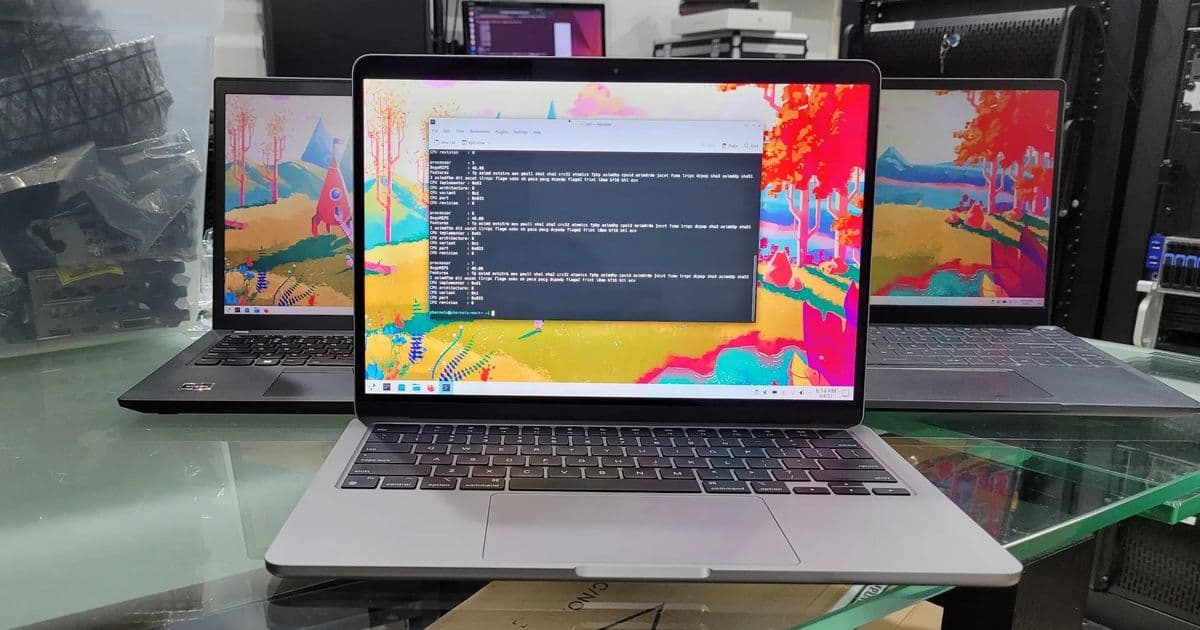
The Asahi Linux project confirms keyboard, touchpad, WiFi, NVMe and USB3 functionality now work on Apple M3 hardware, though developers emphasize a polished release requires more work before general availability.

Five years after launching their mission to bring Linux to Apple Silicon, the Asahi Linux team has published a detailed progress report outlining current support status for Apple's M3 processors. While core components are now operational, developers stress that their commitment to delivering a "polished desktop Linux experience" means no release date is imminent.
Hardware Support Status
The team reports significant achievements on Apple M3 hardware:
- Functional components: Keyboard, touchpad, WiFi, NVMe storage, and USB3 now work with custom kernel patches
- Required patches: Currently maintained in an experimental
fairy dustbranch of their kernel repository - Current limitation: GPU acceleration remains under development with no public timeline
This puts M3 support at approximately the same stage as early M1 beta releases. However, project leaders explicitly state they won't repeat the "janky, half-baked" experience of initial releases: "We have earned a reputation for being the most complete and polished AArch64 desktop Linux experience... We will not squander it."
Performance & Compatibility Outlook
While benchmarks remain unavailable during this development phase, historical data from M1/M2 implementations provides context:
| Component | M1/M2 Current Status | M3 Target Status |
|---|---|---|
| CPU Performance | Near-native (95-98% macOS parity) | Equivalent optimization expected |
| GPU Acceleration | Basic support (Panfrost) | Vulkan/metalRF support pending |
| Power Management | ~15% higher consumption than macOS | Similar delta expected initially |
| Thermal Management | Functional with custom curves | Implementation pending |
Notable ongoing development includes:
- Display enhancements: Overcoming the 60Hz limitation for 120Hz MacBook Pro panels
- Peripheral support: Resolving intermittent webcam detection issues
- USB-C Alt Mode: Actively developed but not production-ready (DisplayPort implementation details)
Build Recommendations
For homelab users considering Apple Silicon Linux today:
- Current-gen recommendation: Deploy on M2 Pro hardware for most stable experience (compatibility list)
- M3 consideration: Only suitable for developers testing patches from the
asahi-edgerepository - Critical peripherals: Avoid Thunderbolt docks until USB4 subsystem matures
- Power monitoring: Always deploy
m1n1power telemetry tools during testing
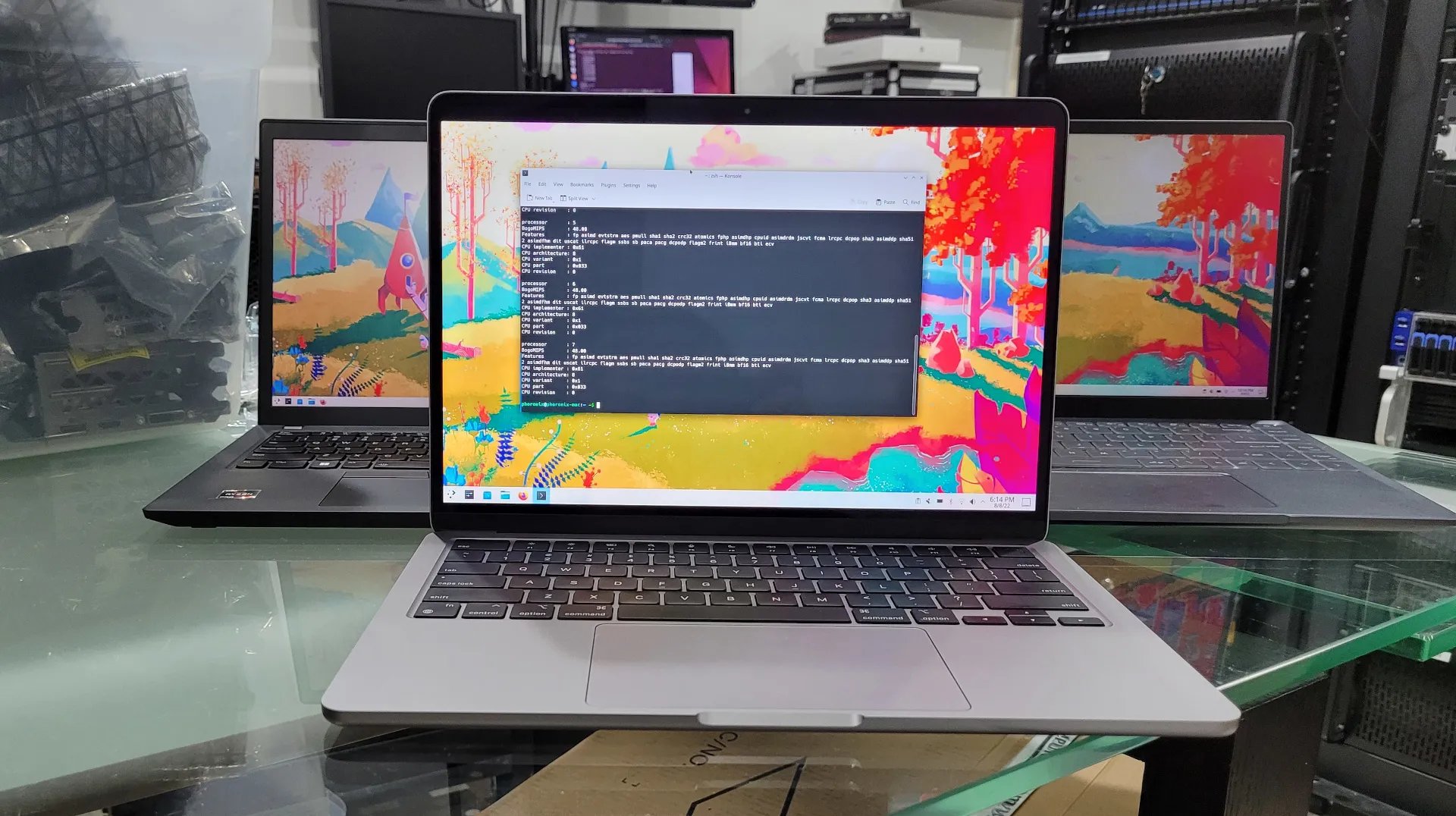 Community testing shows early M3 performance potential
The team states they "don't expect it to take too long" to reach a shippable state but refuse to provide ETAs. Those interested in technical progress can monitor the Asahi Linux blog and GitHub activity.
For benchmark-focused users, the current roadmap prioritizes stability over raw performance unlocks. Once GPU acceleration and power management mature, comprehensive performance analysis against macOS and x86_64 Linux systems will follow.
Comments
Please log in or register to join the discussion