
The author explores “ascetic computing” as a personal philosophy that favors disciplined simplicity, intentional tool choices, and resistance to endless novelty. By embracing constraints, avoiding intrusive software, and curating a modest set of reliable machines, the approach seeks deeper focus, lasting skill, and genuine satisfaction rather than deprivation.
Ascetic Computing – A Philosophy of Focused Simplicity
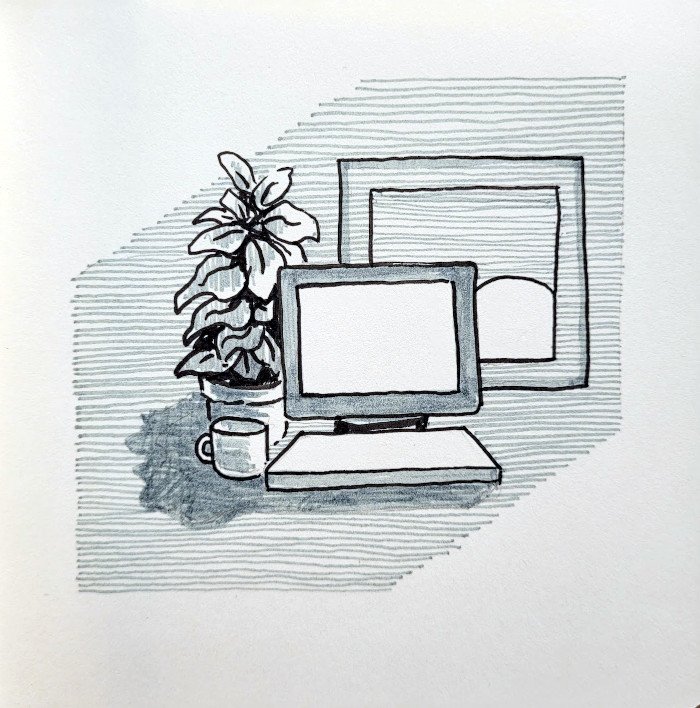
In a moment of quiet reflection, the author found a comment in a configuration file that read, “I opted to do without this for ascetic reasons.” The phrase sparked a chuckle and a cascade of thoughts about why, lately, so many of his choices have been guided by an emerging principle he calls ascetic computing. Unlike the religious connotations of asceticism, this is a natural asceticism—a deliberate pursuit of simplicity, focus, and personal integrity in the digital realm.
The Core Tenets
- Do without compromises to personal standards – Reject tools that betray one’s values, whether by stealing attention with pop‑ups or by imposing unwanted updates.
- Live fearlessly in the face of missing out – Accept that saying no to the latest shiny thing is not a loss but a safeguard against distraction.
- Resist the endless pursuit of shiny things – Recognize the seductive pull of new frameworks, browsers, or gadgets, and choose depth over breadth.
These principles are not commandments; they are habits the author strives to uphold, with occasional lapses that he openly acknowledges.
Why Simplicity Beats Saturation
When every option is presented at once—thousands of tabs, endless software catalogs, a constant stream of notifications—the mind fragments. The author likens this to a traveler burdened with fragile, high‑tech gear that breaks mid‑journey. In contrast, a modest, well‑understood toolkit becomes a trusted companion that just works when the stakes are high.
The Power of Constraints
Constraints, paradoxically, expand creative freedom. By limiting himself to a handful of tools—OpenBSD as the operating system, Vim for editing, LibreWolf for web browsing, Dillo for quick lookups, Ruby for scripting—the author forces himself to master each one deeply. This mirrors the classic programming exercise from Programming Pearls: a sorting problem with limited memory that yields an elegant, faster solution. The same principle applies to art, writing, and any craft where a self‑imposed boundary can spark originality.
Tools of the Ascetic
| Role | Preferred Tool | Why it fits the philosophy |
|---|---|---|
| OS | OpenBSD | Cohesive, security‑focused, predictable release cadence |
| Editor | Vim | Minimalist, keyboard‑centric, timeless |
| Main Browser | LibreWolf | Privacy‑first, no telemetry |
| Quick‑Lookup Browser | Dillo | Tiny, fast, disappears after the task |
| Scripting | Ruby | Readable, batteries‑included, good for personal utilities |
| Graphics | Inkscape, Krita | Open‑source, powerful without bloat |
He also embraces the practice of manual, on‑demand updates—a stance that many label a “security heretic” but which aligns with the desire to control when interruptions occur.
The Lindy Effect and Lasting Skills
The author invokes the Lindy effect: the longer a technology or practice has survived, the longer it is likely to persist. Mastering fundamentals—Unix command‑line tools, the vi editor, low‑level programming concepts—offers a return on investment that outlasts any fleeting framework. Learning a proprietary IDE, by contrast, often falls into the category of transient knowledge that disappears when the vendor changes licensing.
From Minimalism to Maximalism
Ascetic computing is not minimalism in the sense of owning as few items as possible. Rather, it is a curated maximalism: the author maintains a collection of inexpensive, pre‑owned computers, each dedicated to a specific purpose. These machines sit idle like dormant plants in a garden, ready to be “sacrificed” for a task that demands a less principled setup. This approach provides the flexibility to experiment without compromising the core, ascetic environment.
The Joy of Doing Without
Choosing to ignore advertisements, refusing auto‑updates, and limiting exposure to constant novelty is not about deprivation. It is about contentment with what one already possesses. The author notes that as he reduces exposure to ads, his resistance to them grows, freeing mental bandwidth for creative work. This aligns with the ancient ascetic claim that self‑imposed constraints bring greater clarity of thought.
Practical Takeaways
- Audit your toolchain: Identify software that interrupts your flow and replace it with quieter alternatives.
- Set a “shiny‑thing” budget: Allocate a limited amount of time each month to explore new tools; the rest of the time, deepen expertise in your current set.
- Embrace manual updates: Schedule a weekly window to apply patches, giving you control over when interruptions happen.
- Consider a dedicated “experiment” machine: Keep a low‑cost computer for trying out unprincipled software without contaminating your primary environment.
- Practice the Lindy mindset: Prioritize learning concepts and tools that have stood the test of time.
Counter‑Perspectives
Critics might argue that such self‑imposed limits can hinder exposure to innovations that genuinely improve productivity. While the author acknowledges missing out on some conveniences, he contends that the trade‑off—greater focus and reduced cognitive load—justifies the occasional sacrifice. The philosophy is flexible: when a new tool demonstrably solves a problem without adding unnecessary complexity, it can be adopted after careful evaluation.
Conclusion
Ascetic computing, as presented here, is a personal covenant with one’s own attention and values. By deliberately choosing simplicity, resisting the lure of endless novelty, and curating a modest yet capable set of tools, the author finds a clearer mental space for learning, creating, and ultimately enjoying the act of computing itself. It is a reminder that the most powerful hardware is often the one that stays out of the way, allowing the human mind to do the real work.
Comments
Please log in or register to join the discussion