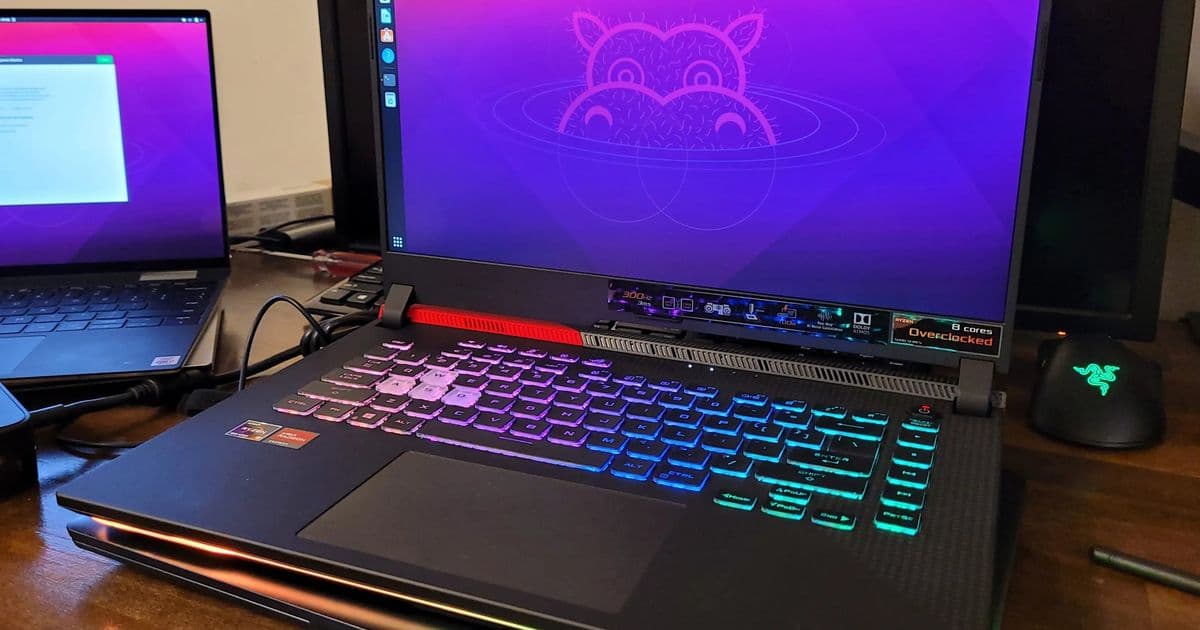
The Linux 6.19 kernel will include an enhanced ASUS Armoury driver, extending fine-grained hardware control beyond the existing WMI interface. This update brings BIOS-level features like APU memory allocation and Intel core management to a wider range of ASUS ROG laptops and the Ally handheld, reflecting a broader trend of hardware vendors providing deeper Linux integration for gaming and performance-focused devices.
The Linux kernel's hardware support continues to evolve, with a notable addition for users of ASUS's Republic of Gamers (ROG) hardware. A new driver, the ASUS Armoury driver, has been merged for the upcoming Linux 6.19 release, building upon the foundation of the existing ASUS WMI (Windows Management Instrumentation) driver. This new driver is designed to provide more robust and feature-complete control over a range of ASUS ROG laptops and the ROG Ally gaming handheld, moving beyond the limitations of the previous implementation.
The ASUS Armoury driver is not a complete replacement but a targeted enhancement. The existing ASUS WMI driver handles basic functions like fan control and performance profiles. However, the Armoury driver exposes deeper, system-level controls that are typically only accessible through the system BIOS or proprietary Windows software. This includes critical performance tuning features that are essential for gamers and power users seeking to optimize their hardware.
Key technical capabilities introduced by the ASUS Armoury driver include:
- APU-Allocated Memory Adjustment: For devices with integrated graphics, particularly the ROG Ally handheld, this allows users to dynamically adjust the amount of system RAM dedicated to the graphics processor. This is a crucial setting for balancing performance in memory-intensive games against the needs of the main system.
- Intel Core Count Control: The driver provides control over Intel's Performance (P) and Efficient (E) cores. Users can now manage the active core count directly from the operating system, enabling power-saving modes or maximizing multi-threaded performance without rebooting into the BIOS.
- Display Mode Switching: It supports switching between Full HD (FHD) and Ultra HD (UHD) modes for compatible display panels. This can be vital for managing performance on high-resolution screens, allowing users to run games at a lower resolution for higher frame rates while maintaining a native desktop resolution for productivity.
- Power Limit and PPT Fixes: The driver also incorporates fixes for power limits (PPT) on specific models like the G513QY, ensuring more accurate and stable power management, which is critical for preventing thermal throttling and maintaining consistent performance.
The merge of this driver for Linux 6.19 is part of a larger set of x86 platform driver updates. The initial support list for the Armoury driver is substantial, covering recent and popular models. Supported devices now include the FA401UV, FA617XT, G835L, GA403UV, GA403WM, GA403WW, and GV302XV. This expansion indicates a concerted effort by ASUS to improve the Linux experience on its gaming hardware, likely in response to the growing popularity of Linux for gaming, especially with the rise of the Steam Deck and Proton.
This development is part of a wider industry trend where hardware manufacturers are increasingly providing first-class Linux support for their high-performance products. Previously, users of such devices often had to rely on community-developed tools or Windows-centric software to access full hardware functionality. The integration of the ASUS Armoury driver directly into the mainline kernel means these features will be available out-of-the-box for Linux users, without the need for third-party kernel modules or complex workarounds.
The inclusion of such detailed hardware control within the kernel is a significant step for Linux's desktop and mobile gaming viability. It reduces the friction for users who want to switch to or use Linux on powerful gaming laptops and handhelds, ensuring they don't have to sacrifice hardware-specific features. The driver's approach of building on the existing WMI foundation also suggests a pragmatic, incremental development path, improving functionality without disrupting existing support.
For users and developers, this driver represents a tangible improvement in hardware compatibility and control. It underscores the importance of open-source collaboration, where hardware vendors contribute directly to the Linux kernel to ensure their products are fully functional. As gaming on Linux continues to mature, such driver support is foundational, enabling the software ecosystem to fully utilize the capabilities of modern hardware.
The relevant pull request for these late additions to Linux 6.19 can be found on the Linux kernel mailing list, detailing the specific code changes and the rationale behind the updates. This transparency allows the community to review, test, and further refine the driver ahead of the official kernel release.
Comments
Please log in or register to join the discussion