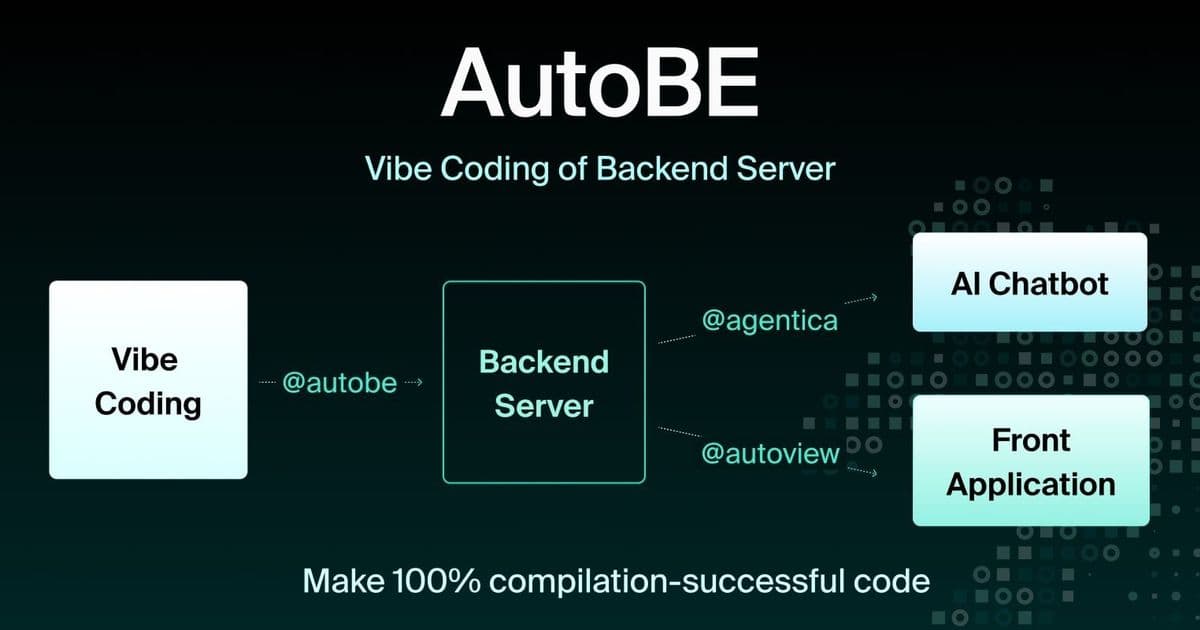
A new open-source AI agent transforms natural language requirements into fully functional backend applications using NestJS and Prisma. With built-in compiler validation and AI code review, @autobe promises 100% working TypeScript implementations—democratizing backend development for non-coders while accelerating pros.
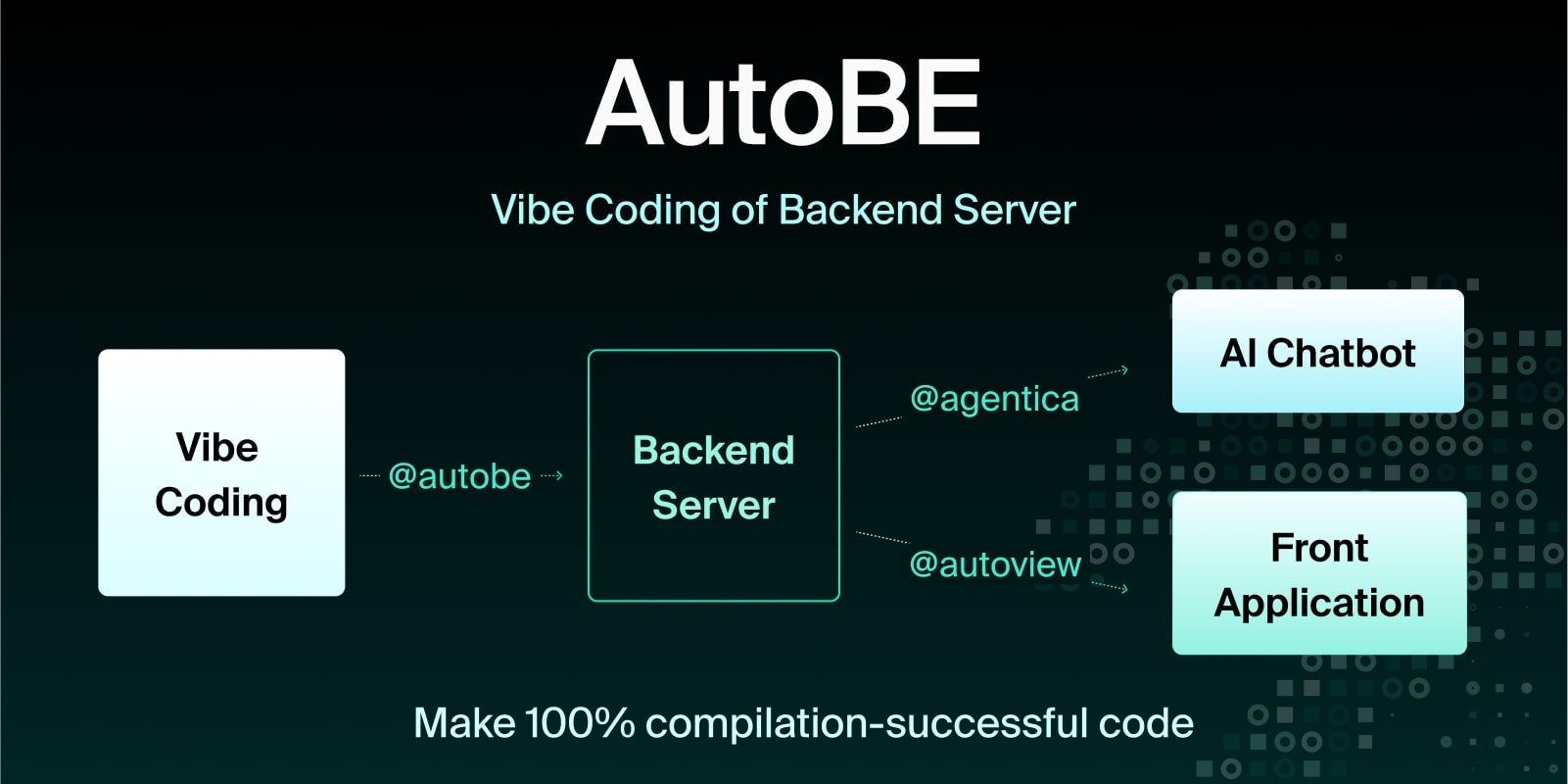
The promise of no-code development has long tantalized non-technical founders and overburdened developers alike. Yet most tools still require significant technical oversight—until now. Meet @autobe, an open-source AI agent that ingests plain English requirements and outputs production-ready backend applications with validated TypeScript, NestJS, and Prisma code.
How It Works: Waterfall Development, AI-Style
@autobe operates like an AI product manager and engineering team rolled into one. Users describe their backend needs (e.g., "I want a political discussion board with voting and comments"), and the agent executes a structured workflow:
- Requirements Analysis: Generates a detailed technical report
- Database Design: Produces Prisma schemas and ER diagrams
- API Specification: Defines controllers, DTOs, and OpenAPI docs
- Test Generation: Writes complete e2e test suites
- Implementation: Codes functional endpoints using NestJS
Crucially, every output undergoes dual validation:
"@autobe-generated code is validated by review agents and OpenAPI/TypeScript/Prisma compilers, delivering 100% working code."
Under the Hood: A Modern TypeScript Stack
The agent generates applications built on battle-tested technologies:
- TypeScript for type safety
- NestJS as the scalable framework backbone
- Prisma ORM with Postgres/SQLite support
- Automated OpenAPI documentation
Developers can inspect and extend the output—a deliberate design choice contrasting opaque low-code platforms. Interactive demos showcase real implementations like discussion boards, todo apps, and e-commerce backends.
Try It Now: Playground & Local Execution
An embedded StackBlitz playground lets users experiment instantly. For offline flexibility, @autobe runs locally via:
git clone https://github.com/wrtnlabs/autobe
cd autobe
pnpm install
pnpm run playground
The Bigger Picture: Trust but Verify
While AI-generated code isn’t new, @autobe’s compiler-driven verification addresses a critical gap: trust. By leveraging TypeScript and Prisma as "ground truth" validators, it minimizes hallucinated code. The AGPLv3 license encourages scrutiny, though a commercial license is forthcoming for enterprises.
As backend complexity grows, tools like this could democratize development while forcing a reckoning: What does "full-stack engineer" mean when AI handles the plumbing? For now, @autobe offers a compelling answer—one validated line of code at a time.
Comments
Please log in or register to join the discussion