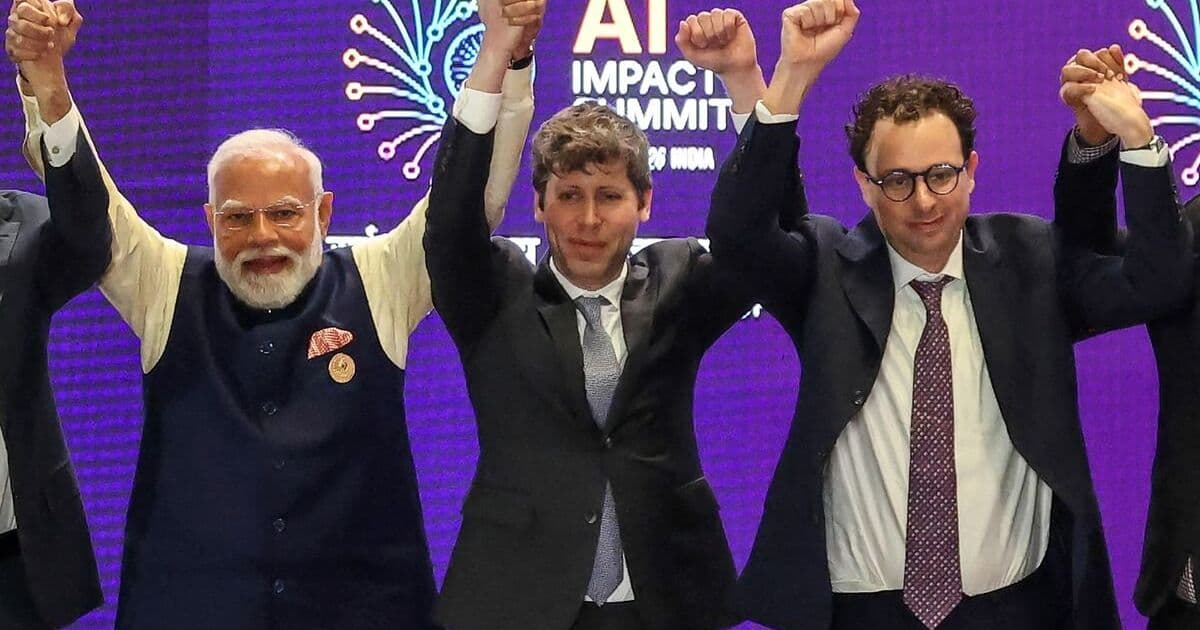
At India's AI Impact Summit, Prime Minister Narendra Modi orchestrated a photo opportunity where tech executives were asked to hold hands in a line, but OpenAI's Sam Altman and Anthropic's Dario Amodei refused to participate, creating an awkward moment that highlighted tensions beneath the summit's ambitious announcements.
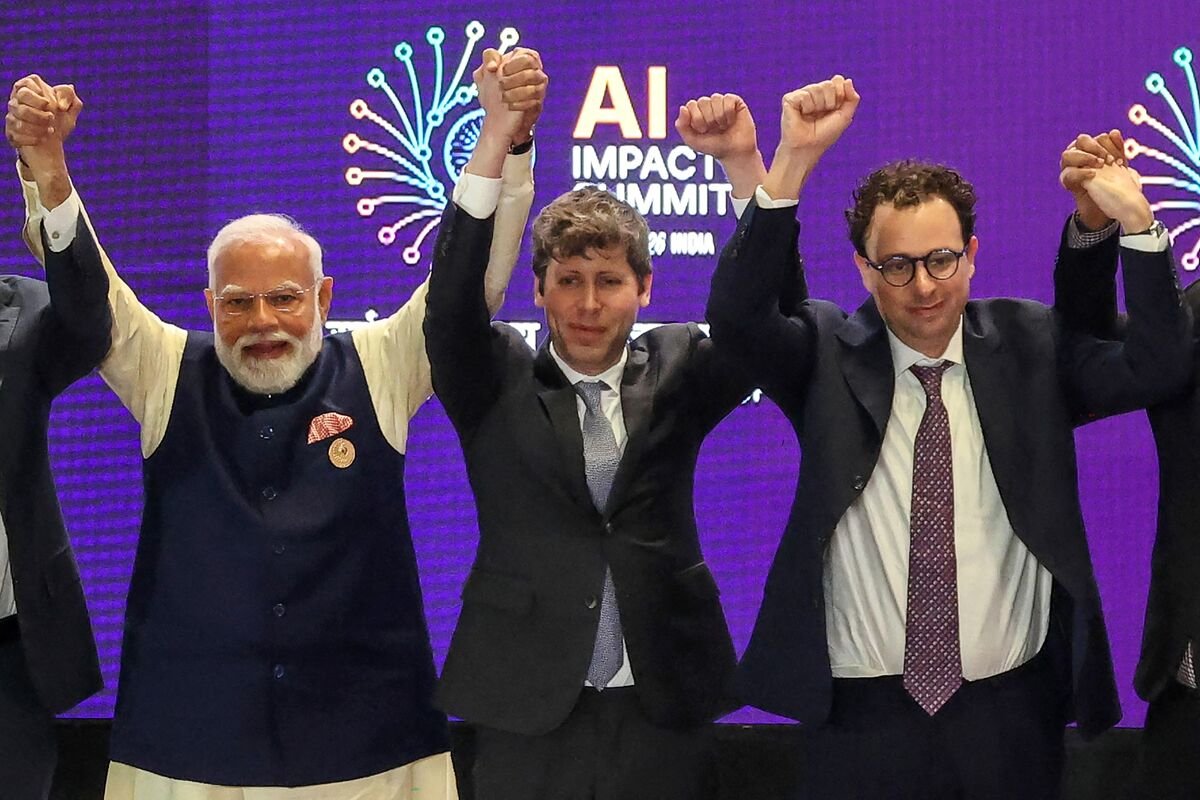
India's AI Impact Summit in New Delhi featured grand ambitions: 300+ exhibitors, 500 sessions, and announcements of billions in AI investment. Yet the event's most memorable moment came during a carefully staged photo opportunity. Prime Minister Narendra Modi arranged tech and business leaders in a line holding hands – a visual metaphor for collaboration. However, OpenAI CEO Sam Altman and Anthropic co-founder Dario Amodei visibly declined to join the hand-holding chain, creating an awkward pause captured by photographers.
The incident reveals underlying tensions at such high-profile gatherings. While Modi's administration promoted the summit as India's emergence as an AI superpower, the refusal by two prominent US AI CEOs to participate in the symbolic gesture suggests discomfort with political theatrics. This occurred despite India's substantive announcements: Reliance committed $110 billion toward AI infrastructure, Tata Consultancy Services became OpenAI's first data center customer with a 100MW deal, and Pine Labs announced OpenAI API integration for payment systems.
Beyond the photo op, substantive developments faced scrutiny:
- Investment realities: Reliance's $110 billion pledge spans seven years and includes existing digital infrastructure projects, not pure AI R&D
- Geopolitical positioning: The summit occurred amid US-China tech tensions, with India courting Western companies while maintaining relationships with Russian tech infrastructure
- Absentees: Bill Gates canceled his keynote amid Epstein controversy, while other Western executives sent mid-level representatives
Technical sessions covered practical applications in healthcare and agriculture, but the government's heavy-handed stage management – including scripted testimonials from entrepreneurs – raised questions about the summit's independence. The photo op incident particularly highlighted how symbolic politics can distract from technical substance, especially when senior technologists refuse to play along.
India's genuine AI progress faces structural challenges: limited GPU access, power infrastructure gaps, and restrictive data localization laws that complicate international partnerships. While Reliance's investment signals serious intent, the 7-year timeline underscores how infrastructure development remains embryonic. The summit's most concrete outcome may be TCS's OpenAI deployment – a commercial agreement unrelated to governmental initiatives.
The awkward visual of Altman and Amodei stepping back from Modi's orchestrated unity moment serves as a metaphor for the delicate balance global tech leaders must strike between market access and political alignment. For India's AI ambitions, the path forward requires more substantive technical partnerships and fewer staged demonstrations of unity.
Comments
Please log in or register to join the discussion