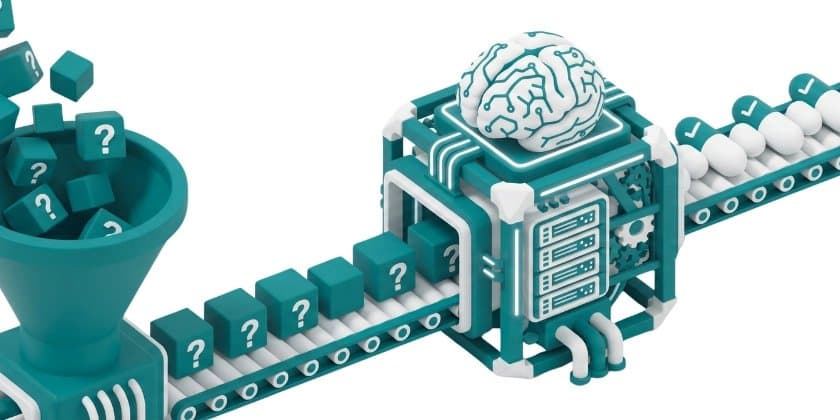
Modern AI customer support systems are replacing reactive ticketing with predictive resolution, using event-driven architectures, NLP, and vector search to autonomously detect and resolve issues before customers even realize there's a problem.
Relying on basic CRUD applications and manual ticket queues for customer support is starting to look outdated. Machine learning models, natural language processing, and high-volume data pipelines are quietly replacing the old ways companies handle user issues. Engineers tasked with building support infrastructures have a different mandate today. They need to wire up systems that predict, break down, and resolve problems autonomously.
The shift toward artificial intelligence in customer service isn't just a frontend facelift. It forces a complete teardown of traditional backend architectures.
From Reactive Ticketing to Predictive Resolution
Most older support setups run on a reactive loop. A user encounters a broken feature, submits a help form, and waits. Modern AI-driven builds abandon that loop in favor of a predictive model. Algorithms constantly scan telemetry streams, application logs, and user behavior to catch errors before a customer even realizes a process failed.
Consider a web app that detects multiple failed API requests from one specific account. Instead of waiting for a complaint, an automated event triggers instantly. The system pushes a targeted notification with troubleshooting steps or logs a hidden support ticket containing the exact error trace. Fixes happen in milliseconds instead of hours.
Event-driven architectures handle the grunt work, leaving human agents out of the initial loop entirely.
Smarter Triage with Sentiment Analysis and NLP
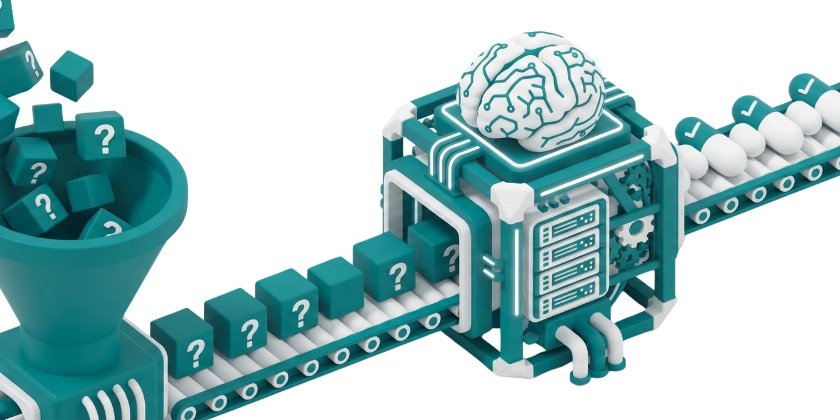
Ticket routing used to rely on users clicking the correct dropdown menu. That method was famously flawed. Now, NLP tools analyze raw text to pull out context alongside the user's actual mood. By pushing incoming support messages through sentiment analysis, systems can assign a frustration score. A message filled with angry phrasing or signs of a critical failure bypasses the normal inbox. It routes immediately to a senior engineer.
Concurrently, intent recognition models parse the text to categorize the exact problem, like a blocked payment or a UI bug, leaving old keyword-matching scripts in the dust.
The Evolution of Self-Service: Vector Search and RAG
Static help articles are being replaced by context-aware search engines. Help centers now rely heavily on vector databases and embeddings rather than rigid exact-match queries. When someone searches for a fix, the database looks for semantic intent rather than scanning for matching letters.
Add Retrieval-Augmented Generation (RAG) into the mix, and the pipeline can extract specific paragraphs from dense technical documentation to generate a conversational, accurate answer in real time. Users fix their own issues. Consequently, the volume of basic tier-one requests hitting the server drops to near zero.
Real-World Implementations and the Path Forward
Understanding these architectural shifts is necessary for teams modernizing old tech stacks. Looking at real-world deployments helps bridge the gap between theory and actual business value. Reviewing 10 genuine examples of how artificial intelligence customer service is enhancing support and experience provides a solid look at where support technology is currently moving.
Integrating these models introduces heavy engineering constraints. It requires managing real-time data ingestion, orchestrating complex APIs, and navigating strict data privacy laws. However, companies that invest in these pipelines end up with a highly scalable environment that significantly lowers resolution times.
Developing these smart backends is no longer a luxury feature. It operates as the new default requirement for shipping modern software.

Heroku MCP Server connects tools like Cursor to Heroku, so you can build, deploy, and manage apps—right from your editor.
Comments
Please log in or register to join the discussion