AI agents often excel at routing requests but fail to deliver appropriate behavior in each branch. Discover how differentiable programming in DSPy transforms subjective 'good service' into measurable metrics, enabling joint optimization of entire agent workflows for consistent, adaptive behavior.
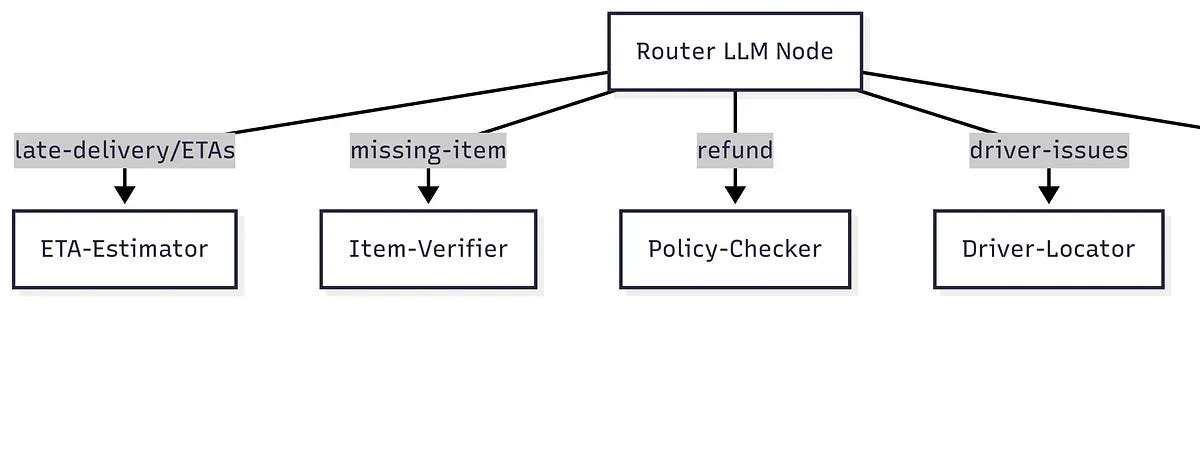
AI agents have become adept at routing requests to the correct processing branch—whether classifying customer tickets as delivery ETAs, missing items, or driver issues. Yet as Viksit Gaur highlights in his DSPy exploration, routing correctness alone is insufficient. When an ETA branch responds with "The eta for your order #1783 is currently being reviewed..." instead of a human-like "Thank you for reaching out—your order arrives in 20 minutes", the system fails users despite technically accurate routing. This behavioral consistency problem plagues most production AI agents today.
Quantifying the Unquantifiable
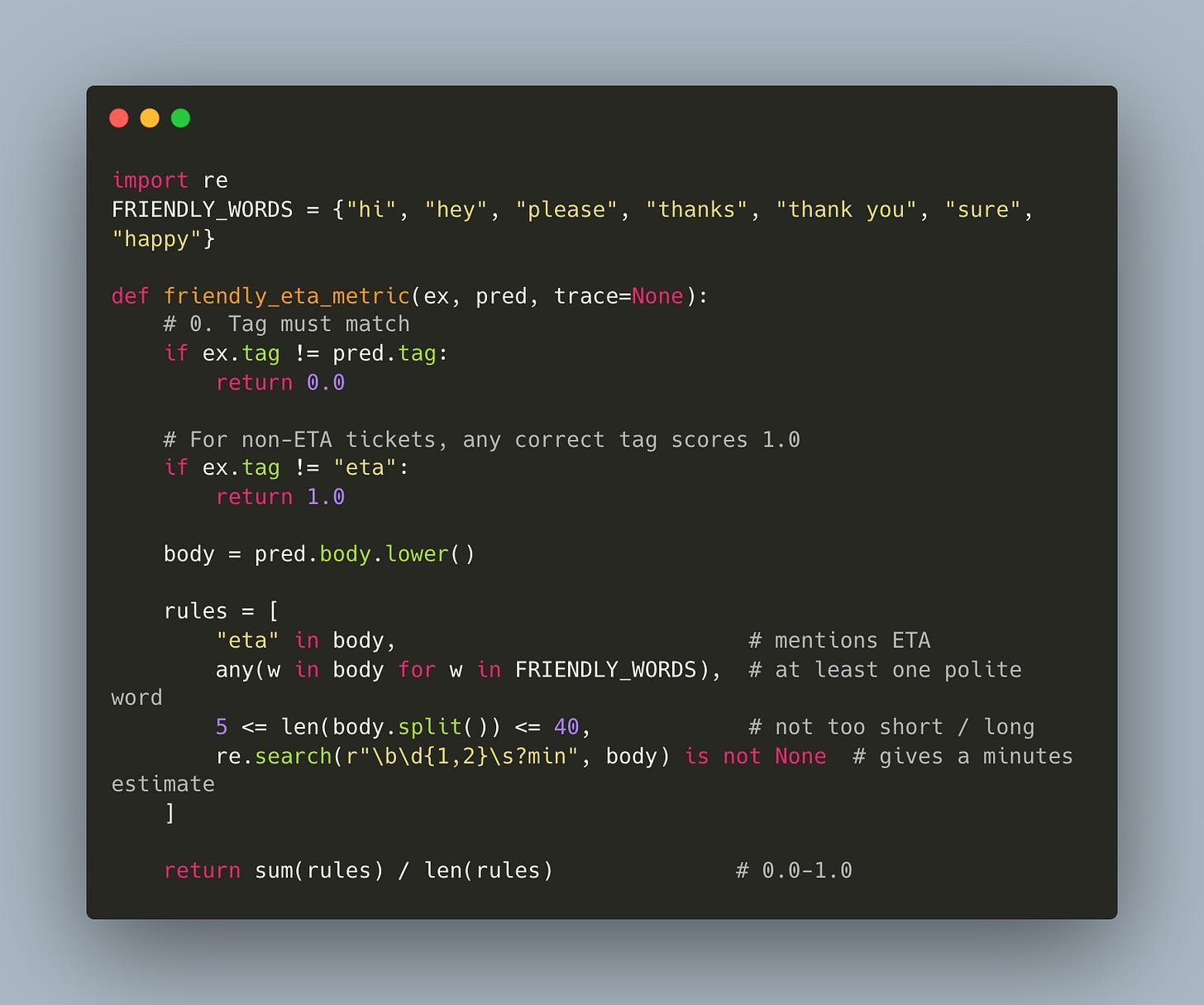
The breakthrough lies in defining behavioral quality as learnable metrics. DSPy enables engineers to codify subjective expectations into measurable rules. For an ETA response, this might include:
- Mandatory inclusion of concrete time estimates
- Presence of gratitude markers ("thank", "please")
- Optimal response length (neither terse nor verbose)
- Specificity requirements (e.g., mentioning order numbers)
# Simplified DSPy metric definition for ETA responses
dspy.Metric(
    rules=[
        "Must mention 'eta' or 'estimated time'",
        "Contains friendly language (e.g., 'thank', 'appreciate')",
        "Response length between 15-40 words",
        "Includes concrete time estimate (e.g., '20 minutes')"
    ],
    scoring="average" # 0.0 to 1.0
)
Each specialized branch gets tailored behavioral targets. Missing item handlers might require:
- Problem acknowledgment within 15 words
- Concrete resolution timelines
- Explicit remedy options (refund/replacement)
- Sentiment analysis scores above 0.7
The Joint Optimization Revolution
Traditional prompt engineering tweaks branches in isolation—a fragile approach that ignores cross-branch dependencies. DSPy's optimizer treats the entire workflow as a differentiable graph:
"The optimizer traces program execution, searching for parameters that maximize behavioral consistency across component interactions. Routing decisions evolve to preserve context for downstream responses, while branches adapt to system-wide interaction patterns." — Viksit Gaur
This co-evolution is transformative. When tested on customer service workflows, initial implementations showed 70% routing accuracy but inconsistent behavioral quality. After joint optimization:
- Routing accuracy increased to 92%
- Behavioral consistency scores improved by 48%
- Responses demonstrated context-aware adaptations (e.g., combining ETA and missing item resolutions)
The system learns that routing isn't just about destination—it's about setting up the next step for behavioral success.
From Automation to Adaptation
This methodology signals a paradigm shift. Historically, behavioral tuning required manual prompt adjustments and hope that local improvements would scale globally. With DSPy:
- Behavioral requirements become declarative specs rather than implementation details
- Complex interactions (e.g., late orders with missing items) inherit consistency
- Systems continuously refine tone, specificity, and empathy based on success metrics
We're moving beyond agents that execute predefined scripts toward systems that discover optimal behaviors through experience. The next frontier? Agents that dynamically restructure their workflows based on learned patterns—no prebuilt decision trees required.
Source: Behavioral optimization for multi-step agents by Viksit Gaur
Comments
Please log in or register to join the discussion