
With Microsoft's WSUS officially deprecated after two decades, IT teams face urgent questions about modern patch management. Action1's cloud-native platform emerges as a compelling alternative, addressing critical gaps in third-party patching, remote workforce support, and automation that plagued legacy systems.
For over 20 years, Windows Server Update Services (WSUS) was the backbone of enterprise patch management. But as Microsoft officially deprecates this aging tool, IT administrators confront its mounting limitations in today's distributed, threat-filled landscape. A sponsored analysis by Action1 reveals how cloud-native solutions are redefining patch management across ten critical dimensions:

The Infrastructure Burden
WSUS demands significant on-premises resources: Windows Server licenses, SQL databases, and careful IIS configuration. Misconfigurations often lead to days of troubleshooting synchronization failures. In contrast, Action1 requires zero server deployment—agents connect directly to its cloud platform post-signup, enabling deployment in minutes rather than days.
Maintenance Overhead vs. Cloud Automation
"WSUS isn't free—it's a hidden cost center," the report notes, citing required hardware, CAL licenses, and administrative labor. Maintenance involves battling database corruption and storage bloat (often hundreds of GB). Action1 eliminates this entirely—updates, scaling, and security are managed by the vendor.
Critical Coverage Gaps
While WSUS handles only Microsoft products—leaving third-party apps like Chrome or Adobe vulnerable—Action1 pre-packages updates for both Microsoft and common third-party software. This closes a major security gap, as non-Microsoft vulnerabilities account for ~33% of successful breaches.
Remote Work Realities
WSUS relies on VPN-connected endpoints, creating coverage gaps for distributed teams. Action1's agents communicate directly via the internet, patching devices anywhere—crucial for hybrid environments. 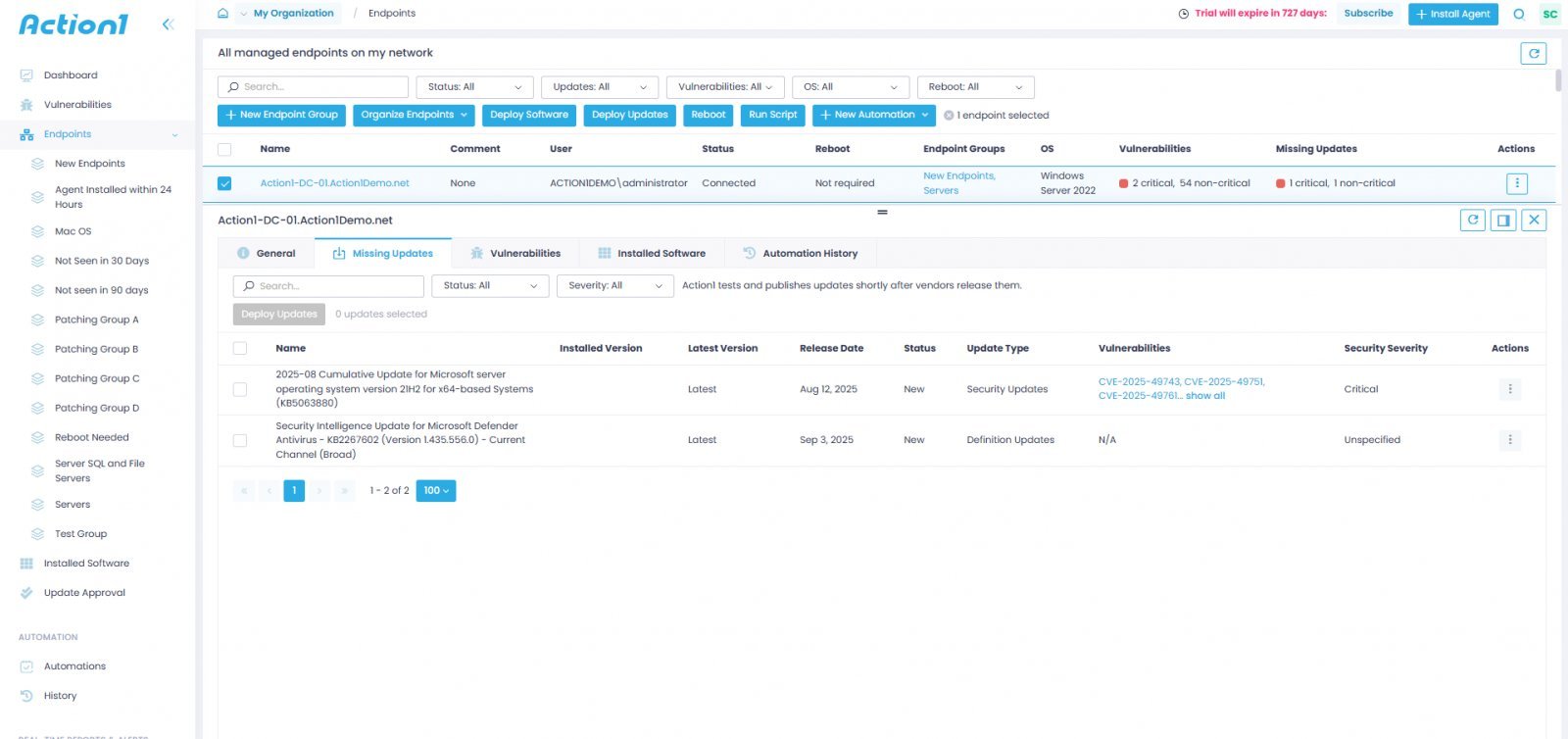 illustrates endpoint management across locations.
Policy-Driven Precision
WSUS requires manual update approvals and syncs, delaying critical deployments. Action1 enables automated policies like "deploy critical patches within 48 hours" with automatic retries. Its dashboard provides real-time visibility into failures—no more deciphering 0x80244022 errors.
Compliance at Scale
WSUS reporting is rudimentary, forcing manual data compilation for audits. Action1 generates real-time compliance reports for standards like HIPAA or PCI DSS, exportable in seconds. 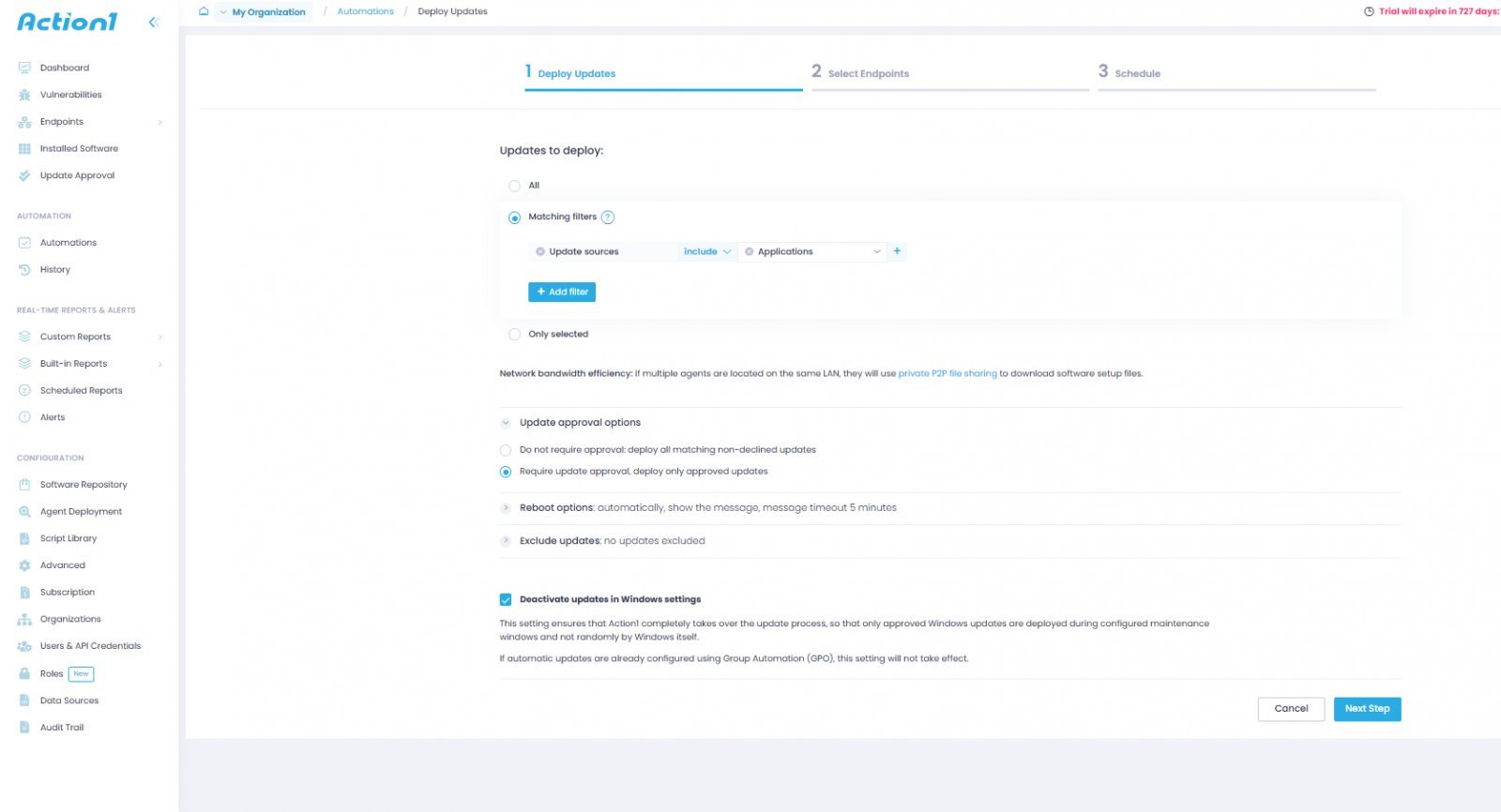 shows its deployment tracking interface.
The Total Cost Equation
The analysis emphasizes WSUS's hidden expenses: "Predictable SaaS pricing often costs less than 'free' when infrastructure and labor are counted." Action1 scales without added servers—whether managing 200 or 20,000 endpoints.
Why Cloud-Native Wins
The verdict is stark: WSUS is an on-prem relic; Action1 represents modern patch management. It adds features WSUS never had—peer-to-peer bandwidth optimization, cross-platform support (Windows/Mac/Linux), and instant vulnerability response. As one administrator summarized: "It's trading a wagon for a sports car."
Sponsored and written by Action1. Source: BleepingComputer
Comments
Please log in or register to join the discussion