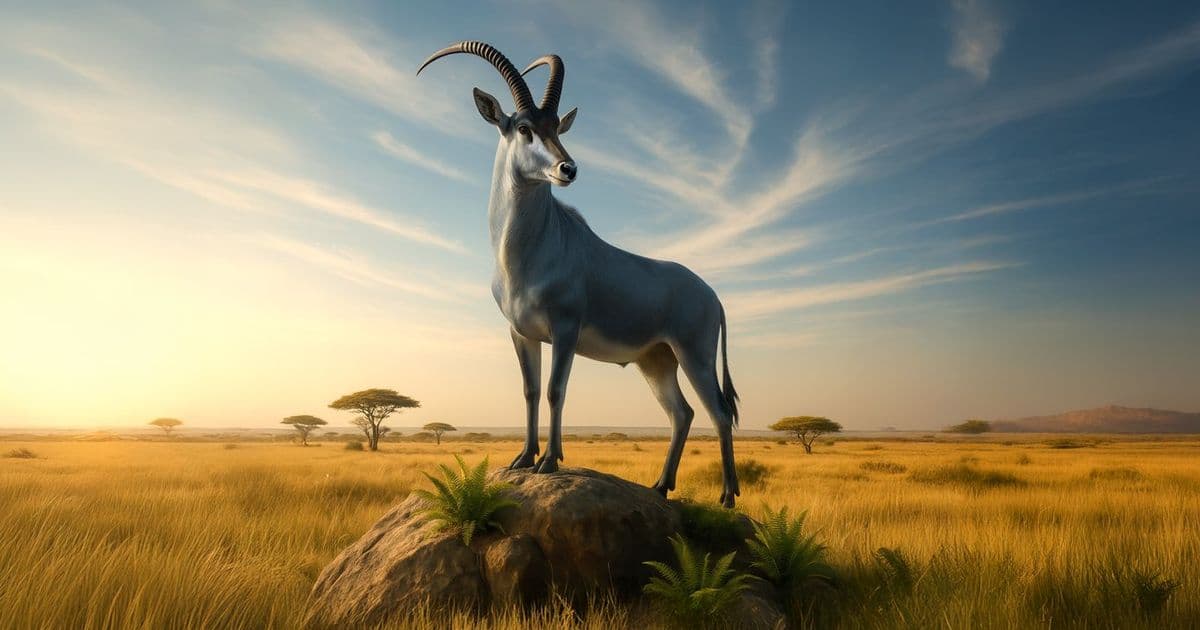
Colossal Biosciences, the Texas-based biotechnology company focused on de-extinction, has announced its next target species: the bluebuck, an African antelope that went extinct in the late 18th century. This strategic expansion comes as the company secures additional funding and advances its proprietary genetic technologies.
Colossal Biosciences, the Dallas-based biotechnology company pursuing de-extinction as a viable commercial enterprise, has revealed the bluebuck as its next target species for resurrection. The announcement represents a significant expansion of the company's portfolio beyond its initial focus on the woolly mammoth and thylacine.
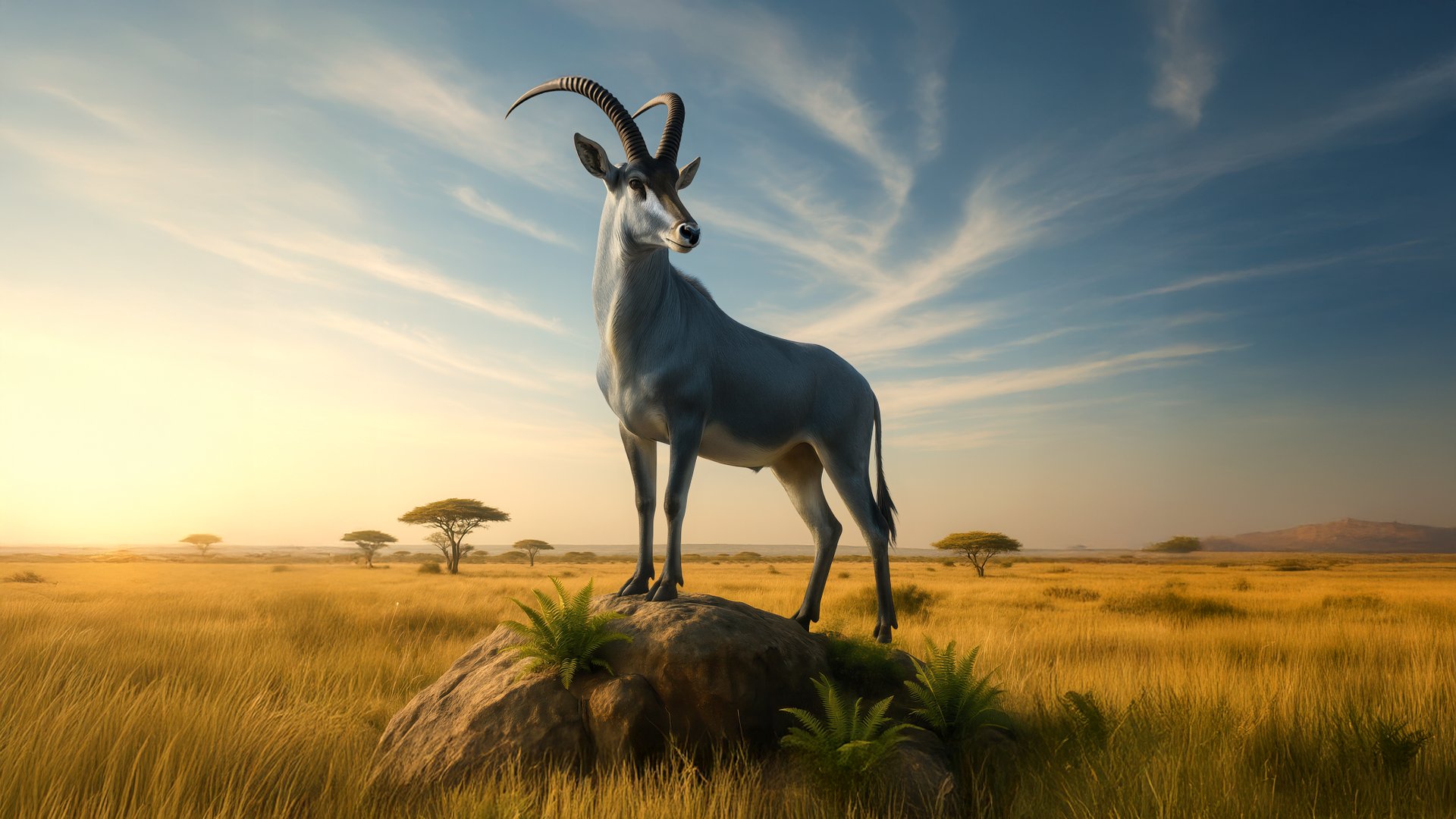
The bluebuck (Hippotragus leucophaeus), a distinctive blue-gray antelope native to South Africa, was hunted to extinction by 1799, making it the first large African mammal species to become extinct in historical times. Colossal's selection of this species underscores both the scientific feasibility of their approach and their strategic focus on species with clear ecological roles.
"De-extinction represents not just a scientific challenge, but a commercial opportunity with significant market potential," said Beth Shapiro, Colossal's lead paleogeneticist and a MacArthur Fellow. "The bluebuck offers a compelling case study because its genome is relatively well-preserved, and its ecological function in South African savannas can be modeled with reasonable accuracy."
Colossal's business model hinges on multiple revenue streams beyond the scientific achievement itself. The company has secured $225 million in funding to date, including a $150 Series B round led by Thomas Tull's US Innovative Fund and joined by Baidu co-founder Robin Li. This valuation places Colossal among the highest-funded biotechnology startups globally.
The bluebuck project will leverage Colossal's proprietary CRISPR-based genetic editing technologies and advanced stem cell techniques. The company's approach involves sequencing available bluebuck DNA from museum specimens, identifying the genetic differences from living relatives (likely the roan or sable antelope), and then editing the genome of a closely related species to approximate the bluebuck's genetic profile.
"The technical challenges are substantial but not insurmountable," said George Church, Colossal's co-founder and Harvard geneticist. "We've made significant progress in our mammoth project, developing methods to edit elephant cells with mammoth characteristics. The bluebuck project benefits from being more genetically proximate to living species."
Market analysts view Colossal's expansion as strategically astute. The company now operates at the intersection of biotechnology, conservation, and synthetic biology—a market projected to reach $387 billion by 2028 according to Grand View Research.
"Colossal has successfully positioned itself at the forefront of a new biotechnology sector," said Dr. Elena Vazquez, biotech analyst at BioEquity Insights. "Their de-extinction projects generate significant media attention, but the real value lies in the proprietary technologies they're developing. The ability to edit complex mammalian genomes has applications far beyond de-extinction, from conservation biology to human medicine."
The bluebuck announcement coincides with Colossal's expansion into new facilities in Dallas and partnerships with several African conservation organizations. The company has established a "De-Extinction Advisory Council" composed of conservation biologists, ethicists, and legal experts to guide species selection and implementation strategies.
Critics remain skeptical about the ecological implications and ethical considerations of de-extinction. "Bringing back a species without its ecosystem is like rebuilding a car without roads," said Dr. Jane Goodall, the primatologist and conservationist. "Colossal's approach must be part of broader conservation efforts, not a replacement for them."
Colossal counters that their work complements traditional conservation methods. "Our technologies can help preserve endangered species by developing genetic rescue tools," said Ben Lamm, Colossal's CEO. "The bluebuck project will advance our capabilities that can be applied to species like the northern white rhino, which has only two known individuals left."
From a business perspective, Colossal's strategy involves creating intellectual property around their genetic technologies while developing partnerships with zoological institutions and tourism companies. The company has already established memoranda of understanding with several wildlife parks to potentially display resurrected species.
The bluebuck project is expected to require 5-7 years of development before any potential release into carefully managed reserves. Colossal estimates the project will require approximately $75 million in additional funding, though the company has not specified whether this will come through new equity rounds or strategic partnerships.
As synthetic biology continues to advance, Colossal's de-extinction efforts represent both a scientific frontier and a commercial venture with unprecedented implications for biodiversity and biotechnology markets. The bluebuck, once a symbol of extinction, may become instead a symbol of a new technological era in conservation.
Comments
Please log in or register to join the discussion