
Red Hat proposes an 18-line patch allowing Linux kernel VT support to be toggled at boot time, aiming to smooth the transition to user-space consoles like KMSCON in Fedora 44, though the approach faces resistance from kernel maintainers.
Boot-Time VT Toggle Patch Sparks Debate in Linux Kernel Community
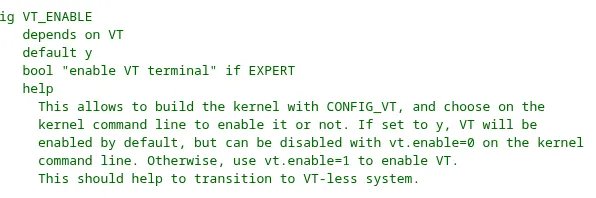
The Linux kernel community is buzzing today over an 18-line patch proposal that would fundamentally change how virtual terminal (VT) support is handled in the kernel. Jocelyn Falempe of Red Hat has suggested allowing kernel VT support to be enabled or disabled at boot time through command-line parameters, rather than being limited to the traditional build-time configuration option.
Current VT Implementation Limitations
Currently, Linux kernel VT support is controlled by the CONFIG_VT option, which must be set during kernel compilation. This binary choice means distributions must decide at build time whether to include VT support or not. For users who want to experiment with both kernel-based VT and user-space console solutions like KMSCON, this limitation presents a significant barrier.
The proposed patch would maintain CONFIG_VT in the kernel build but introduce runtime control through the vt.enable=1 or vt.enable=0 boot parameters. This approach would allow systems to have VT support available but not necessarily active by default.
The Transition Challenge
"It's all about the transition," explains Jocelyn Falempe in the kernel mailing list discussion. "Talks about VT-less systems started in 2012, but since then no major desktop Linux distribution has done it. I think one of the reasons is that if you switch off VT, of course some users will complain, as it has a lot of implications. Telling them to go rebuild their kernel is not good. Telling them to run grubby to change the kernel command line until they find alternatives for their use case is better. They can experiment and do the switch when they are ready."
This transition represents a significant architectural shift in how Linux handles console functionality. The kernel VT has been a fundamental component since the early days of Linux, providing essential system console capabilities independent of any graphical environment.
Performance Implications
For homelab builders and performance enthusiasts, the VT implementation has measurable impacts:
- Memory footprint: Kernel VT consumes approximately 1-2MB of kernel memory
- Boot time: VT initialization adds roughly 50-100ms to the boot process
- CPU cycles: VT handling consumes CPU cycles that could be repurposed for other tasks
Distribution Strategies
Red Hat's approach contrasts with suggestions from Greg Kroah-Hartman, Linux's second-in-command, who expressed skepticism about the runtime toggle proposal. Kroah-Hartman argued that distribution vendors could instead build separate kernels with and without VT support, or make a definitive choice one way or another based on their target users' needs.
"One suggestion being explored now is whether the VT support could be split-out as a Linux kernel module but that remains to be seen," notes the discussion thread.
Fedora 44 and KMSCON Plans
Regardless of the debate's outcome, Fedora 44 is moving forward with plans to replace the kernel-based console with KMSCON, a user-space implementation. This represents a significant shift in how console functionality is provided in a major Linux distribution.
KMSCON (Kernel Mode Setting Console) offers several potential advantages over traditional VT:
- Better integration with modern graphics drivers
- More consistent rendering across different hardware
- Potential for improved performance on systems with limited resources
- Easier customization and extension through user-space programming
For homelab builders running headless systems, the implications are particularly interesting. Removing VT support could free up valuable resources, especially on embedded systems or low-power devices where every kilobyte of RAM and millisecond of boot time matters.
Testing the Transition
For users who want to experiment with VT-less systems today, the process typically involves:
- Building a custom kernel without CONFIG_VT
- Ensuring KMSCON or another user-space console is properly installed
- Verifying all critical functionality works without kernel VT
- Testing emergency recovery procedures
The proposed patch would simplify this process significantly, allowing users to toggle between VT and VT-less configurations without kernel recompilation.
Community Perspectives
The patch has sparked a healthy technical debate with valid points on both sides:
Arguments for the runtime toggle:
- Easier transition path for distributions
- Allows users to experiment without kernel recompilation
- Maintains backward compatibility
- Reduces support burden during transition period
Arguments against the runtime toggle:
- Adds complexity to kernel initialization
- Increases code maintenance burden
- Doesn't ultimately solve the long-term goal of removing VT
- Distribution-specific solutions might be more appropriate
Looking Ahead
Regardless of which approach prevails, the discussion highlights an important aspect of Linux kernel development: balancing technical purity with practical transition strategies. The decade-long effort to move away from kernel VT demonstrates how deeply entrenched certain technologies become in open-source ecosystems.
For homelab builders and performance enthusiasts, this debate offers valuable insights into how architectural decisions impact real-world systems. The ability to toggle VT support at boot time could provide interesting testing capabilities for optimizing system performance in different scenarios.
As Fedora 44 approaches and KMSCON matures, we'll likely see more concrete data comparing the performance characteristics of traditional VT implementations versus user-space alternatives. This will help inform decisions not just for distributions, but for individual users building custom systems where every millisecond and megabyte counts.
The Linux kernel mailing list discussion continues, and we'll be watching closely to see how this proposal evolves. For those interested in following the technical details, the patch proposal and subsequent discussion threads provide valuable insights into the decision-making process for core kernel features.

Comments
Please log in or register to join the discussion