
An exploration of advanced JIT compilation techniques for implementing a dynamic Lisp environment using GraalVM's language implementation framework.
The quest for optimizing dynamic language interpreters has led to innovative approaches in just-in-time compilation. One particularly promising avenue involves using GraalVM's Truffle framework to build high-performance language implementations. This article examines the architectural decisions and optimization techniques employed in creating a Truffle-based Emacs Lisp interpreter that demonstrates significant performance improvements over traditional implementations.
Core Architecture Principles
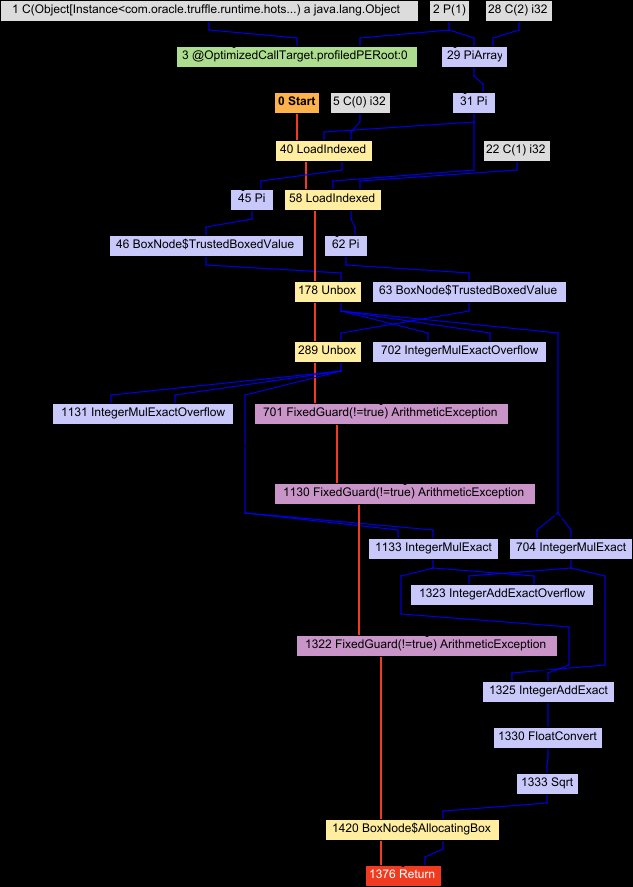
At its foundation, the interpreter leverages Truffle's partial evaluation capabilities to transform abstract syntax trees (ASTs) into optimized machine code. The key insight is that writing an interpreter with Truffle effectively creates a JIT compiler through aggressive inlining and specialization. For example, a simple addition operation (+ 1 2) gets compiled through multiple stages of optimization:
- Initial AST interpretation
- Partial evaluation that removes interpreter overhead
- Specialized machine code generation
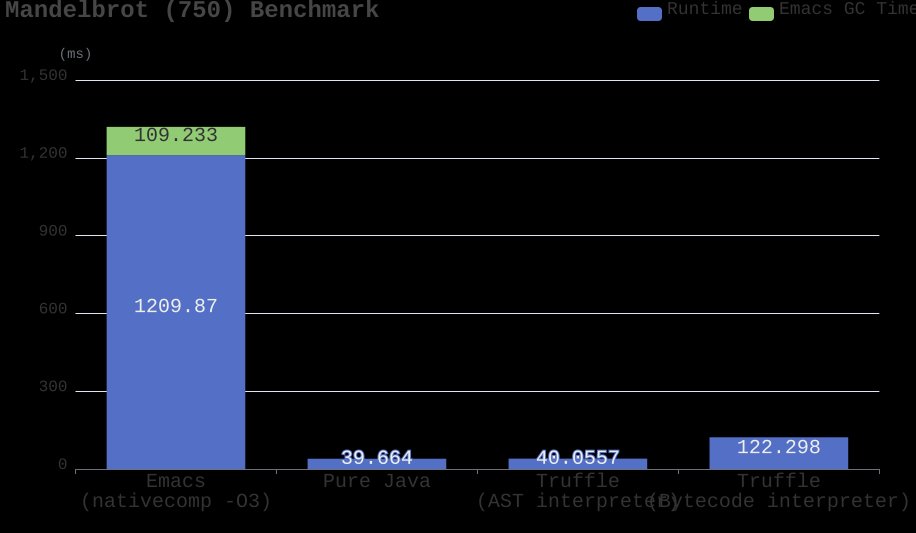
This process eliminates much of the traditional interpreter overhead, particularly for numerical operations where the Truffle implementation shows 10x speedups over native Emacs compilation.
Advanced Compilation Techniques
The interpreter employs several sophisticated compilation strategies:
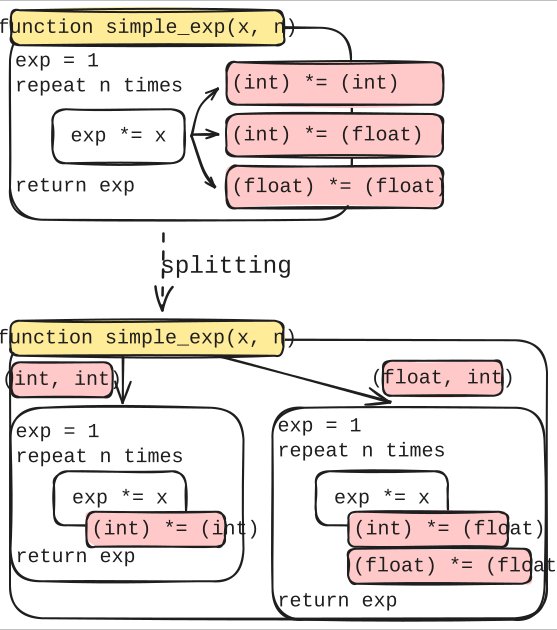
Speculative Optimization: Through Truffle's DSL annotations, the interpreter generates specialized code paths for common type combinations. This allows efficient handling of polymorphic operations while maintaining fallback paths for less common cases.
Runtime Macro Expansion: Emacs Lisp's unique macro system is handled through lazy AST creation and node replacement. This approach maintains semantic correctness while allowing for subsequent optimizations of expanded code.
Frame Virtualization: To handle Emacs Lisp's dynamic scoping rules, the interpreter uses a novel frame chaining technique that allows:
- Dynamic variable introduction through macros
- Efficient closure capture
- Zero-overhead access to outer scope variables
Performance Considerations
The implementation demonstrates several important performance characteristics:
- Type Specialization: Through Truffle's @Specialization mechanism, common operations like arithmetic avoid boxing overhead
- Function Inlining: Built-in functions can be inlined directly into call sites
- Assumption Tracking: Function redefinitions are handled efficiently through Truffle's assumption tracking system
Challenges and Solutions
Implementing a complete Emacs Lisp environment presented unique challenges:
- Dynamic Variable Capture: The solution involved materializing frames only when absolutely necessary for closure creation
- Macro Expansion: Required developing a hybrid AST that can dynamically switch between macro and function evaluation
- Special Form Handling: Needed to account for Emacs' unusual special form aliasing behavior
Future Directions
The current work opens several interesting avenues for further exploration:
- Integration with Emacs' bytecode system
- Native image compilation using GraalVM's native image capabilities
- Advanced debugger integration leveraging Truffle's instrumentation APIs
This implementation demonstrates that modern JIT compilation techniques can bring significant performance improvements to dynamic languages like Emacs Lisp, while maintaining compatibility with existing language semantics and idioms. The techniques described here also provide a blueprint for implementing other Lisp dialects or dynamic languages on the Truffle framework.
Comments
Please log in or register to join the discussion