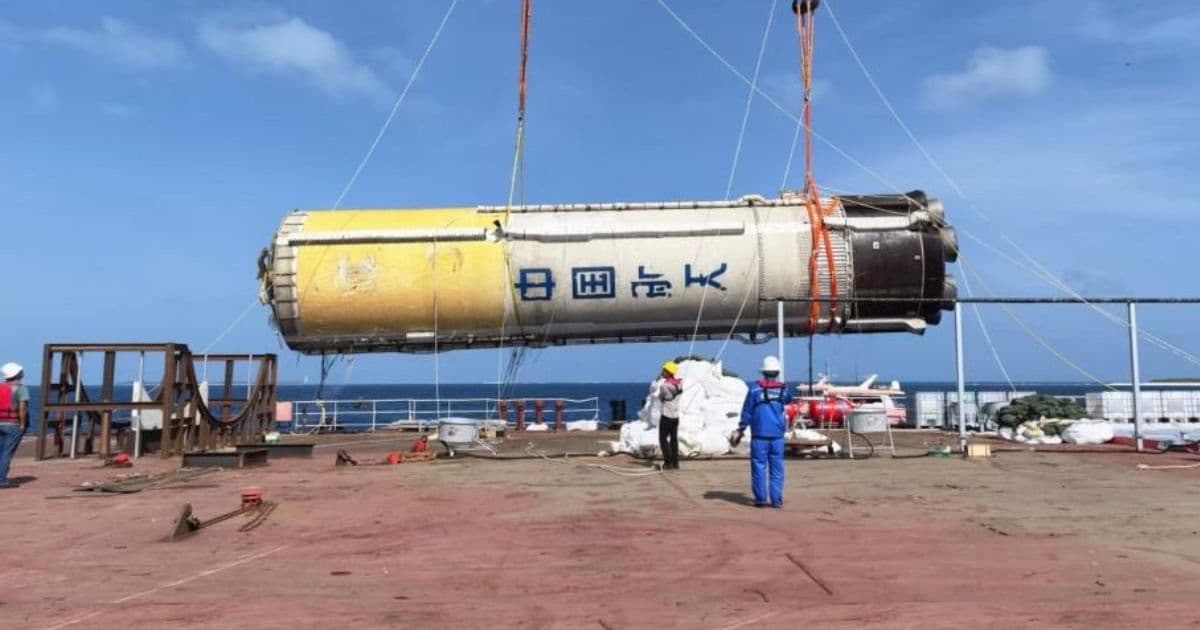
China has successfully recovered a Long March-10 rocket booster from the South China Sea, marking a significant milestone in reusable rocket technology.
China has achieved a historic milestone in space technology with the successful maritime recovery of a Long March-10 rocket booster from the South China Sea. This operation represents China's first-ever retrieval of a launch vehicle component from the ocean, placing the nation among an elite group of spacefaring countries with reusable rocket capabilities.
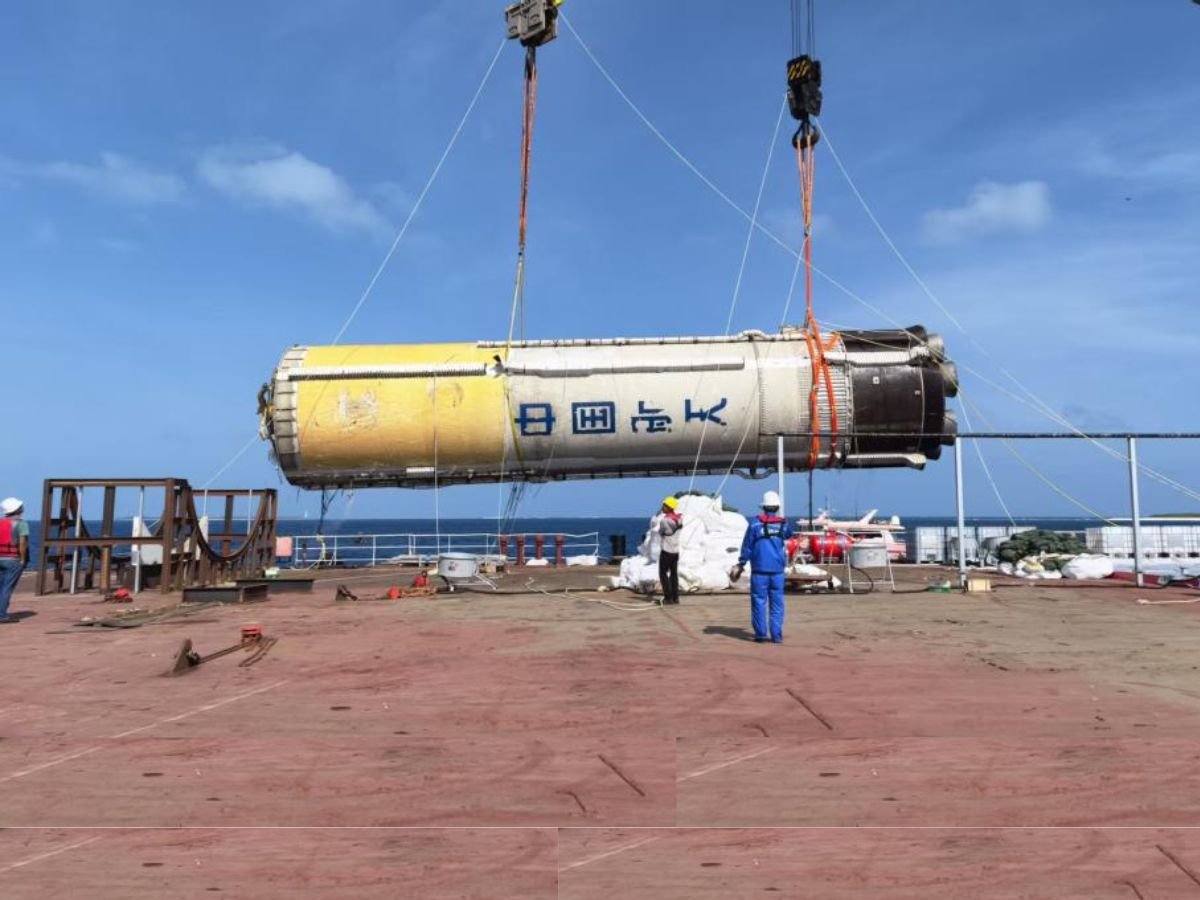
The recovery operation took place on Friday, immediately following a crucial low-altitude verification test conducted earlier in the week. During this test, the booster demonstrated its ability to navigate a controlled return to Earth using its engines and grid fins, splashing down safely in a designated maritime zone. This successful retrieval marks a significant advancement in China's space program, as reusable rocket technology has been operational only in the United States until now.
The maritime recovery test was part of a broader series of space missions conducted by China's space agency. Alongside the Long March-10 booster recovery, the agency also carried out a maximum dynamic pressure escape flight test for the Mengzhou crewed spacecraft system. These tests are critical components of China's ambitious space program, which aims to achieve a manned lunar mission by 2030.
The Long March-10 rocket program is strategically designed with two primary configurations to serve different mission requirements. The standard Long March-10 model stands as a heavy-lift rocket at 92.5 meters (303.5 feet) tall, with a liftoff weight of 2,189 metric tons. This configuration features a core booster and side boosters, engineered to transport payloads of at least 27 tons to an Earth-moon transfer trajectory.
For near-Earth operations, particularly those supporting the Tiangong space station, China has developed the derivative Long March-10A. This variant is significantly shorter at 67 meters (220 feet) and weighs 740 tons. The 10A model features the fully reusable first-stage booster that was recently recovered from the sea. Optimized for frequent spaceflight operations, this configuration offers a 14-ton carrying capacity, making it more suitable for regular missions to the Tiangong space station.
The successful recovery of the Long March-10 booster represents more than just a technical achievement; it demonstrates China's growing capabilities in space technology and its commitment to developing cost-effective, reusable launch systems. As the global space race intensifies, this milestone positions China as a serious competitor in the commercial space launch market, potentially offering more economical options for satellite deployment and space station resupply missions.
The maritime recovery method employed by China offers several advantages over traditional land-based recovery systems. Ocean recovery provides greater flexibility in landing zones and reduces the risk to populated areas during booster descent. This approach also allows for the recovery of larger boosters that might be impractical to land on land-based platforms.
Looking ahead, the technologies demonstrated in this recovery operation will be crucial for China's lunar ambitions. The ability to reuse rocket components significantly reduces the cost of space missions, making ambitious projects like lunar exploration more economically feasible. As China continues to develop its space capabilities, the successful implementation of reusable rocket technology could accelerate the timeline for achieving its goal of a manned lunar mission by 2030.
The Long March-10 program represents a significant investment in China's space infrastructure, with the dual-configuration approach allowing the country to efficiently serve both deep space exploration and near-Earth operations. As these technologies mature, they will likely play a central role in China's broader space strategy, which includes establishing a permanent presence on the moon and potentially developing commercial launch capabilities for international customers.
This achievement comes at a time when space agencies and private companies worldwide are racing to develop reusable rocket technology. China's success in maritime booster recovery demonstrates that the country is not only keeping pace with global space technology developments but also carving out its own path with innovative approaches to space exploration and commercialization.
Comments
Please log in or register to join the discussion