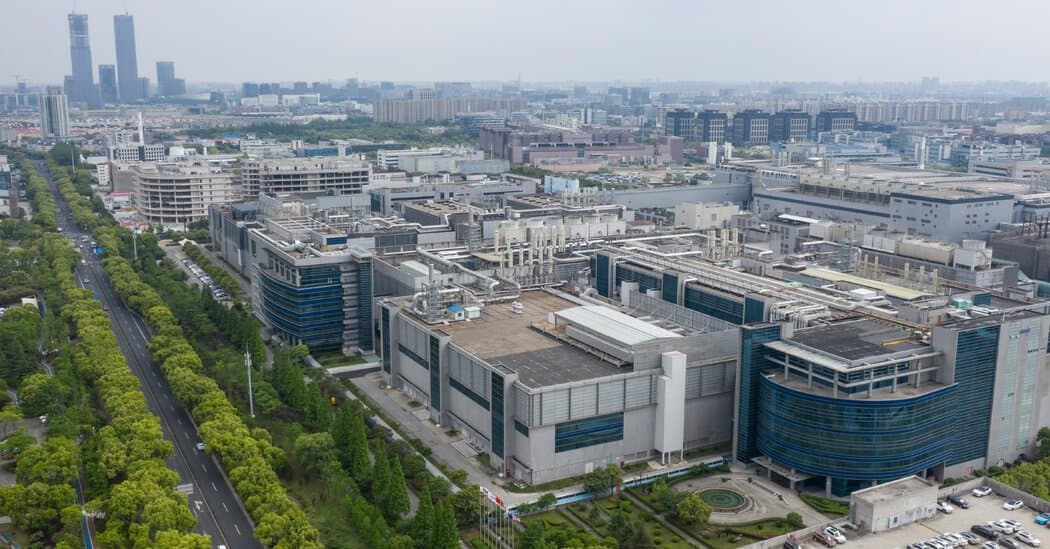
Despite massive investment, China produces just 2% of global AI chips and 70x less memory storage than foreign competitors, highlighting the challenges of semiconductor self-sufficiency.
China's ambitious push to become self-sufficient in semiconductor manufacturing has fallen significantly short of its goals, according to a new analysis that reveals the country's AI chip production remains a fraction of global output despite over a decade of massive investment.
Despite pouring more than $150 billion into the semiconductor sector over the past 10 years, Chinese firms are expected to produce only 2% of the world's AI chips in 2026, while generating 70 times less memory storage than their foreign competitors. This stark reality underscores the persistent technological gap that continues to challenge Beijing's strategic ambitions in the critical technology sector.
The investment has been part of China's broader push for technological self-reliance, particularly in the face of US export controls and sanctions that have restricted access to advanced chipmaking equipment and technologies. However, the analysis suggests that these efforts have not translated into meaningful market share or technological parity with established players like Taiwan's TSMC, South Korea's Samsung, and US-based Intel.
Industry experts point to several factors limiting China's progress. The country continues to face significant challenges in accessing the most advanced lithography machines needed for cutting-edge chip production, with Dutch company ASML remaining a critical chokepoint due to export restrictions. Additionally, China's domestic chip design capabilities, while improving, still lag behind global leaders in areas like AI-specific architectures and high-bandwidth memory solutions.
This technological gap has real-world implications for China's AI ambitions. While companies like ByteDance have launched upgraded AI models such as Doubao 2.0, their performance and capabilities remain constrained by the availability of advanced chips. The situation has forced Chinese tech giants to optimize their AI systems to run on less powerful hardware, potentially limiting their competitiveness in the global AI race.
The semiconductor challenge is particularly acute given the central role that advanced chips play in AI development. Industry analysts note that the computational demands of training large language models and other AI systems continue to grow exponentially, making access to cutting-edge chip technology increasingly critical for maintaining competitive advantage.
China's struggles in the semiconductor sector come amid broader tensions in the global tech industry, including ongoing disputes over intellectual property, data security, and market access. The country's limited success in building a competitive domestic chip industry represents a significant vulnerability in its technology ecosystem and raises questions about the effectiveness of its state-led industrial policy approach.
Some observers suggest that China may need to fundamentally rethink its strategy, potentially focusing on niche areas where it can achieve leadership rather than trying to compete across the entire semiconductor value chain. Others argue that continued investment and technological innovation could eventually narrow the gap, though the timeline for such progress remains uncertain.
The semiconductor shortfall also has implications for global supply chains and technology competition. As the US and its allies work to reduce dependence on Chinese technology, China's limited chip production capacity could constrain its ability to develop and deploy advanced technologies domestically, potentially affecting everything from consumer electronics to critical infrastructure.
Looking ahead, the semiconductor industry remains one of the most strategically important and technologically complex sectors in the global economy. China's experience suggests that achieving technological self-sufficiency in this field requires not just massive financial investment, but also sustained innovation, access to critical technologies, and the ability to attract and retain top talent – challenges that have proven difficult to overcome despite Beijing's best efforts.
As the global competition for semiconductor leadership intensifies, China's continued reliance on foreign chip technology represents both a strategic vulnerability and a potential opportunity for diplomatic engagement. The outcome of this technological competition will likely have far-reaching implications for the future of AI development, economic competitiveness, and global technological leadership.
Comments
Please log in or register to join the discussion