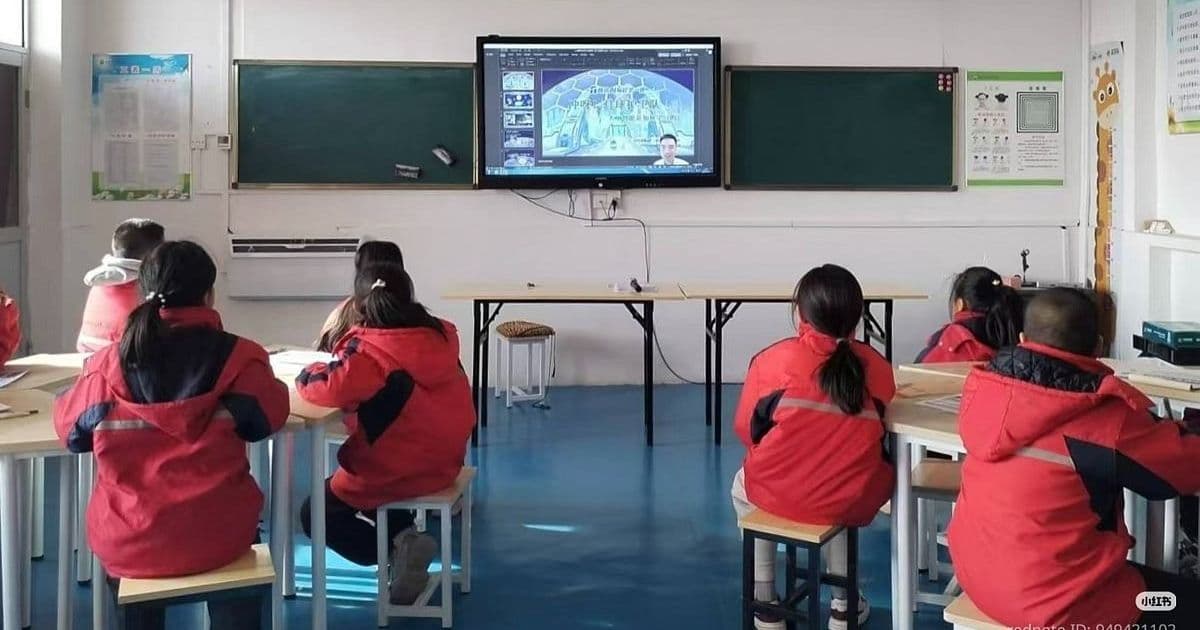
China is piloting AI integration in K-12 education to reduce teacher workloads, improve rural school access, and support students with disabilities, marking a significant shift in educational technology adoption.
China is embarking on an ambitious experiment to integrate artificial intelligence into its K-12 education system, with pilot programs already underway in schools across the country. The initiative aims to address three critical challenges: reducing teacher workloads, improving educational access in rural areas, and providing better support for students with disabilities.
The scope of China's AI education push is remarkable. In pilot schools, AI systems are being used to grade children's artwork, monitor facial expressions during lectures, and provide personalized learning experiences. This represents a fundamental shift in how education is delivered and managed in one of the world's largest education systems.
Reducing Teacher Workloads Through Automation
One of the primary motivations behind China's AI education initiative is the overwhelming workload faced by teachers. Administrative tasks, grading, and classroom management consume significant portions of educators' time that could otherwise be spent on instruction and student engagement.
AI systems are being deployed to handle routine tasks like grading assignments, particularly in subjects where objective assessment is possible. For instance, AI can evaluate multiple-choice tests, analyze written responses for specific criteria, and even assess creative work like artwork based on predetermined rubrics. This automation allows teachers to focus more on lesson planning, student interaction, and addressing individual learning needs.
The technology also assists with classroom management by monitoring student engagement through facial recognition and behavioral analysis. While this raises privacy concerns, proponents argue it helps identify students who may be struggling or disengaged, allowing for timely intervention.
Bridging the Rural Education Gap
China's rural schools have long struggled with attracting and retaining qualified teachers, limited resources, and outdated facilities. AI technology offers a potential solution by providing access to high-quality educational content and instruction regardless of geographic location.
Through AI-powered platforms, students in remote areas can access the same curriculum and teaching resources as their urban counterparts. Virtual tutors can provide personalized instruction, while AI systems can adapt content difficulty based on individual student performance. This democratization of education could help reduce the significant achievement gap between rural and urban students.
The technology also enables resource sharing between schools. A single expert teacher can reach multiple classrooms simultaneously through AI-mediated instruction, while local teachers focus on facilitation and support. This model maximizes the impact of limited human resources in underserved areas.
Supporting Students with Disabilities
AI technology is proving particularly valuable in supporting students with disabilities, offering personalized assistance that would be difficult to provide at scale with human resources alone. For students with visual impairments, AI-powered text-to-speech and image recognition systems can make educational content accessible. Students with hearing impairments can benefit from real-time captioning and sign language interpretation provided by AI systems.
For students with learning disabilities, AI can provide customized learning paths that adapt to individual needs and pace. The technology can identify patterns in student errors and adjust instruction accordingly, something that would be challenging for teachers managing large classrooms with diverse needs.
The Broader Context of China's AI Strategy
China's push into AI education is part of a larger national strategy to become a global leader in artificial intelligence. The country has invested heavily in AI research and development, with education seen as a key application area that can demonstrate both technological capability and social benefit.
The initiative also reflects China's demographic challenges, including an aging population and declining birth rates. By making education more efficient and accessible, the country hopes to maintain its competitive advantage in human capital development despite these demographic headwinds.
Challenges and Concerns
Despite the potential benefits, China's AI education initiative faces several challenges. Privacy concerns are paramount, particularly regarding the collection and use of student data for AI training and analysis. The use of facial recognition and behavioral monitoring in classrooms raises questions about surveillance and the impact on student autonomy and creativity.
There are also concerns about the quality and bias of AI systems. If the algorithms are trained on limited or biased data, they may perpetuate or exacerbate existing educational inequalities. The technology's effectiveness in complex subjects that require nuanced understanding and critical thinking remains to be proven.
Teacher resistance is another potential obstacle. Many educators worry about being replaced by technology or losing control over their classrooms. Successful implementation will require careful change management and demonstration of how AI augments rather than replaces human teachers.
Global Implications
China's AI education experiment has significant implications for the global education technology market. If successful, it could serve as a model for other countries facing similar challenges with teacher shortages, rural education access, and special education needs.
The initiative also positions Chinese companies as leaders in educational AI technology, potentially giving them a competitive advantage in the global market. As other countries observe China's experience, we may see increased adoption of similar technologies worldwide.
However, the Chinese model may not be directly transferable to other contexts. Different educational philosophies, privacy regulations, and cultural attitudes toward technology in education may require significant adaptation of the approach.
The Future of AI in Education
China's AI education initiative represents a bold experiment in using technology to address fundamental challenges in education. While the long-term outcomes remain uncertain, the scale and ambition of the effort make it a significant development to watch.
The success or failure of these pilot programs will likely influence educational policy and technology adoption globally. As AI continues to advance, the question is not whether technology will play a larger role in education, but how to implement it in ways that enhance rather than diminish the human elements of teaching and learning.
For now, China's classrooms are becoming testbeds for the future of education, with implications that extend far beyond its borders. The world will be watching to see whether AI can truly transform education in ways that benefit both teachers and students, or whether the technology will face the same limitations and challenges that have plagued previous educational innovations.
Comments
Please log in or register to join the discussion