China's CXMT is flooding the legacy DRAM market with DDR4 chips priced at 50% discounts, leveraging state subsidies to gain share while Samsung and SK hynix focus on next-generation HBM4 development.
China's semiconductor manufacturers are executing a strategic pincer movement in the memory market, with CXMT aggressively discounting legacy DDR4 DRAM chips while simultaneously advancing high-bandwidth memory capabilities. This dual-track approach presents a complex challenge for Korean leaders Samsung Electronics and SK hynix as they prioritize development of sixth-generation HBM4 technology.
Industry data reveals CXMT – China's top DRAM producer – is offering DDR4 memory at approximately half the prevailing market price. This discount comes amid a remarkable price surge where PC DRAM DDR4 8Gb chips reached $11.50 in January, representing an 8x year-over-year increase and the highest level since market tracking began in 2016. The dramatic price inflation creates fertile ground for CXMT's aggressive pricing strategy.
Major hardware manufacturers appear responsive to these discounts. US firms HP and Dell are reportedly conducting quality tests on CXMT's DRAM, while Taiwan's Asus and Acer have initiated talks with Chinese partners. "Chinese firms are waging a volume-based strategy starting with general-purpose memory, backed by state subsidies and domestic demand from AI servers and locally developed GPUs," an industry source noted anonymously.
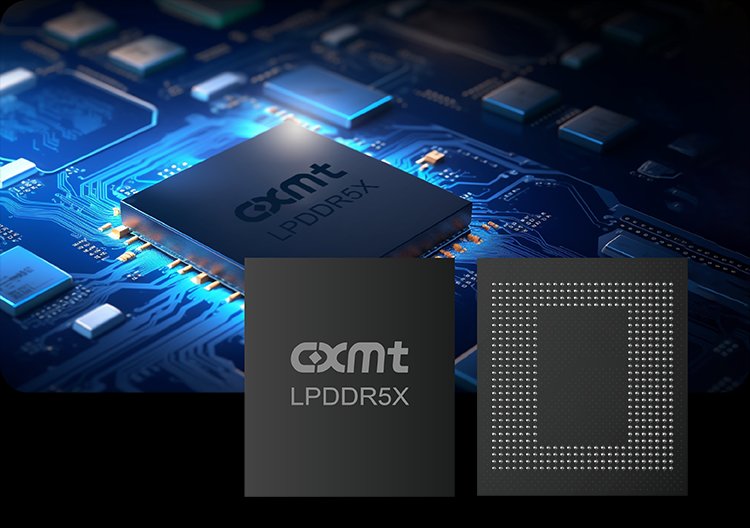 China’s top DRAM manufacturer CXMT's LPDDR5 DRAM (CXMT's website)
The timing creates significant pressure for Korean chipmakers. More than half of Samsung and SK hynix's total DRAM production capacity remains allocated to general-purpose products like DDR4. While both companies maintain technological leadership in high-bandwidth memory (HBM) for AI applications, their substantial exposure to the legacy market means price erosion could impact profitability even if they succeed in the HBM4 race.
CXMT isn't stopping at discount strategies. The company is converting about 20% of its total DRAM output capacity – equivalent to 60,000 wafers monthly – at its Shanghai facility to produce fourth-generation HBM3 chips. Equipment installation is scheduled for completion in late 2024 with mass production slated for 2025. Though HBM3 and HBM3E trail the forthcoming HBM4 in performance, they remain crucial components for current AI data center operations.
The Chinese advance extends beyond DRAM. Yangtze Memory Technologies Corp (YMTC) captured 10% of the global NAND flash market in 2023 through competitively priced mobile storage products. Construction is underway on YMTC's third fabrication plant in Wuhan, with half its capacity earmarked for DRAM production starting next year. Initial focus will be legacy DRAM, with potential HBM production through partnerships with local assembly firms.
This strategic pattern – establishing volume in legacy products before climbing the value chain – presents a long-term challenge. "At this stage, Chinese manufacturers are relying on aggressive pricing to build scale," the anonymous source explained. "But over time, the technology gap may narrow more quickly than expected. Even if Korean firms maintain HBM leadership, neglecting the mainstream segment could undermine profitability long-term."
The developments highlight how geopolitical industrial policies intersect with market dynamics. China's semiconductor progress, fueled by subsidies and domestic AI demand, is forcing global memory leaders to balance cutting-edge innovation against defending established revenue streams. As the HBM4 race accelerates, the parallel battle for legacy memory markets may prove equally decisive for industry structure.
Comments
Please log in or register to join the discussion