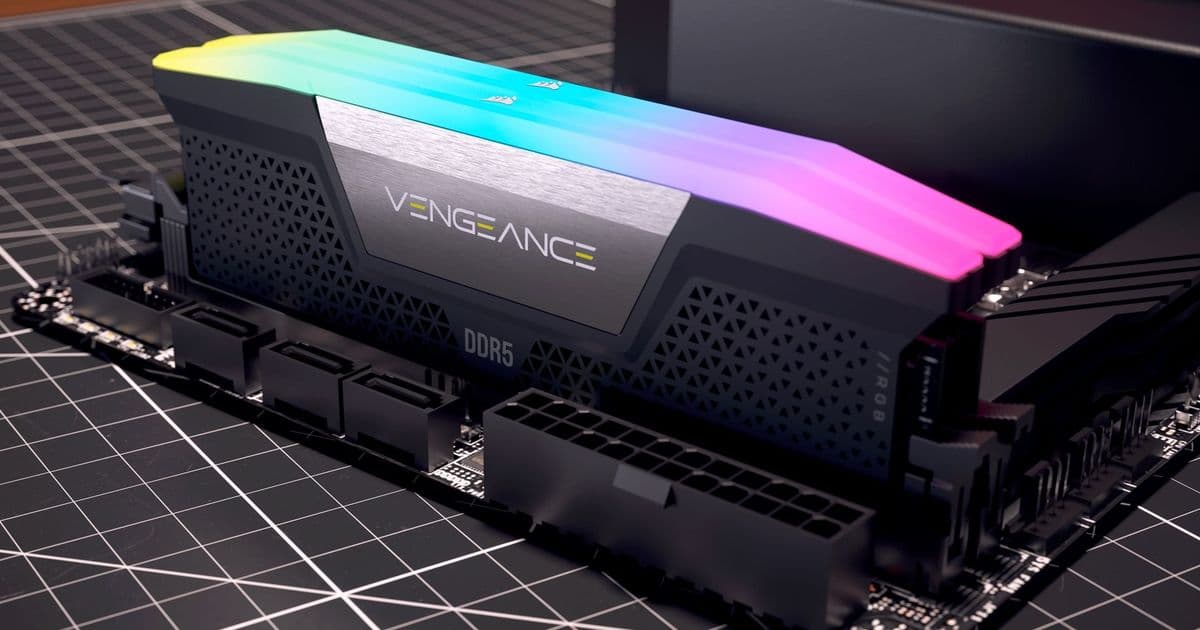
CXMT’s DDR5 dies have entered Corsair’s Vengeance line, offering 6 000 MT/s CL‑36 modules for the Chinese market. The move highlights how China’s domestic DRAM capacity is being used to alleviate global shortages, and it may reshape pricing and supply dynamics for consumer memory.
CXMT’s First Mainstream Consumer DDR5 Kit
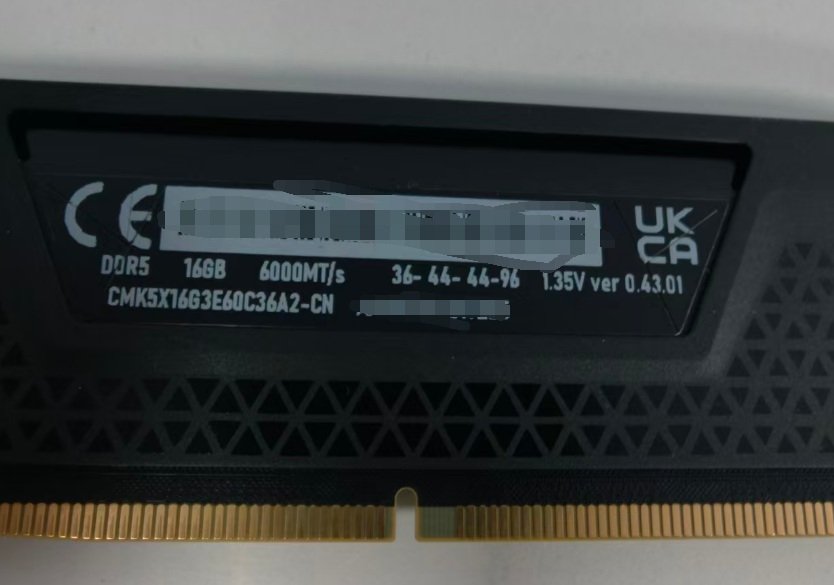
In early May 2026 a Corsair Vengeance DDR5‑6000 MT/s 16 GB stick (part number CMK5X16G3E60C36A2‑CN) surfaced on the Chinese market, and CPU‑Z screenshots confirmed that the DRAM chips are sourced from ChangXing Memory Technologies (CXMT). This is the first time a CXMT‑produced die has appeared in a high‑visibility consumer product from a brand that traditionally relies on Samsung, Micron or SK Hynix.
Technical specs and production context
| Specification | Value |
|---|---|
| Module type | DDR5 SDRAM |
| Capacity | 16 GB (single‑rank) |
| Speed | 6 000 MT/s (XMP 3.0 / AMD EXPO) |
| Timings | CL‑36‑40‑40‑96 |
| Voltage | 1.35 V |
| Die density | 16 Gb per chip (CXMT) |
| Certification | UKCA, CE |
CXMT’s public roadmap lists a maximum speed of 8 000 MT/s and densities up to 24 Gb per die, so the 6 000 MT/s part is well within its current capability envelope. The module is certified for both Intel XMP and AMD EXPO, meaning it can be auto‑configured on the majority of modern platforms without manual timing tweaks.
Why CXMT can fill the gap now
- Production headroom – Unlike the three legacy fabs, CXMT does not have large, long‑term contracts with hyperscale data‑center customers. Its 300 mm line, built on a 30 nm class process, runs at lower wafer yields but has ample capacity that is currently idle.
- Domestic policy support – Chinese subsidies for semiconductor fab expansion have kept CXMT’s fab utilization above 70 % despite global fab oversupply, giving it a stable supply chain for raw silicon and packaging.
- Cost structure – CXMT’s labor and material costs are roughly 15 % lower than those of its Korean and US rivals, which translates into a potential module price advantage of 10‑12 % at the same performance tier.
Market implications
1. Immediate relief for Chinese gamers and PC builders
The Chinese consumer market has been hit hard by DRAM shortages since 2023. Samsung and Micron have prioritized 32 GB‑plus modules for data‑center servers, leaving the 8‑16 GB segment thin. A Corsair‑branded kit that uses CXMT dies can be priced competitively, narrowing the price gap between domestic and imported kits. Early price monitoring on Chinese e‑commerce sites shows the CXMT‑based Vengeance kit listed at ¥1 199 (~US$170), compared with the Samsung‑based equivalent at ¥1 399.
2. Potential ripple effect on global pricing
If CXMT can scale beyond the China‑only SKU and secure supply for other OEMs, the added capacity could push global DDR5‑6000 pricing down by 5‑8 %. The effect would be most pronounced in the 8‑16 GB segment, where price elasticity is highest. However, the impact will be limited until CXMT can certify its parts for the broader CE‑marked market and meet the stricter reliability tests required by Western OEMs.
3. Reliability and overclocking outlook
Corsair’s involvement provides a quality‑control buffer: the company performs its own burn‑in, error‑rate testing, and validation for XMP/EXPO profiles. Early user reports from the @wxnod Twitter thread indicate stable operation at the rated 1.35 V with no ECC errors in 24‑hour stress runs. A separate KingBank‑branded CXMT kit was over‑clocked to 8 000 MT/s with timings 44‑56‑56‑128 at 1.5 V, suggesting the silicon has headroom, though such settings are outside typical consumer warranty limits.
4. Strategic shift for Corsair and other brands
Corsor’s decision to source from CXMT reflects a broader trend: OEMs are diversifying away from the “big three” to hedge against supply shocks. If the partnership proves successful, we may see similar collaborations with other Chinese memory makers such as Nanya or YMTC, especially for entry‑level kits where price sensitivity outweighs absolute performance.
Outlook for CXMT and the consumer DRAM market
- 2026‑2027: Expect CXMT to release a DDR5‑8 000 MT/s 32 GB kit for the Chinese market, leveraging its 24 Gb die density.
- 2028: With the anticipated rollout of DDR5‑7200‑plus modules from Samsung and Micron, CXMT will need to accelerate its process node improvements (targeting 20 nm class) to stay competitive on speed.
- Long term: If CXMT can obtain JEDEC qualification for its dies and pass the stringent JEDEC JESD79‑5 reliability tests, it could become a viable supplier for global OEMs, adding a fourth pillar to the consumer DRAM supply chain.
In summary, the appearance of CXMT‑based DRAM in a Corsair Vengeance kit marks a tangible step toward a more diversified memory market. While the immediate benefit is a modest price reduction for Chinese consumers, the longer‑term implication is a potential reshaping of the supply‑side dynamics that have driven DRAM scarcity for the past three years.
For further technical details on CXMT’s process roadmap, see the company’s official whitepaper.
Comments
Please log in or register to join the discussion