
Citizen Europe has launched three new references in its light-powered chronograph collection, all featuring 43mm stainless steel cases, tachymeter bezels, and the Caliber H500 Eco-Drive movement. The new models offer different color configurations and strap options, but trade sapphire crystal for mineral glass at this price point.
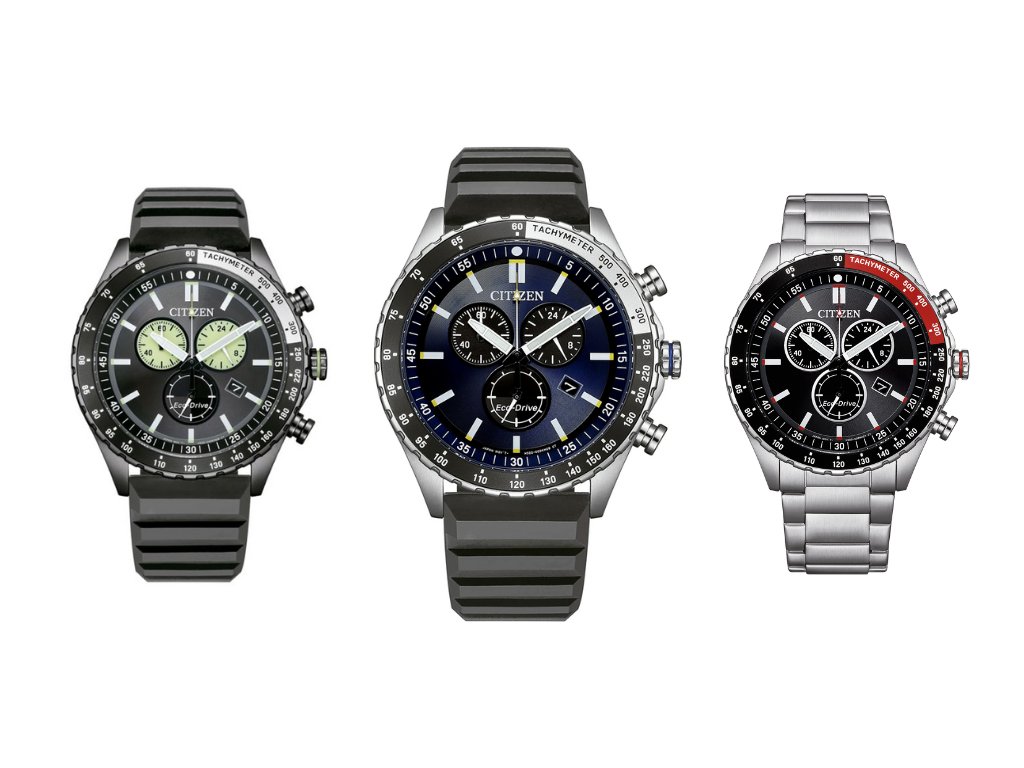
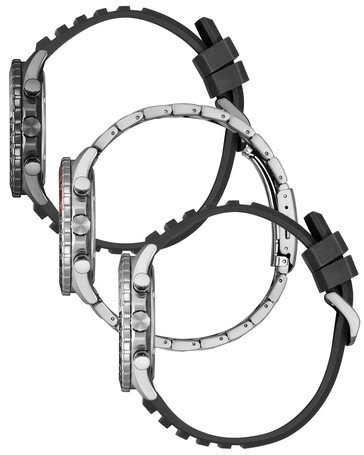
Citizen Europe has officially expanded its collection of light-powered chronographs with three new references: the AT2565-05E, AT2566-88E, and AT2569-04L. These additions to the brand's Eco-Drive lineup maintain the 43mm stainless steel case diameter that has become a standard for modern chronographs, but with a relatively slim 10.7mm profile height that offers better wearability than many contemporary automatic chronographs.
The H500 Eco-Drive Movement: Solar Power Meets Chronograph Function
At the heart of these releases is the Caliber H500 Eco-Drive movement, Citizen's proprietary solar-quartz engine. Unlike traditional battery-powered quartz movements that require periodic battery replacements, the H500 converts any light source—natural or artificial—into electrical energy through its integrated photovoltaic cell. This system provides a substantial 150-day power reserve on a full charge, which significantly exceeds the typical 2-3 year lifespan of standard quartz watch batteries.
The movement's accuracy is rated at ±15 seconds per month, which is standard for solar quartz but notably more precise than many mechanical chronographs in this price range. The H500 supports a 1-second chronograph that measures up to 60 minutes, accompanied by a 24-hour sub-dial positioned at 2 o'clock and a date window at 4 o'clock. One practical feature is the insufficient charging warning system: when the battery depletes, the second hand shifts to two-second intervals rather than stopping completely, giving the wearer a clear visual cue that the watch needs exposure to light.
Design Variations and Case Specifications
All three models share the same fundamental architecture—a 43mm stainless steel case with a fixed external bezel equipped with a tachymeter scale for speed measurement. The tachymeter allows drivers to calculate average speed over a known distance, a classic chronograph complication that remains relevant for motorsport enthusiasts and practical users alike. The dial features a unique concentric circle texture, adding visual depth without compromising legibility.
The three references differ primarily in their color schemes and strap configurations:
AT2565-05E: This model features a black-plased stainless steel case with green-toned sub-dials, creating a stealthy, tactical aesthetic. It comes on a textured black rubber strap, making it the most sport-oriented option of the trio.
AT2566-88E: The most traditional-looking variant, this reference uses a standard silver-tone finish with a bi-color red and black bezel insert. It's paired with a multi-link stainless steel bracelet, bringing the total weight to 153 grams—noticeably heavier than the rubber-strapped models but offering a more formal appearance suitable for office wear.
AT2569-04L: This model features a blue dial with a black and silver bezel insert, also utilizing a black rubber strap. The blue dial provides a more versatile color that works well with both casual and business-casual attire.
Water Resistance and Crystal Trade-offs
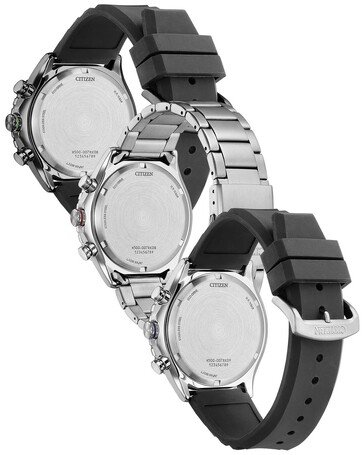
All three models offer 10-bar water resistance (approximately 100 meters), making them suitable for swimming, snorkeling, and other moderate aquatic activities. However, the choice of mineral crystal over sapphire represents a significant mechanical trade-off in this price bracket.
Mineral crystal, while more impact-resistant than acrylic, is far more prone to scratching than sapphire crystal. For consumers who prioritize scratch prevention and long-term clarity, this is a notable compromise. Sapphire crystal, which is used in most watches above the $500 price point, offers superior scratch resistance but is more brittle and can shatter under severe impact. The decision to use mineral crystal likely reflects Citizen's cost management strategy, keeping these models accessible while maintaining the solar-powered functionality.
Practical Buyer Considerations
For potential buyers, the choice between these three models comes down to aesthetic preference and intended use case. The black-plated AT2565-05E offers the most casual, sporty look and is likely the best choice for active lifestyles. The stainless steel bracelet on the AT2566-88E provides a more formal appearance but adds weight and may be less comfortable during physical activity. The blue-dialed AT2569-04L strikes a balance between casual and formal, making it the most versatile option.
The Eco-Drive technology eliminates the need for battery changes, which is a significant long-term convenience. However, owners should ensure the watch receives adequate light exposure—approximately 5 hours of bright light or 8 hours of moderate indoor light every few months—to maintain optimal performance. The 150-day power reserve provides a generous buffer, but the watch will eventually enter power-save mode if left in darkness for extended periods.
Market Positioning and Competitors
These new Citizen models enter a competitive market for solar-powered chronographs. Their primary advantage is the combination of solar charging with a relatively slim profile—many solar chronographs are thicker due to the photovoltaic cell integration. The 10.7mm thickness makes these watches more wearable under shirt cuffs than many alternatives.
In terms of direct competition, these models compete with other solar chronographs from brands like Seiko (with their Solar Chronograph line) and Casio's Edifice series. The Citizen models distinguish themselves with their specific design language and the fixed tachymeter bezel, which some competitors lack. However, the mineral crystal is a notable disadvantage compared to some competitors that offer sapphire at similar price points.
Long-Term Ownership Considerations
For long-term ownership, the solar charging system means these watches should theoretically last decades without needing battery replacements, though the capacitor (which stores the solar energy) may eventually degrade after 10-15 years of use. The mineral crystal will likely show scratches over time, but these can be polished out with proper care. The stainless steel cases should maintain their appearance well, though the black-plated model may show wear on the plating after several years of heavy use.
The 10-bar water resistance is adequate for most water activities but not suitable for diving. Owners should avoid pressing the chronograph pushers underwater, as this can compromise the gaskets and reduce water resistance over time.
Conclusion
Citizen's new chronographs offer a compelling package for buyers seeking a solar-powered, solar-charged timepiece with classic chronograph functionality. The H500 movement provides reliable, low-maintenance timekeeping, while the 43mm case size offers modern proportions without being overly large. The three color variations provide options for different style preferences, though the mineral crystal represents a compromise that buyers should consider carefully.
These models are available through Citizen's European distribution network and select retailers. For those interested in the solar chronograph concept but wanting sapphire crystal, exploring other models in Citizen's lineup or considering competitors may be worthwhile. However, for buyers prioritizing solar charging, classic chronograph aesthetics, and moderate pricing, these three new references represent solid additions to Citizen's catalog.
Image sources: @plus9time on Instagram, Citizen EU
Comments
Please log in or register to join the discussion