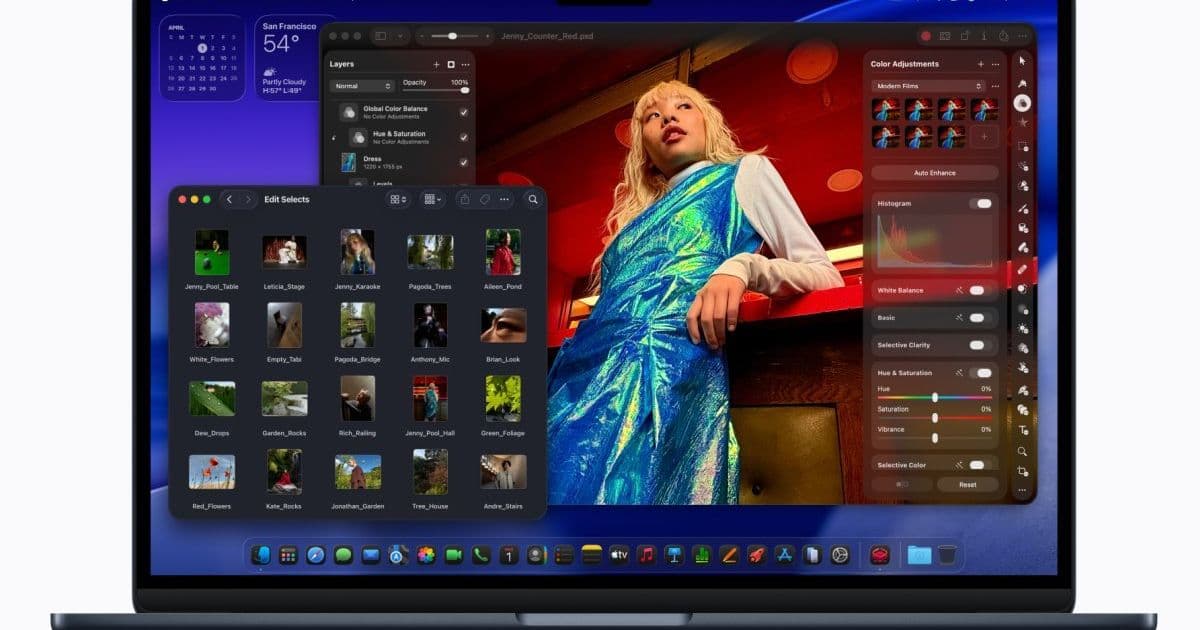
Apple's latest MacBook Air receives significant upgrades with the M5 processor, increased storage, and WiFi 7 support, though at a higher starting price. This update impacts developers who rely on MacBooks for iOS and cross-platform development.
Apple has refreshed its MacBook Air lineup with substantial upgrades, including the new Apple M5 processor, minimum 512GB storage, and WiFi 7 support. The new models, available for pre-order starting March 4 with wider availability beginning March 11, start at $1,099—$100 more than the previous generation.
For developers who use MacBooks for iOS development, cross-platform work, or general programming tasks, these upgrades bring meaningful performance improvements and increased storage capacity. The move to the M5 processor should provide a noticeable performance boost over the M3 chips in previous models, while the doubled minimum storage from 256GB to 512GB addresses a long-standing concern about insufficient storage space for development environments, virtual machines, and large project files.
The inclusion of WiFi 7 support is particularly relevant for developers who frequently transfer large code repositories, dependencies, or build artifacts. With theoretical speeds up to 46 Gbps, WiFi 7 offers significant improvements over previous wireless standards, potentially reducing wait times during development workflows.
Apple has also increased the minimum RAM to 16GB across the lineup, which is welcome news for developers running multiple applications, emulators, or development environments simultaneously. The base configuration includes a 13.6-inch model with an M5 processor featuring a 10-core CPU and 8-core graphics, with options to upgrade to a 10-core GPU and up to 32GB of RAM and 4TB of storage.
For developers who prefer larger screens, the 15-inch model starts at $1,299 and comes standard with 10-core graphics. Both models maintain the ultra-portable design that has made the MacBook Air popular among mobile developers, with the 13.6-inch model weighing just 2.7 pounds (1.23 kg) and the 15-inch model at 3.3 pounds (1.51 kg).
The timing of this announcement is interesting, as rumors suggest Apple may introduce a lower-cost MacBook in the near future. This could potentially create a more diverse MacBook lineup, with a budget option for entry-level developers and the premium Air for those needing more power.
For iOS developers specifically, the M5's performance improvements could benefit those working with increasingly complex applications, AR/VR development, or machine learning tasks. The increased storage and RAM will help with larger Xcode projects and testing multiple iOS versions simultaneously through virtualization or physical devices.
Developers considering upgrading should weigh the benefits of the M5 processor against the $100 price increase. For those doing intensive development work, the performance and storage upgrades may justify the cost. For lighter development tasks or those with existing MacBooks with M3 chips, the upgrade might be less compelling.
The new MacBook Air models maintain developer-friendly features including MagSafe charging, Thunderbolt 4 ports for external displays and peripherals, and a 12MP Center Stage webcam for virtual meetings and code reviews. The inclusion of a 3.5mm audio jack is also appreciated for developers who prefer wired headphones or headsets during long coding sessions.
As Apple continues to refine its silicon, the M5 in the MacBook Air represents a balance between performance and power efficiency. For developers, this means longer battery life during development sessions away from power outlets, which can be particularly valuable for those who work remotely or attend conferences.
The MacBook Air has long been a popular choice among developers for its portability, battery life, and performance. With these upgrades, Apple reinforces its position in the developer laptop market, though the rising starting price may make some developers consider alternatives or wait for potential lower-cost options.
Comments
Please log in or register to join the discussion