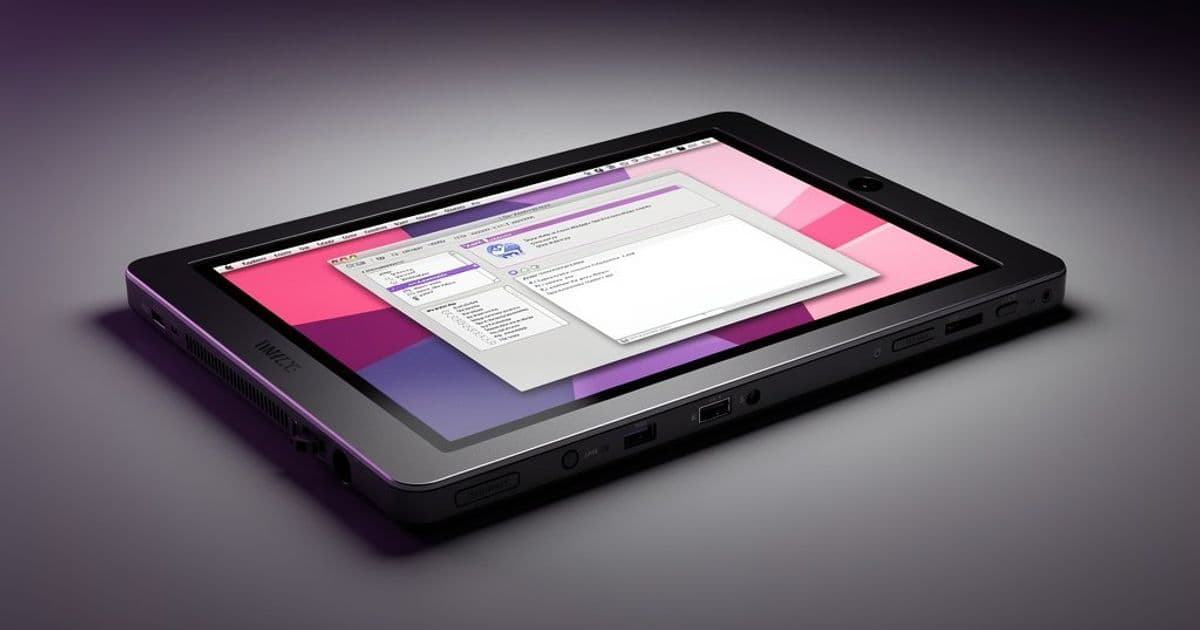
A BasiliskII Macintosh 68k emulator port enables System 7 through OS 8.1 to run on M5Stack Tab5 hardware, showcasing retro computing possibilities on modern microcontroller platforms.
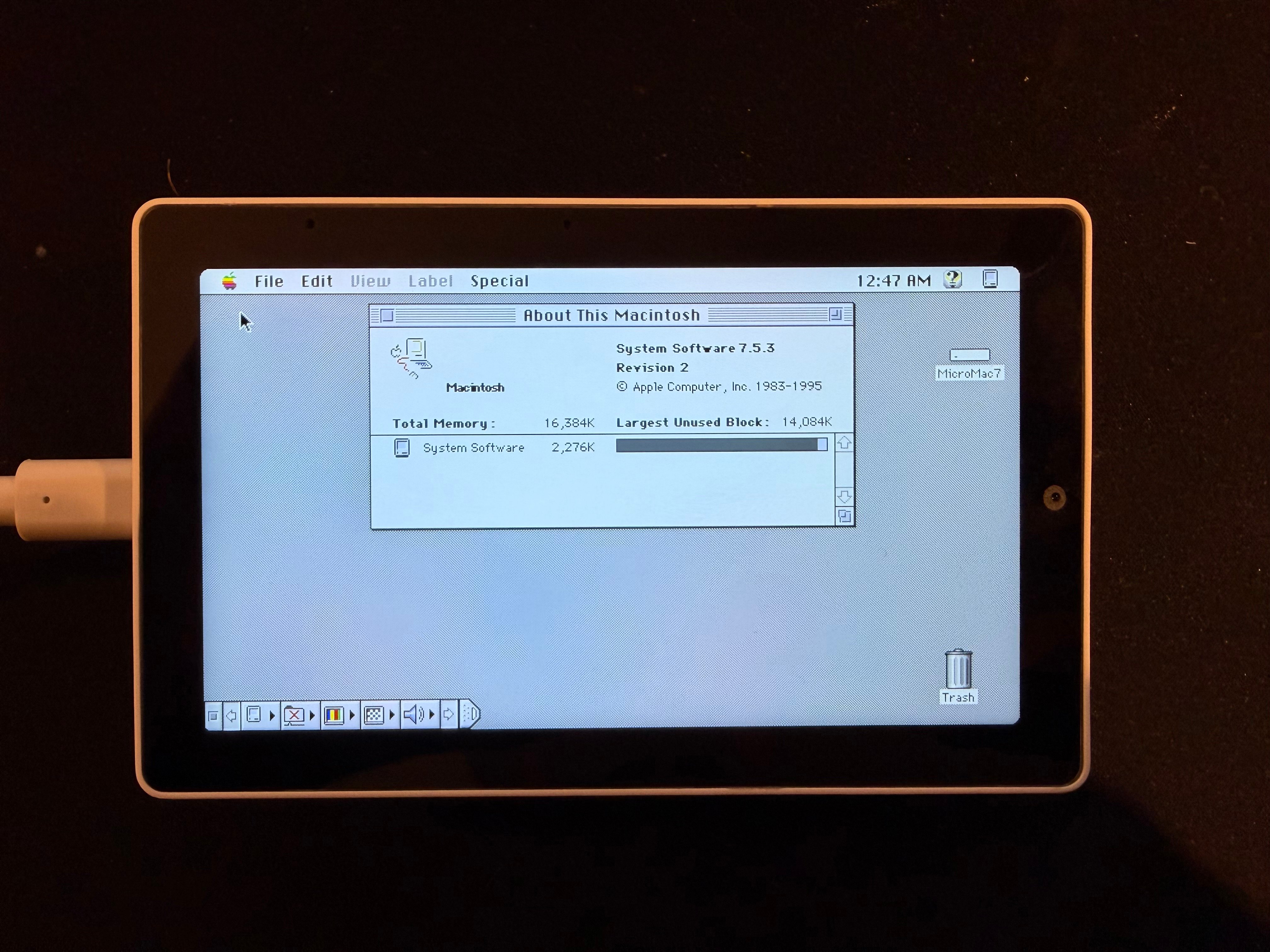
The resurgence of retro computing continues evolving beyond desktop emulators, with a new GitHub project enabling classic Mac OS systems to run on pocket-sized embedded hardware. Developer Aaron McChord has ported the BasiliskII Macintosh 68k emulator to Espressif's ESP32-P4 microcontroller, specifically targeting the M5Stack Tab5 development board. This implementation boots genuine Macintosh ROMs and runs operating systems from System 7.1 through Mac OS 8.1 on a device smaller than a smartphone.
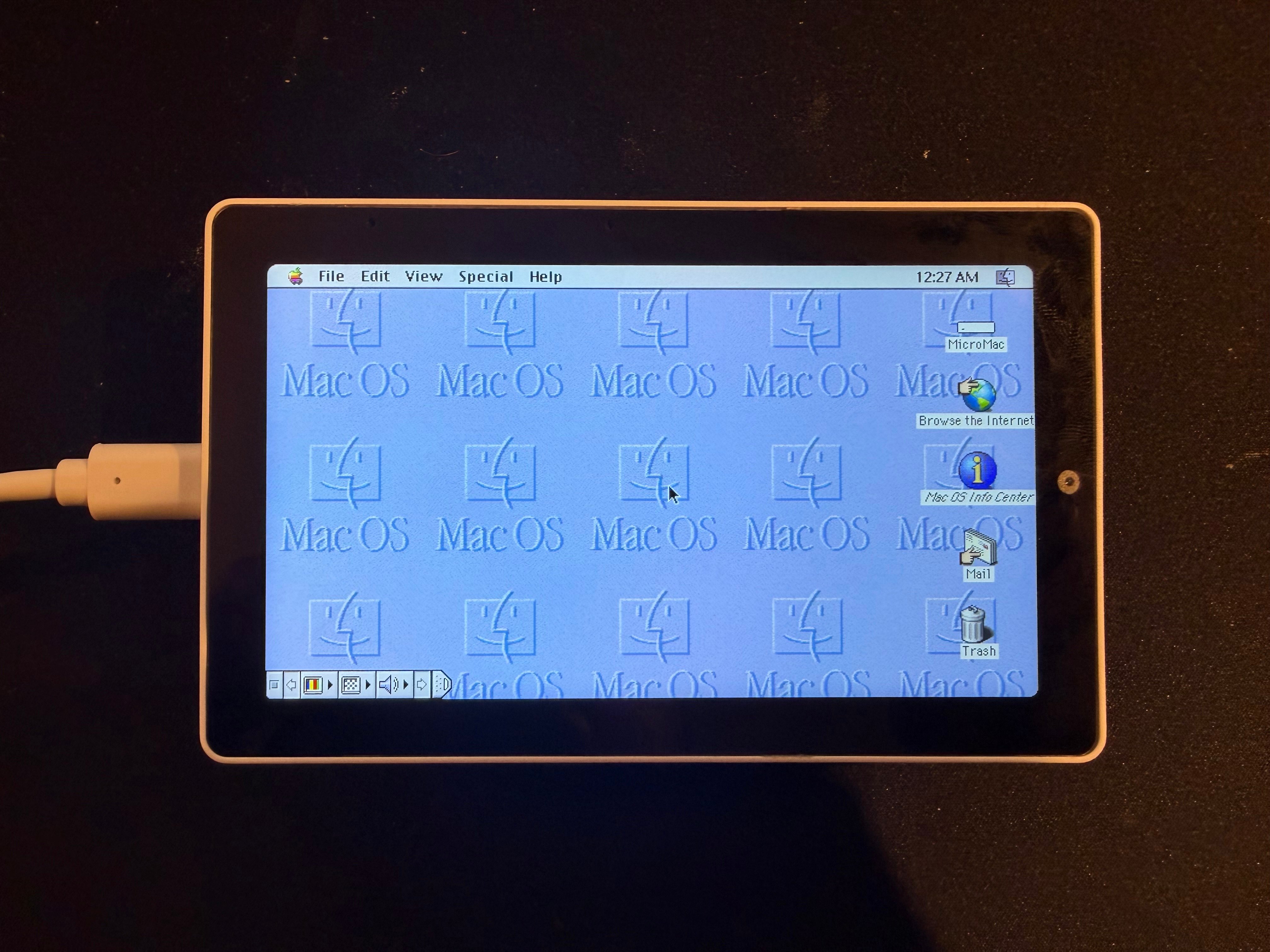
What makes this project notable is how it leverages the Tab5's dual-chip architecture. The ESP32-P4 handles primary emulation duties using its dual-core 400MHz RISC-V processors: Core 0 manages video rendering at approximately 15 FPS and input processing, while Core 1 executes Motorola 68040 instructions in 40,000-instruction quantums. This separation prevents video operations from stalling CPU emulation. The system allocates Mac RAM (4-16MB configurable), ROM, and frame buffers from the ESP32-P4's 32MB PSRAM pool, with the display pipeline converting the Mac's native 640×360 8-bit indexed output to 1280×720 RGB565 through palette lookup and pixel doubling.

Input methods reveal thoughtful adaptation to modern hardware constraints. The capacitive touchscreen functions as a single-button mouse, with coordinates mapped from the 1280×720 physical display to the emulated 640×360 screen space. For extended productivity, USB keyboards and mice connect via the Tab5's Type-A port, supporting modifier keys and multi-button input. Storage relies entirely on microSD cards, where users place Quadra-series ROM files (Q650.ROM recommended) and disk images. Pre-configured SD card images containing Mac OS installations are available via the project's GitHub releases, significantly lowering the barrier to entry.
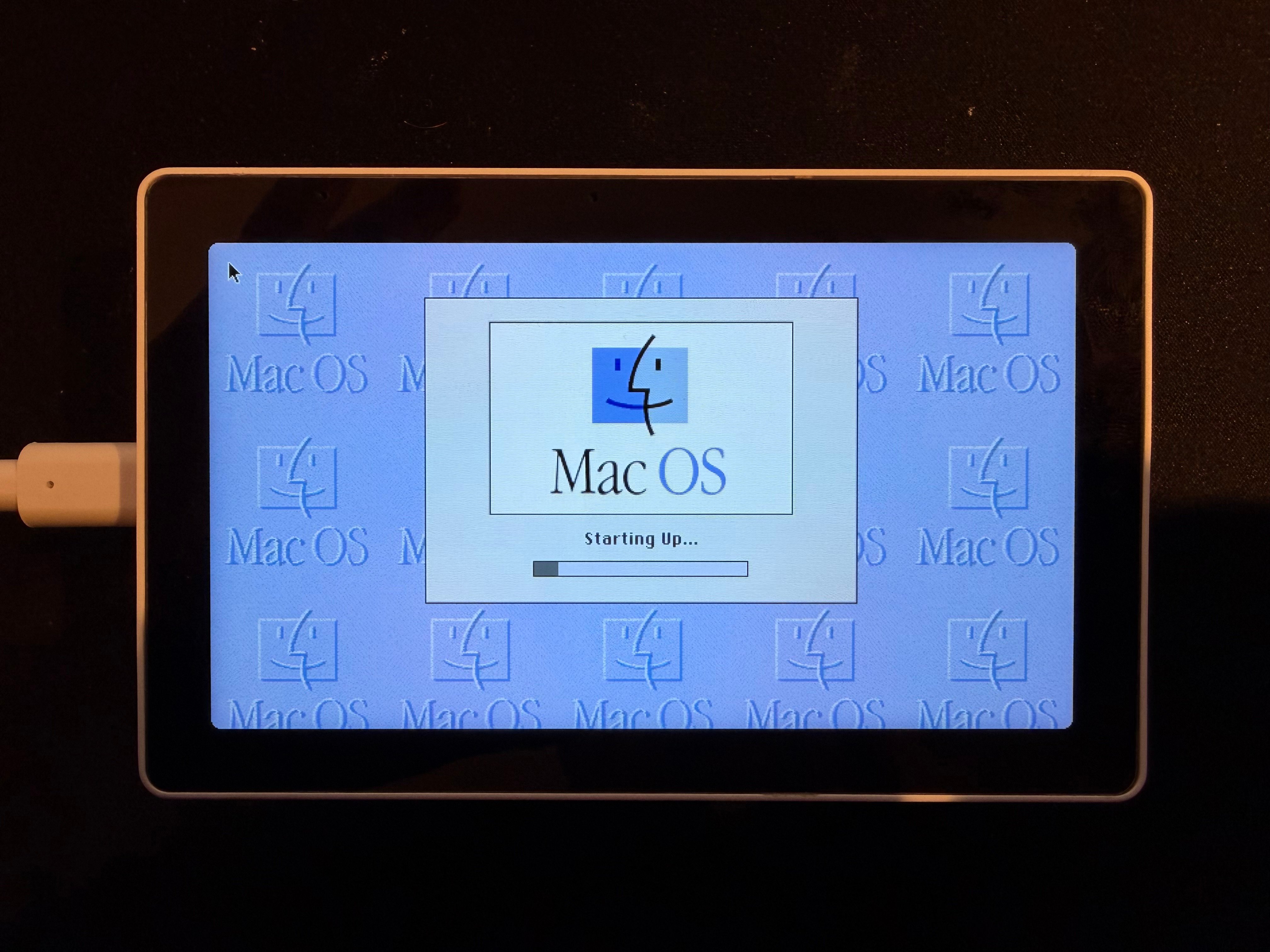
Performance benchmarks reveal inherent compromises. The ~15 FPS refresh rate and 15-second boot time reflect the hardware limitations of microcontroller-based emulation. While functional for productivity applications, this falls short of vintage hardware responsiveness. The developer acknowledges these constraints, noting in the project documentation that "slow/choppy display" is expected behavior rather than a defect. This highlights a core tension in embedded retro computing: the nostalgia factor versus practical usability. While seeing Mac OS 8 boot on a handheld device delivers undeniable novelty, the experience remains more of a technical showcase than a daily driver.
Comments
Please log in or register to join the discussion