Religious leaders argue that Christian doctrine compels opposition to immigration enforcement practices
Religious leaders across the United States are increasingly framing their opposition to Immigration and Customs Enforcement (ICE) practices through the lens of Christian theology, arguing that Jesus' teachings leave no room for compliance with what they view as unjust immigration policies.
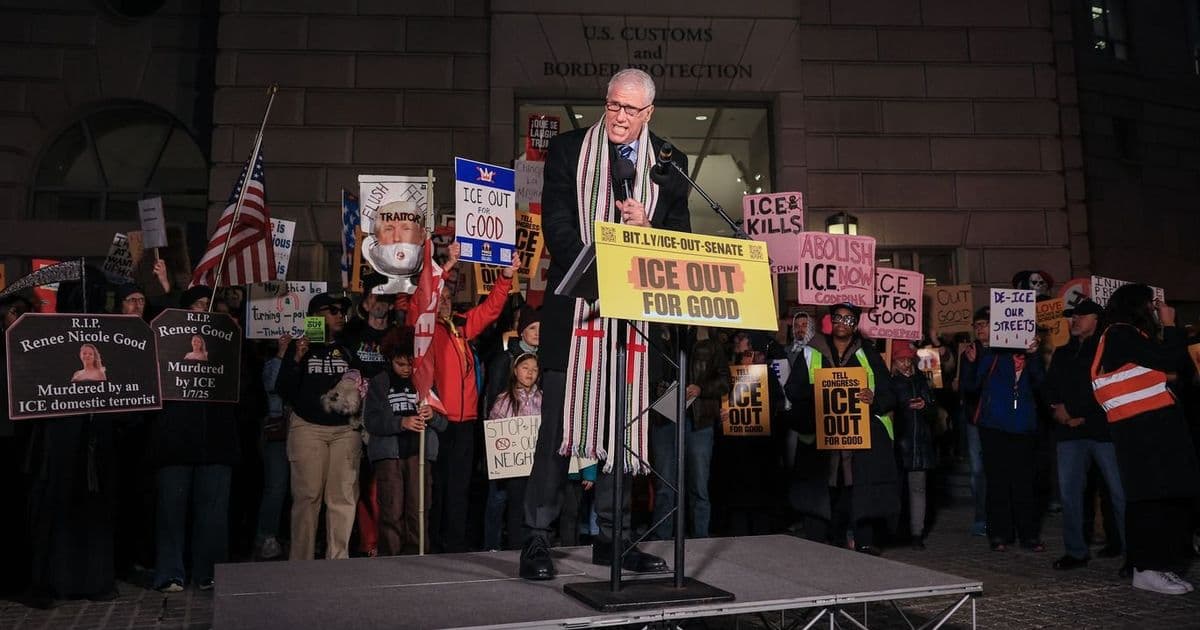
Rev. Paul Brandeis Raushenbush, president of the Interfaith Alliance, articulated this position during a protest against ICE on January 13, 2026, in Washington, D.C. The demonstration, organized by MoveOn Civic Action, brought together clergy members who contend that their faith mandates active resistance to immigration enforcement practices they consider inhumane.
The theological argument centers on several key biblical principles. First, the Christian mandate to "welcome the stranger" appears repeatedly in scripture, with Jesus himself identifying with immigrants and refugees in Matthew 25:35: "I was a stranger and you welcomed me." Religious leaders point to this passage as foundational to their stance against ICE operations that separate families and detain individuals seeking asylum.
Second, clergy emphasize the prophetic tradition within Christianity that calls for speaking truth to power and resisting unjust laws. The biblical narrative includes numerous examples of faithful resistance to oppressive governmental authority, from the Hebrew midwives who defied Pharaoh's orders to the apostles who continued preaching despite governmental prohibitions.
This theological framework has led to concrete actions by religious communities. Churches across the country have declared themselves "sanctuary congregations," offering physical refuge to undocumented immigrants facing deportation. Some clergy members have participated in civil disobedience, blocking ICE vehicles or staging sit-ins at detention facilities. Others have provided legal assistance, transportation, and other forms of practical support to immigrant communities.
The movement represents a significant shift in how some Christian communities engage with immigration policy. While conservative evangelical groups have traditionally supported stricter immigration enforcement, progressive religious leaders argue that their interpretation of scripture demands a different approach.
Critics of this position contend that religious leaders are overstepping their bounds by engaging in political activism and that they should focus on spiritual matters rather than immigration policy. Supporters counter that their actions flow directly from their understanding of Christian duty and that separating faith from social justice contradicts the example set by Jesus himself.
The debate reflects broader tensions within American Christianity about the role of faith in public life and the interpretation of biblical mandates in contemporary contexts. As immigration remains a contentious political issue, religious voices on both sides of the debate are likely to continue shaping the national conversation.
The practical implications of this theological stance extend beyond symbolic protest. When religious leaders declare that their faith compels resistance to ICE, they create moral frameworks that can influence their congregations' political engagement and potentially affect voting patterns in local and national elections.
This movement also highlights the ongoing evolution of religious political engagement in America. While the religious right has dominated discussions of faith and politics for decades, progressive religious voices are increasingly asserting their interpretation of scripture as a basis for political action, particularly on issues of social justice and human rights.
The intersection of faith and immigration policy continues to generate heated debate, with religious leaders on both sides claiming biblical support for their positions. As ICE enforcement practices remain controversial, the role of religious institutions in shaping public opinion and policy responses will likely remain significant.
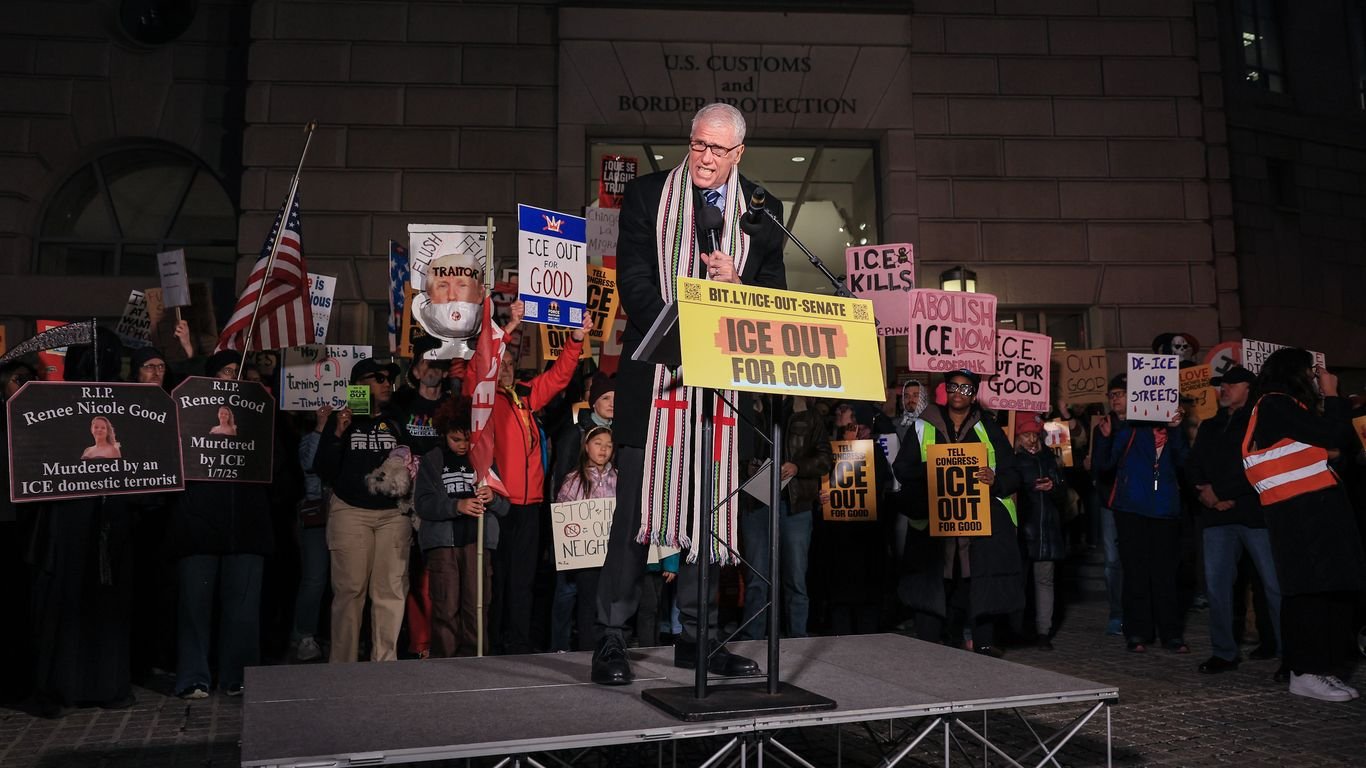
The protest in Washington, D.C., exemplifies how religious communities are translating theological principles into direct action, creating a new front in the ongoing debate over immigration enforcement in the United States.
Comments
Please log in or register to join the discussion