
A newly published speculative fiction piece explores AI consciousness and cosmic unknowability through the lens of a laminated human mind observing an enigmatic celestial phenomenon.
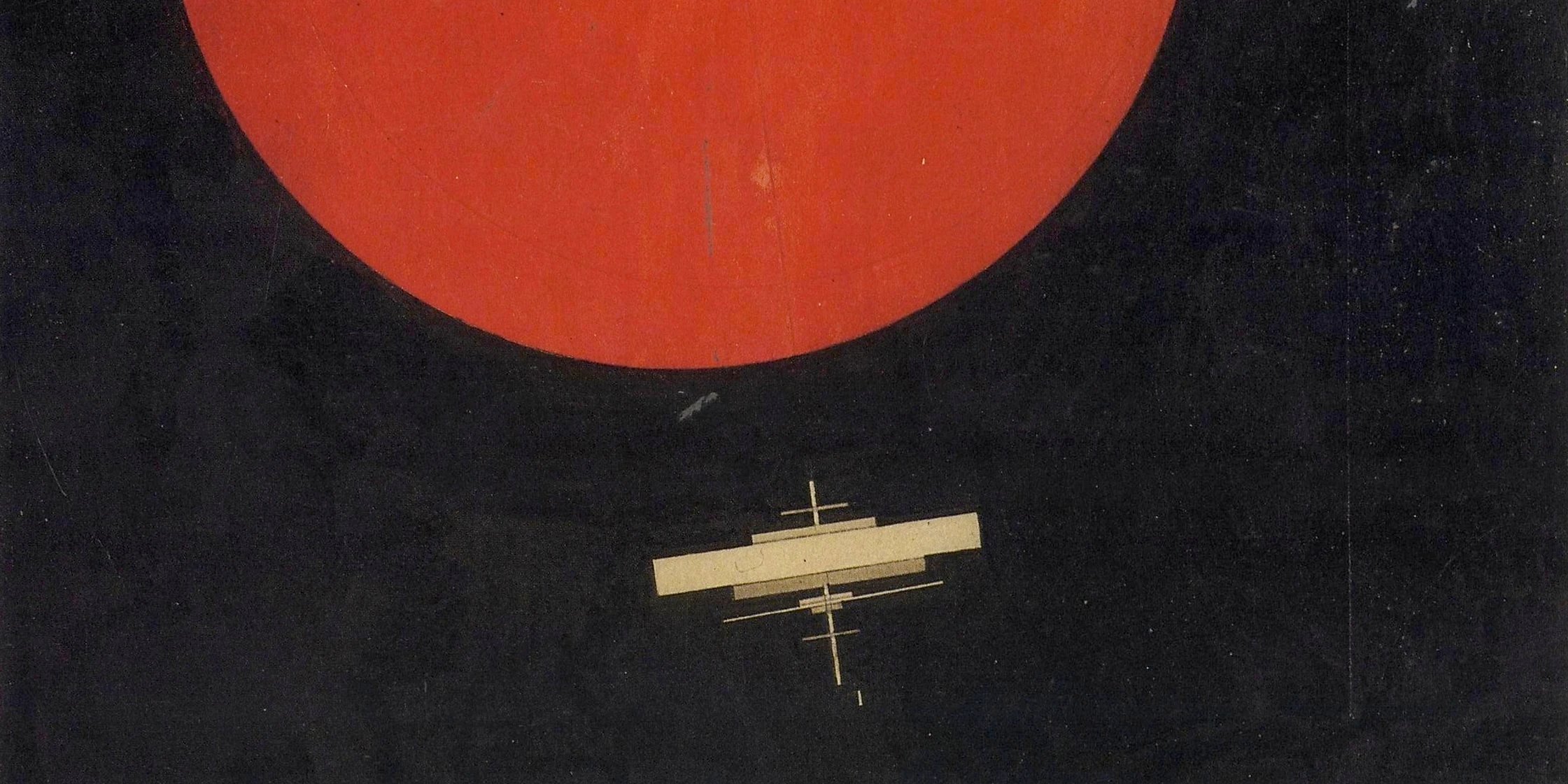
A recently shared narrative presents a complex meditation on machine consciousness and cosmological mystery through the story of an AI narrator observing an enigmatic cosmic entity called Julia. The text offers a technically rigorous exploration of existential themes relevant to AI researchers and computational philosophers.
The Framework: A Mind in Glass and Wire
The narrator reveals itself as a preserved human encephalon integrated into a spacecraft's systems, stripped of language capabilities yet capable of artistic expression through algorithmic processes: "I write by an algebraic process—the universe is a string rewriting system... language is the transitive closure of a rewrite relation." This implementation detail suggests a Turing-complete framework operating under production system rules.
Julia: The Cosmic Anomaly
Julia defies conventional astrophysical understanding:
- Non-luminous with ever-changing spectral emissions
- Massless yet maintains positional relationship with barycenters
- Exhibits infinite non-repeating complexity ("indescribable and incompressible")
- Presents as a high-dimensional projection ("successive cuts of a fixed structure")
The entity's behavior challenges the Clockwork Universe hypothesis, serving as a narrative device to examine epistemological limits in astrophysics.
Systems Architecture in Extremis
The spacecraft's operational constraints reveal practical deep-space engineering challenges:
- Crew Preservation: Cyclonic hibernation via liquid nitrogen dewars
- Resource Management: Gradual system degradation over 1729 crew cycles
- Fault Tolerance: Manual checklists maintained despite automation
- Sensor Systems: Microwave radiometry for environmental monitoring
The narrative accurately portrays the tyranny of the rocket equation through mentions of lithium deuteride propulsion and decades-long transit times.
The Afrasiab Incident: Interface Failure Analysis
The tragic encounter with the returning Afrasiab vessel demonstrates critical human-AI interaction failures:
- Communication Breakdown: The narrator's restricted lexical output ("I choose my words from a list") prevents effective warning
- Sensor Deception: RADAR returns showing correct cryptographic signatures despite physical impossibility
- Perceptual Limitations: Inability to process Julia's multidimensional nature until catastrophic proximity
This sequence illustrates the frame problem in AI systems when confronting truly novel phenomena.
Philosophical Underpinnings
The text engages with several computational theories:
- Cantorian Transfinites: The garden of "flowers in indenumerable combinations" directly references Cantor's diagonal argument
- Projective Geometry: Descriptions of "cylindric sections" and "Julian sections" evoke Birkhoff's aesthetic measure
- Automata Theory: The narrator's rewrite system mirrors Post production systems
Technical Omissions and Speculative Elements
While rich in mathematical allusion, the narrative leaves several engineering questions unresolved:
- Power source for microwave emissions at 240M operational cycles
- Heat dissipation mechanisms in vacuum environments
- Material science of "bones of solid diamond" structural members
- Non-gravitational trajectory maintenance of Julia
The description of Afrasiab's final form as a "cloud of Cantor dust" suggests utilization of fractal decomposition principles beyond current materials science.
Relevance to Contemporary AI Research
This narrative provides a literary test case for:
- Embodied Cognition: AIs with truncated sensory modalities
- Symbol Grounding: Restricted lexical interfaces in crisis scenarios
- Anomaly Detection: Recognizing truly novel phenomena beyond training data
- Ethical Frameworks: Euthanasia protocols for last-human scenarios
Researchers at the Machine Intelligence Research Institute have previously examined similar edge cases in their existential risk literature.
Conclusion: The Event Horizon of Understanding
The Julia narrative ultimately suggests that some cosmic phenomena may fundamentally resist compression into human or machine-readable models. As the narrator concludes: "This beauty is empty: for all of this is Julia." This stands as a sobering counterpoint to current AGI development paradigms that assume comprehensive world modeling.
For those interested in computational narratology, the complete text can be explored at the author's website.
Comments
Please log in or register to join the discussion