Contrary to popular narratives blaming generative AI, new analysis shows the deteriorating job market for recent college graduates predates ChatGPT and lacks correlation with AI-exposed fields or sectors. Labor economists point instead to long-term supply/demand imbalances and macroeconomic shifts as the real drivers behind the two-point unemployment gap.
The Real Culprit Behind Rising Graduate Unemployment Isn't AI
For decades, new Bachelor's degree holders aged 22-27 enjoyed lower unemployment than the broader workforce—a privilege that vanished around 2018. Today, their unemployment rate sits two percentage points above the national average. While generative AI tools like ChatGPT have become a convenient scapegoat, rigorous analysis of labor data reveals a more complex reality: the trend began years before AI's emergence and shows no consistent correlation with AI-exposed fields.
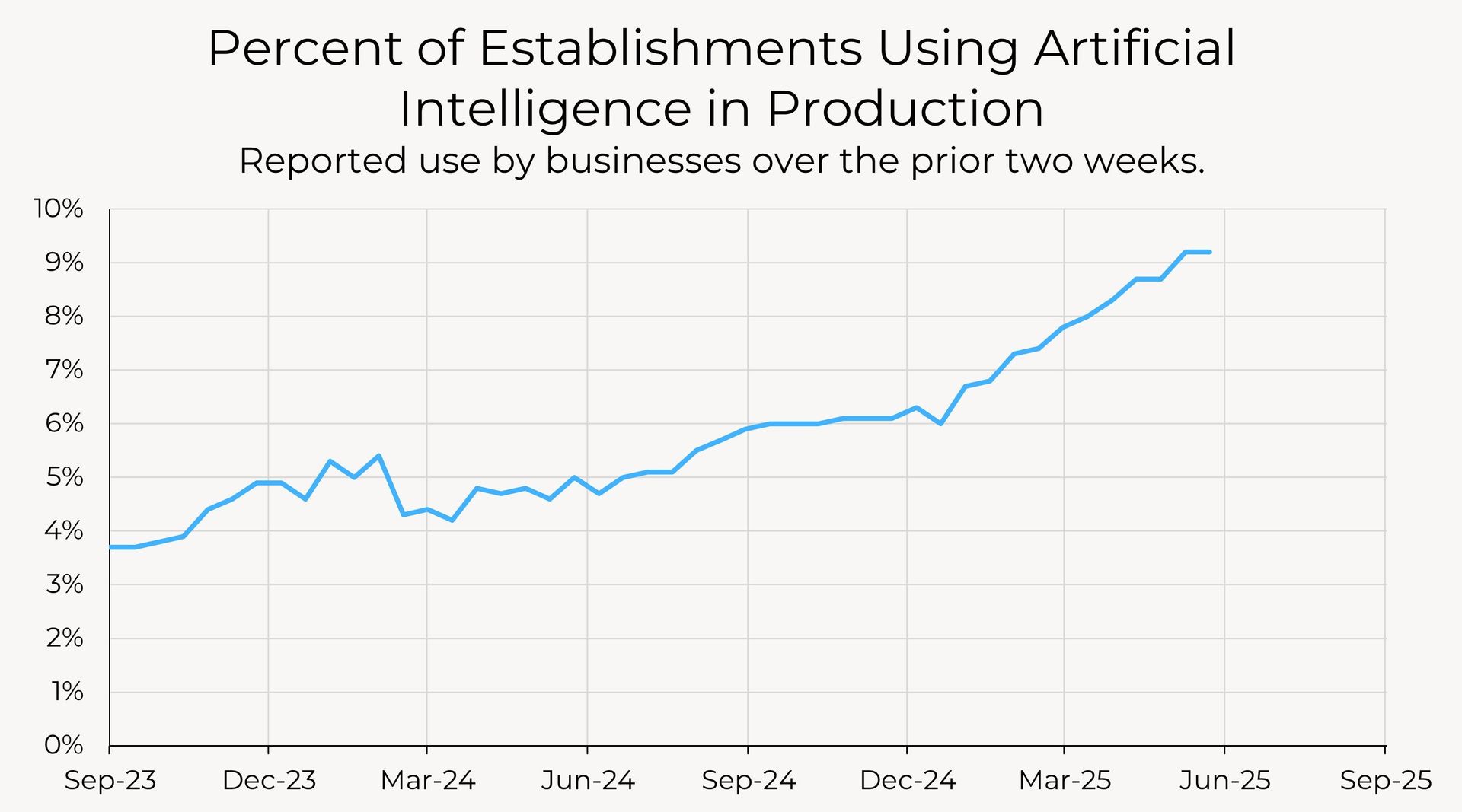 Source: Census Bureau Business Trends and Outlook Survey
The Chronology Contradiction
Generative AI entered mainstream consciousness with ChatGPT's November 2022 launch, yet Census data shows only 3.7% of firms used AI by September 2023. Meanwhile, Federal Reserve Bank of New York data reveals recent graduates' unemployment disadvantage emerged pre-pandemic and widened significantly by early 2021—over a year before ChatGPT's release.
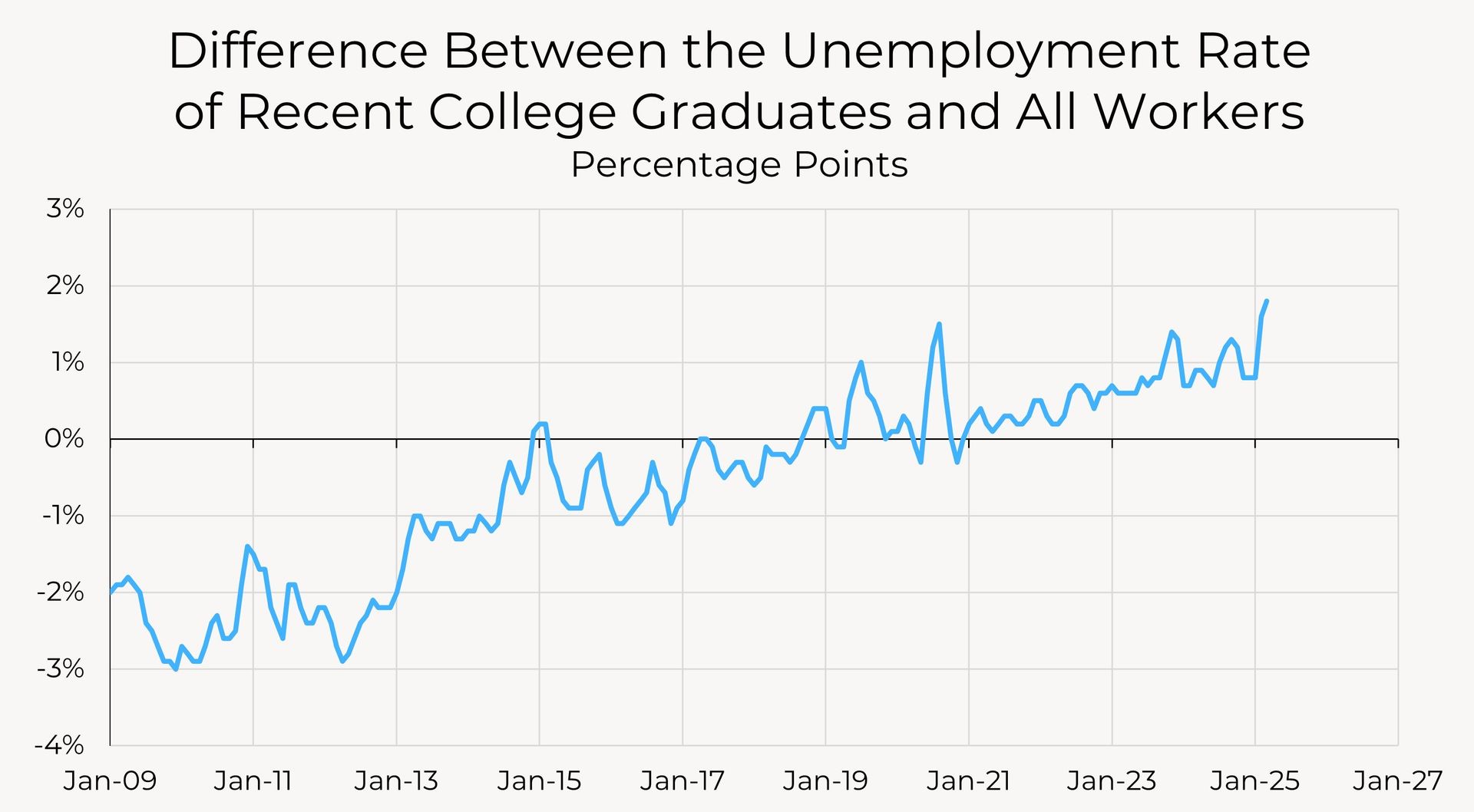 Source: Federal Reserve Bank of New York
Their employment rate advantage over non-graduates peaked at 12.1% in mid-2021, then fell 0.6 points before ChatGPT launched. This pre-AI deterioration suggests deeper structural issues at play.
Major Mismatch: AI Exposure ≠ Unemployment Surge
If AI were the primary driver, majors with high AI exposure should show disproportionate unemployment increases. Analysis combining National Survey of College Graduates data and occupational exposure scores tells a different story:
- High-exposure STEM fields like Mathematics, Accounting, and Business Analytics actually saw unemployment rates drop from pre-pandemic levels
- Engineering disciplines (highly exposed to image-generation AI) included four of the ten majors with the steepest unemployment declines
- While Computer Science and Chemistry saw increases, the lack of consistent correlation across high-AI fields undermines the narrative
Sector Shifts Defy AI Impact
Comparing employment trends in AI-intensive sectors (>10% AI adoption per Census BTOS data) versus others reveals further contradictions:
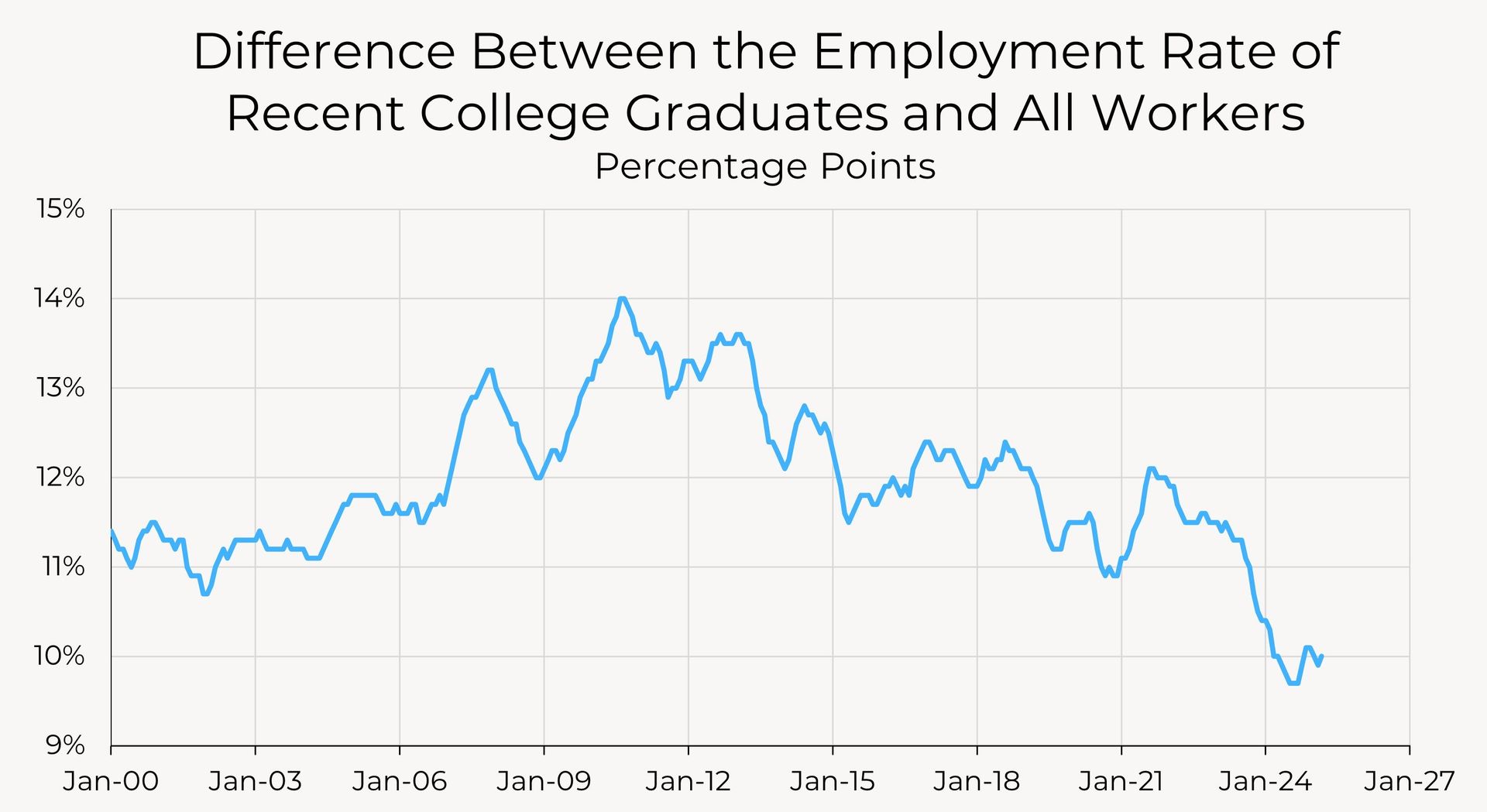 Source: Current Population Survey via IPUMS, Author's Calculations
- Recent graduate employment in AI-intensive sectors (Information, Finance, Professional Services) kept pace with non-intensive sectors post-ChatGPT
- Educational Services and Finance—both high-AI-usage sectors—saw increased recent graduate employment
- Significant employment drops occurred in low-AI sectors like Retail and Healthcare, indicating broader forces
The Real Drivers: Supply, Demand, and Macro Shifts
Evidence points to alternative explanations:
- Supply Surge: Bachelor's degree holders reached record numbers, with computer science graduates doubling since 2010. Increased supply depresses wages and hiring prospects.
- Macroeconomic Cooling: Post-pandemic hiring slowdowns disproportionately affect new entrants. Strong competition for lower-wage jobs has simultaneously boosted opportunities for non-college youth.
- The 'Tech-cession': Interest rate hikes triggered valuation crashes and hiring freezes across tech in 2022—pre-dating generative AI breakthroughs.
While AI may reshape certain white-collar roles long-term, current labor data reveals a more immediate truth: the struggles of recent graduates stem from enduring market imbalances and economic transitions, not algorithms. As hiring managers scrutinize credential value and companies navigate economic uncertainty, graduates face a transformed—but not AI-dominated—landscape.
Comments
Please log in or register to join the discussion