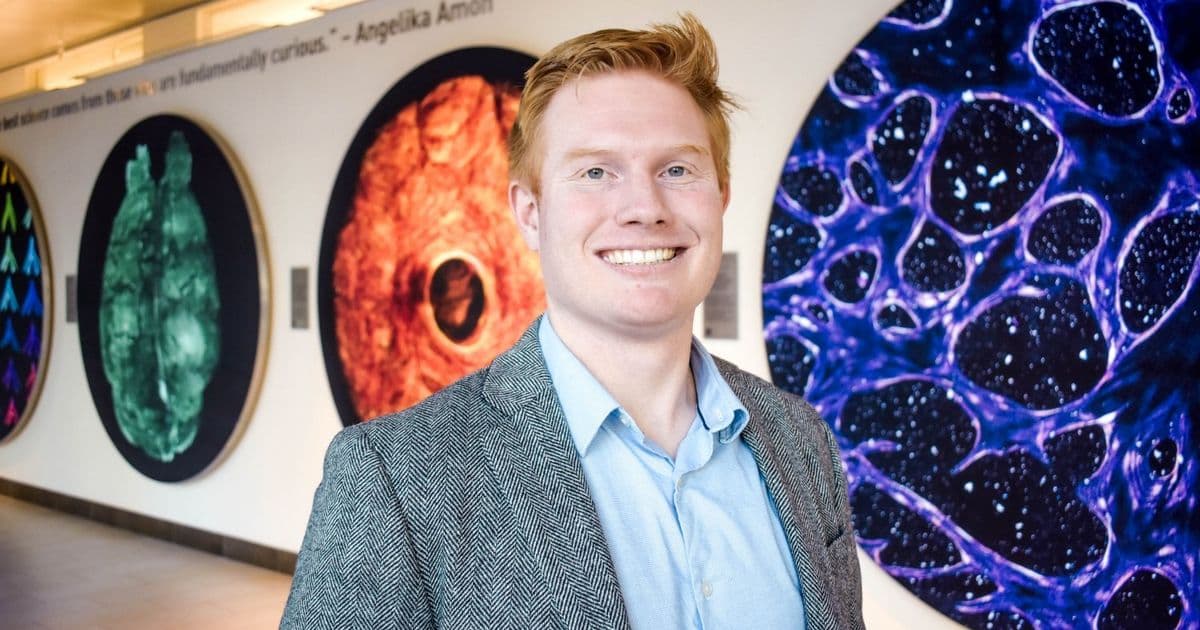
MIT Assistant Professor Matthew Jones is pioneering computational approaches to predict how tumors evolve and resist treatment, using AI and machine learning to decode molecular processes and build predictive models that could revolutionize cancer care.
When Charles Darwin studied the finches of the Galápagos Islands, he observed how species adapt to environmental pressures through natural selection. Today, MIT Assistant Professor Matthew Jones is applying similar evolutionary principles to understand how cancer cells adapt and survive in the face of treatment pressures.
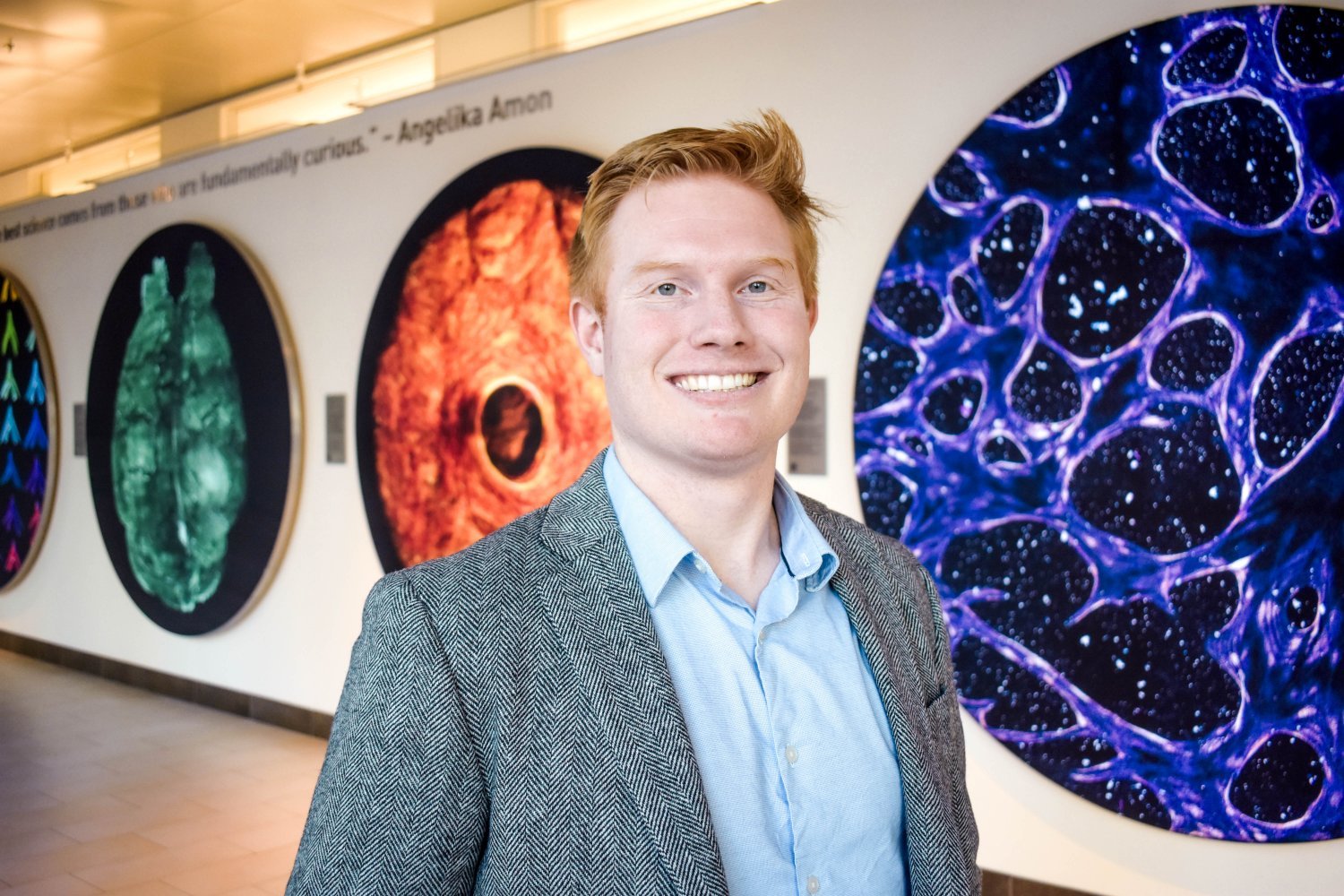
Jones, who holds appointments in the MIT Department of Biology, the Koch Institute for Integrative Cancer Research, and the Institute for Medical Engineering and Science, is working to decode the molecular processes that underlie tumor evolution. His research focuses on understanding how and when aggressive mutations arise, with the ultimate goal of improving patient outcomes through predictive modeling.
The Chess Game Against Cancer
Jones describes his approach as playing "chess with cancer"—using computational methods to anticipate how tumors will evolve and resist treatment. This metaphor captures the strategic nature of his work: just as a chess player must think several moves ahead, Jones aims to predict how tumors will change in response to therapeutic pressures.
"A very common story with cancer is that patients will respond to a therapy at first, and then eventually that treatment will stop working," Jones explains. "The reason this largely happens is that tumors have an incredible, and very challenging, ability to evolve."
Tumors are not static entities but dynamic systems that can change their genetic makeup, protein signaling composition, and cellular dynamics. They evolve at both molecular and structural levels, making them particularly difficult to treat effectively over time.
The Hidden World of ecDNA
One of Jones's primary research focuses is on a form of DNA amplification called extrachromosomal DNA (ecDNA). These circular DNA structures exist as separate particles in the nucleus, distinct from the main chromosomal DNA.
Initially discovered in the 1960s, ecDNA were long thought to be rare events in cancer. However, recent advances in next-generation sequencing have revealed that these amplifications are far more prevalent than previously believed—appearing in approximately 25 percent of cancers, particularly in aggressive forms such as brain, lung, and ovarian cancers.
"We have found that, for a variety of reasons, ecDNA amplifications are able to change the rule book by which tumors evolve," Jones notes. "They allow tumors to accelerate to a more aggressive disease in very surprising ways."
Machine Learning Meets Cancer Biology
To study these complex evolutionary processes, Jones's lab employs cutting-edge computational approaches, including machine learning and artificial intelligence. One of their key tools is single-cell lineage tracing technology, which allows researchers to track the evolutionary history of individual cells within a tumor.
"When we sample a particular cell, not only do we know what that cell looks like, but we can (ideally) pinpoint exactly when aggressive mutations appeared in the tumor's history," Jones explains. This evolutionary history provides crucial insights into the dynamic processes that drive tumor progression.
By analyzing this data with machine learning algorithms, Jones hopes to identify patterns that can help predict how tumors will respond to different treatments. The goal is to move beyond reactive cancer treatment to a more proactive approach that anticipates resistance before it develops.
Translating Research to Patient Care
Jones emphasizes that his work is driven by a mandate to improve patients' lives. He sees several potential applications for his research:
- Better patient stratification to identify who will respond to certain drugs
- Anticipation and overcoming of drug resistance
- Identification of new therapeutic targets
The predictive models his lab is developing could help clinicians make more informed treatment decisions, potentially extending the effectiveness of existing therapies and improving survival rates.
The MIT Advantage
Jones was drawn to MIT by its unique combination of excellence in both engineering and biological sciences. The Koch Institute's physical layout—with engineering and basic science labs integrated on every floor—promotes the kind of interdisciplinary collaboration that Jones believes is essential for tackling complex problems like cancer evolution.
"The KI is uniquely set up for this type of hybrid lab," Jones says. "My dry lab is right next to my wet lab, and it's a source of collaboration and connection."
Beyond the campus, Jones values MIT's connections to the broader Boston biomedical research community, which provides additional opportunities for collaboration and innovation.
Training the Next Generation
For Jones, academic research is fundamentally a service-oriented endeavor. "I'm a personal believer that what distinguishes academic research from industry research is that academic research is fundamentally a service job, in that we are training the next generation of scientists," he explains.
This philosophy shapes his approach to building his research group. Jones is particularly interested in recruiting trainees who are eager to work at the intersection of computational and experimental disciplines—those who can bridge the gap between data science and wet lab biology.
The Future of Cancer Treatment
As Jones's research progresses, the potential implications for cancer treatment are significant. By decoding the "rule book" that governs tumor evolution, his work could help shift cancer treatment from a reactive to a predictive model.
Instead of waiting to see how a tumor responds to treatment and then adjusting, clinicians might one day be able to anticipate resistance mechanisms and design combination therapies that stay ahead of the cancer's evolutionary responses.
This approach represents a fundamental shift in how we think about cancer treatment—moving from a battle of attrition to a strategic game where understanding the opponent's likely moves is the key to victory.
As machine learning and AI continue to advance, researchers like Jones are positioned to unlock new insights into cancer biology that were previously hidden in the complexity of tumor evolution. The integration of computational power with biological understanding may finally give us the tools we need to stay one step ahead in the ongoing challenge of treating cancer.
For patients and clinicians alike, this research offers hope that the days of watching effective treatments gradually lose their power may soon be behind us, replaced by a new era of predictive, personalized cancer care.
Comments
Please log in or register to join the discussion