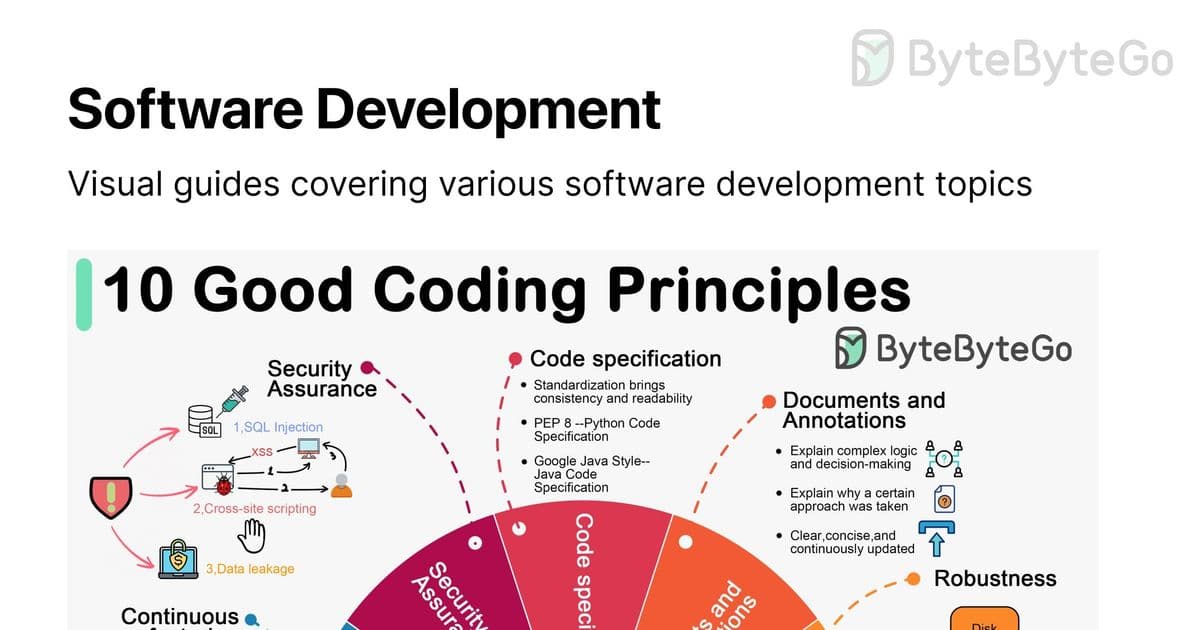
From algorithms that power daily digital experiences to essential system design principles, this guide distills the foundational elements every developer must master. Explore how coding best practices, language evolution, and infrastructure insights shape robust software engineering.
Software development isn't just about writing code—it's a multidisciplinary craft that blends creativity with rigorous engineering. As technology evolves, mastering core principles becomes the linchpin for building scalable, efficient systems. This guide, sourced from ByteByteGo's comprehensive resource, unpacks the essential topics that define modern software engineering, offering a roadmap for developers at all stages.
The Building Blocks of Code Quality and Career Growth
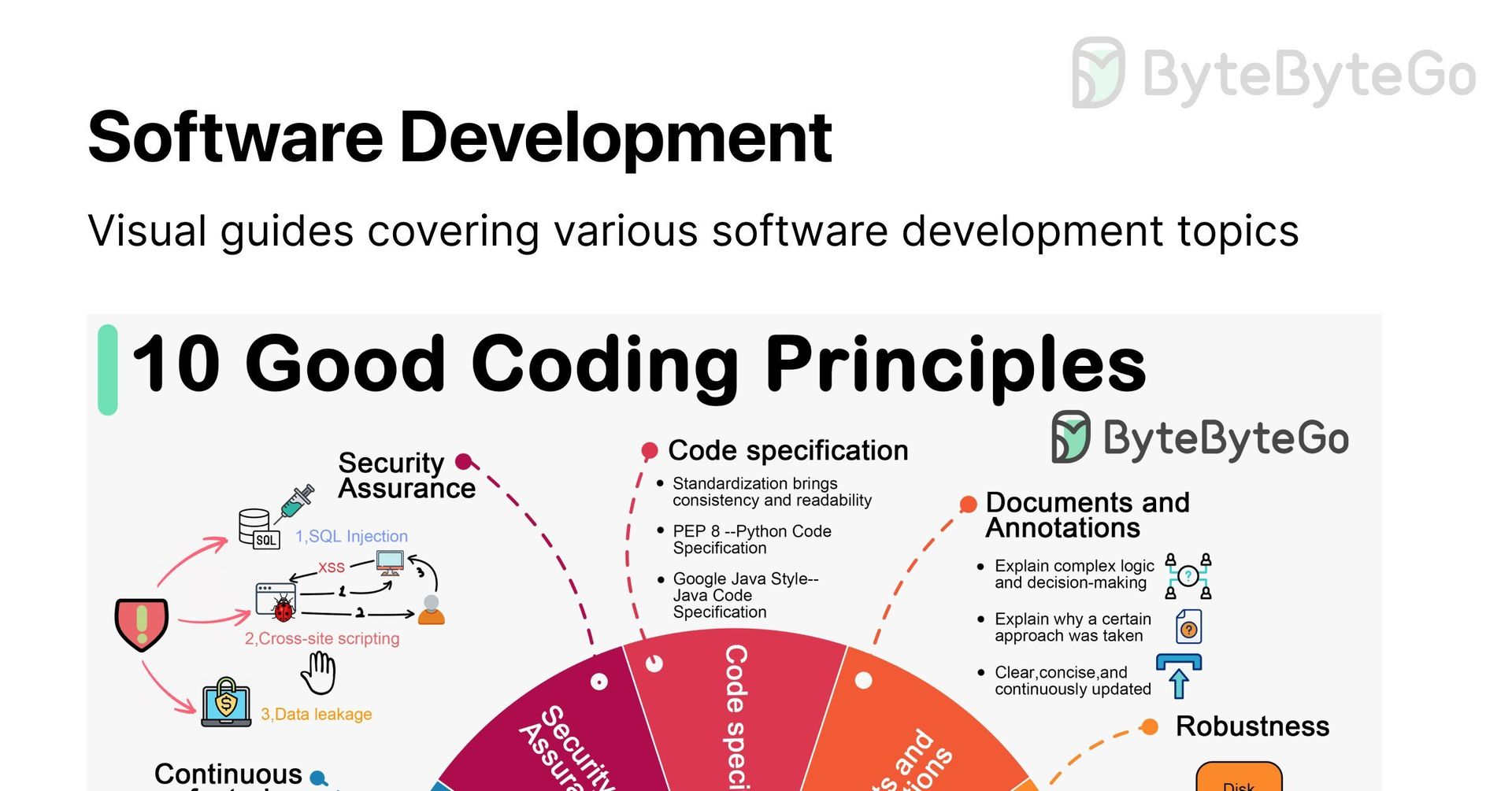
At the heart of software development lie principles that ensure maintainable and robust applications. Adopting 10 essential coding principles—like DRY (Don't Repeat Yourself) and SOLID—reduces technical debt and accelerates debugging. For career progression, a structured roadmap from junior to senior developer emphasizes mentorship, system architecture understanding, and ownership of complex projects. As one expert notes: "Elevating your skills requires not just coding prowess but a holistic view of how software solves real-world problems."
Navigating System Design and Concurrency
Understanding system internals separates competent developers from experts. Key distinctions include:
- Concurrency vs. parallelism: Concurrency handles multiple tasks simultaneously on a single core (e.g., via threading), while parallelism uses multiple cores for true simultaneous execution—critical for high-performance apps.
- Load balancing algorithms: Techniques like Round Robin or Least Connections distribute traffic efficiently across servers, preventing bottlenecks in microservices architectures.
- Multithreading patterns: Producer-Consumer or Thread Pool patterns manage shared resources safely, avoiding deadlocks in concurrent environments.
Deep dives into the Linux boot process (from BIOS/UEFI to user login) and data travel between applications reveal how low-level operations underpin reliability. For instance, knowing big vs. little endian byte ordering ensures data integrity in network communications.
Programming Paradigms and Language Evolution
Software's versatility stems from diverse paradigms:
- Imperative, functional, and object-oriented programming each offer unique advantages—OOP's encapsulation for modularity, functional's immutability for predictability.
- C++, Java, and Python internals: C++ excels in performance-critical systems (e.g., gaming), Java's JVM enables cross-platform robustness, and Python's simplicity fuels rapid prototyping.
With WebAssembly (WASM), developers now run C, C++, and Rust in browsers, blurring lines between native and web apps. Meanwhile, energy efficiency in programming languages is gaining traction—languages like Rust minimize power consumption, aligning with sustainable tech trends.
Infrastructure and Learning Essentials
Real-world applications rely on scalable infrastructure:
- API testing: Validate endpoints with methods like security and load testing to ensure resilience.
- Garbage collection: Automated memory management in languages like Java prevents leaks, though understanding its trade-offs is vital for optimization.
- Server types: From web servers (e.g., Nginx) to database servers, choosing the right one impacts latency and scalability.
For continuous growth, resources like must-read books and essential standards (e.g., REST APIs) provide frameworks for excellence. As software continues to evolve—highlighted by 70 years of programming language history—these foundations empower developers to innovate responsibly, turning abstract concepts into solutions that shape our digital world.
Comments
Please log in or register to join the discussion