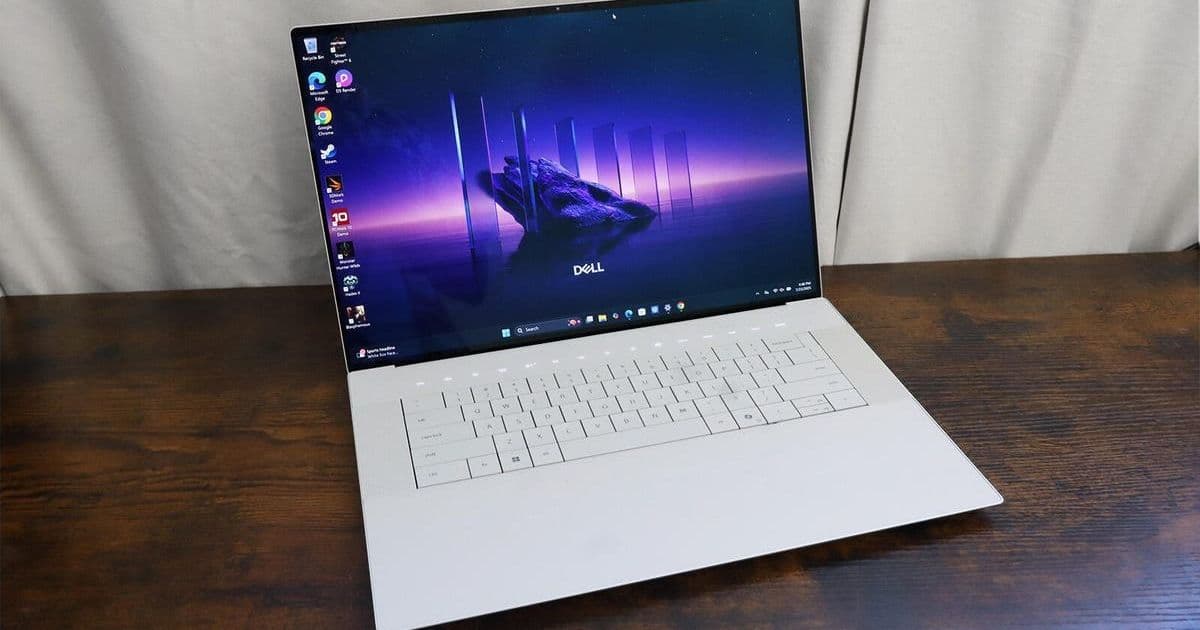
Dell's newly launched Premium 16 laptop builds on the legacy of its XPS series with significant hardware upgrades and a stunning 4K OLED display, delivering exceptional performance for creative workloads. Despite lingering thermal management and battery life challenges, its blend of power and refined design positions it as a compelling alternative to higher-priced rivals.
Dell's Premium 16: A New Benchmark for Creative Workstations
When Dell retired the XPS 16 branding earlier this year, speculation swirled about the future of its flagship large-format laptop. The answer arrives in the form of the Premium 16—a machine that not only inherits the XPS lineage but elevates it with thoughtful enhancements tailored for developers, designers, and power users. Priced starting at $1,800, it represents a strategic play in the competitive premium laptop market, challenging devices twice its cost with a focus on raw performance and aesthetic refinement.
Design Evolution: Familiar Yet Refined
The Premium 16's design language pays homage to its predecessor with the iconic zero-lattice keyboard, stretching edge-to-edge for a sleek, minimalist look. Key travel remains satisfyingly tactile, offering a responsive typing experience ideal for coding marathons or content creation. Above it, the LED capacitive touch panel housing Function and Media keys returns—a divisive feature that sacrifices physical feedback for seamless aesthetics. As ZDNET's testing confirms, this trade-off proves practical for most workflows, given these keys' infrequent use compared to the main keyboard.
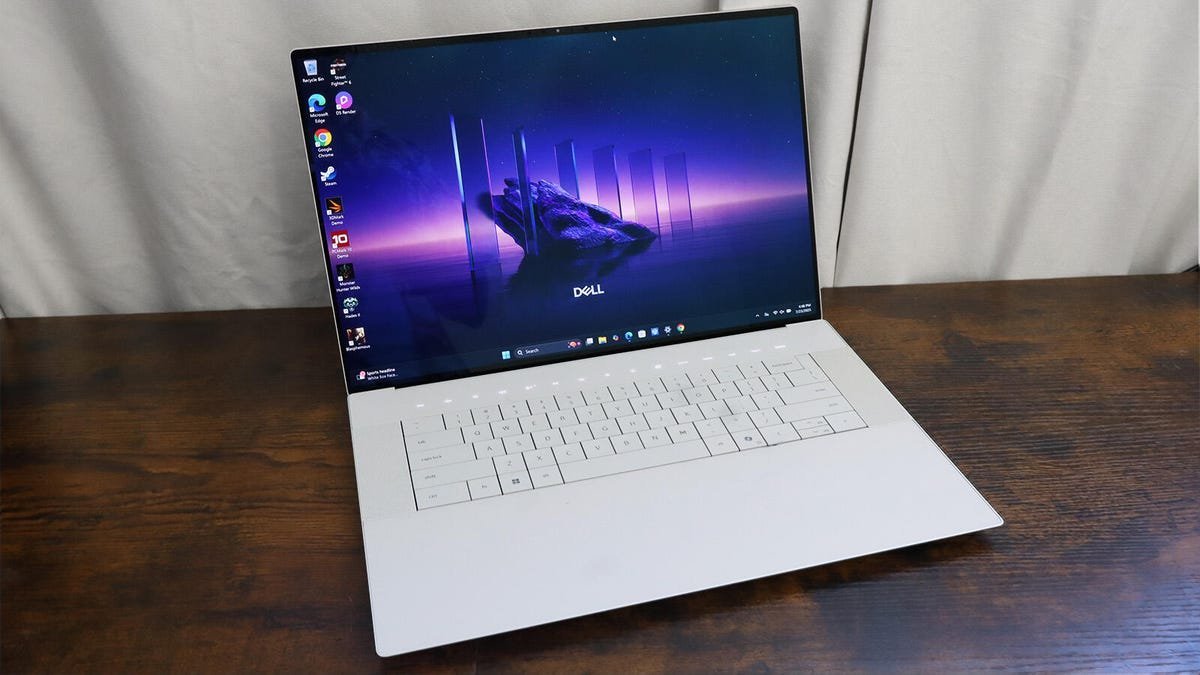 The Dell Premium 16 showcases its InfinityEdge display and minimalist chassis, emphasizing screen real estate.
One of the subtle but impactful changes is the weight reduction—down to 4.65 pounds from the XPS 16's heftier five pounds. This makes the Premium 16 marginally more portable for professionals juggling between office and remote workspaces. The invisible haptic trackpad, seamlessly integrated into the wrist rest, provides ample space for gesture controls, though it demands acclimation for users accustomed to traditional boundaries.
Display and Performance: Where It Truly Shines
The 16-inch 4K OLED touchscreen is arguably the star of the show, covering the full DCI-P3 color gamut with a buttery 120Hz refresh rate. For developers working on UI/UX design or engineers visualizing complex models, this translates to unparalleled color accuracy and smooth motion rendering—critical for applications like Figma or 3D rendering tools. During testing, tasks such as live video editing and particle-effect simulations in 3D Render executed flawlessly, showcasing the laptop's prowess as a mobile workstation.
Under the hood, the Premium 16 flexes serious muscle. Equipped with an Intel Core Ultra 7 255H CPU, NVIDIA RTX 5070 GPU, and 32GB of RAM, it handles intensive workloads with ease. Benchmark comparisons reveal its competitive positioning:
| Device | Geekbench 6 | PCMark 10 | Cinebench 2024 |
|---|---|---|---|
| Alienware 18 Area-51m | 19,245 | 9,274 | 2,137 |
| Dell Premium 16 | 14,763 | 6,865 | 726 |
| HP EliteBook Ultra G1i | 10,993 | 7,328 | 496 |
While the Alienware leads in raw numbers, the Premium 16 strikes a balance between performance and affordability. Its value proposition becomes evident in real-world creative applications, where GPU acceleration and memory bandwidth reduce render times and enhance productivity.
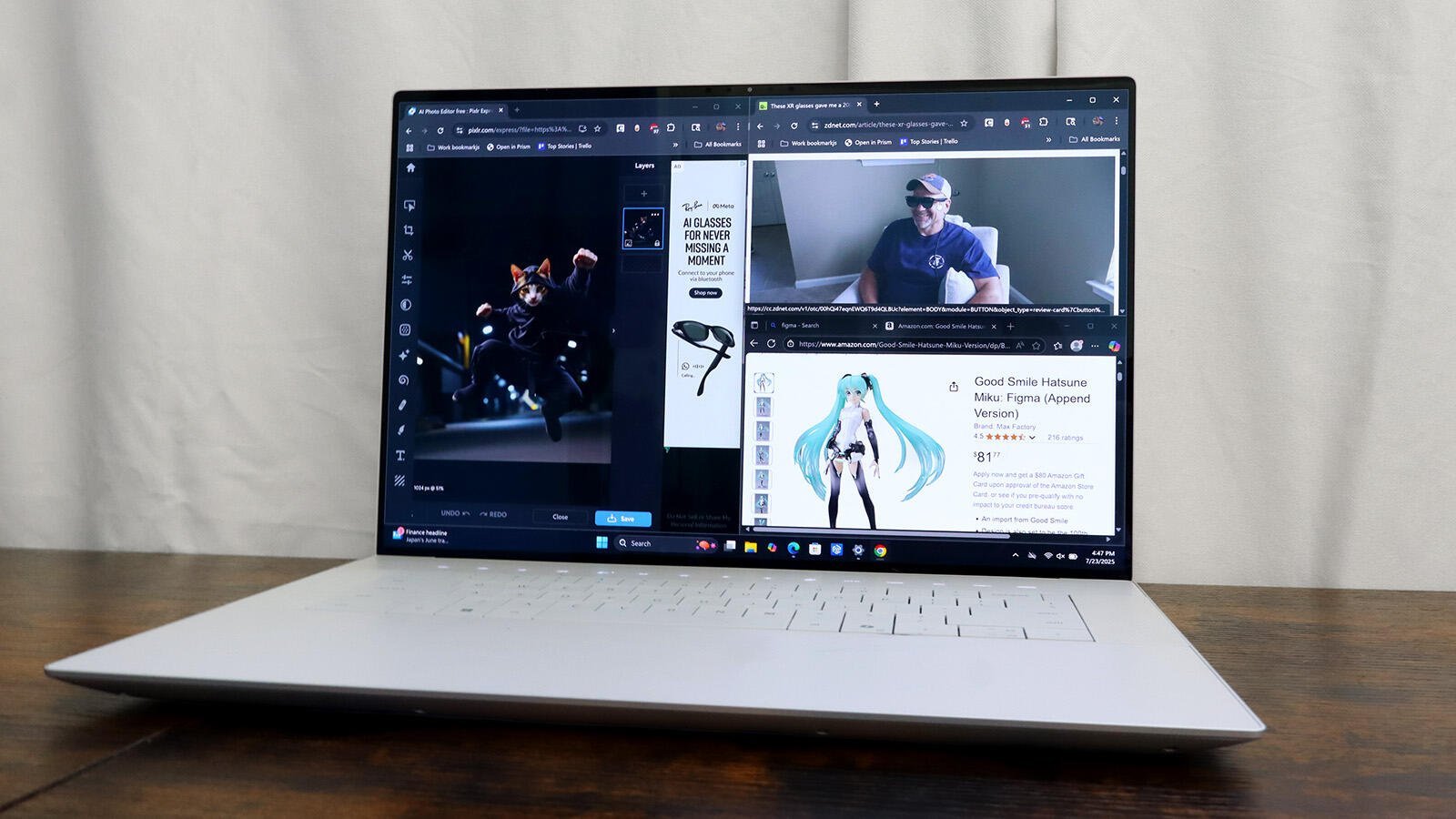 The hidden haptic trackpad blends into the chassis, emphasizing the Premium 16's clean aesthetic.
The Trade-Offs: Thermal and Battery Constraints
No device is without compromises. The Premium 16's thermal management struggles under sustained loads, with noticeable heat buildup during prolonged 4K video editing or multitasking with 50+ browser tabs. This mirrors a common critique of the XPS line and highlights the cooling limitations inherent in slim profiles—developers pushing continuous compilation cycles should monitor temperatures. Battery life, too, falters at around five hours under moderate use, though rapid charging (50% in 30 minutes) mitigates this for on-the-go scenarios.
Why This Matters for the Tech Ecosystem
Dell's iterative approach with the Premium 16 signals a shift toward specialization in professional-grade mobile hardware. By optimizing for creative workflows rather than gaming or general use, it carves a niche against giants like Apple's MacBook Pro. For tech leaders, this underscores a broader trend: the convergence of form factor and function in devices designed for hybrid work environments. At $2,800 for high-end configurations, it democratizes access to workstation-level performance, potentially reshaping procurement decisions in studios and development teams.
As the lines between consumer and professional devices blur, the Premium 16 stands as a testament to targeted innovation—proving that legacy isn't just about heritage, but about pushing boundaries without breaking the bank.
Source: ZDNET
Comments
Please log in or register to join the discussion