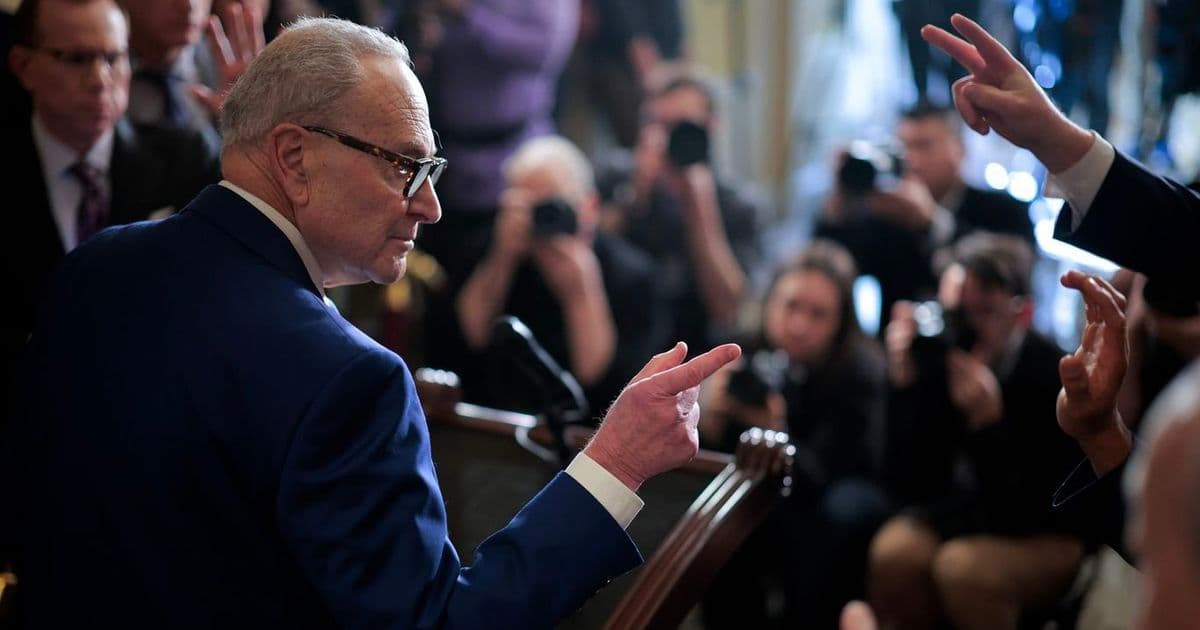
Senate Democrats are pushing back against Trump administration efforts to crack down on sanctuary cities, warning that the dispute could trigger a government shutdown as budget negotiations intensify.
Senate Democrats are escalating their opposition to the Trump administration's immigration enforcement policies, specifically targeting efforts to penalize sanctuary cities as a potential government shutdown looms.
The sanctuary city dispute
The Trump administration has been pushing for stricter enforcement of immigration laws, including withholding federal funding from cities that limit cooperation with federal immigration authorities. These "sanctuary cities" have policies that restrict local law enforcement from assisting federal immigration officials in detaining or questioning undocumented immigrants.
Democrats, led by Senate Minority Leader Chuck Schumer, argue that these policies are essential for maintaining trust between immigrant communities and local law enforcement. They contend that forcing local police to act as immigration agents would make communities less safe by discouraging crime reporting and cooperation with police.
Budget negotiations intensify
The sanctuary city debate has become entangled with broader budget negotiations as Congress faces a Friday deadline to fund the government. Democrats are signaling they may withhold support for any budget deal that includes provisions targeting sanctuary cities or reducing funding to these jurisdictions.
This standoff comes as lawmakers grapple with multiple contentious issues, including border wall funding, disaster relief, and overall spending levels. The sanctuary city dispute adds another layer of complexity to already difficult negotiations.
Political implications
The clash over sanctuary cities reflects the broader ideological divide between the two parties on immigration policy. Republicans generally favor stricter enforcement and view sanctuary policies as undermining federal law, while Democrats emphasize the humanitarian and practical aspects of these local policies.
With midterm elections approaching, both parties are using the issue to energize their bases. Republicans are appealing to voters who prioritize border security, while Democrats are highlighting what they see as the administration's harsh treatment of immigrant communities.
What happens next?
As the shutdown deadline approaches, both sides will need to find common ground or risk a partial government shutdown. The sanctuary city issue remains one of several sticking points, along with disagreements over healthcare funding, military spending, and disaster relief.
The outcome of these negotiations will have significant implications not only for federal funding but also for the future of sanctuary city policies across the country. A shutdown would disrupt government services and could have economic consequences, adding pressure to reach a compromise.
Historical context
Sanctuary city policies have existed in various forms for decades, with some cities adopting formal policies in the 1980s to protect Central American refugees. The debate intensified during the Obama administration and has become even more polarized under Trump.
Several court battles have already shaped the legal landscape around sanctuary policies, with mixed results. Some federal courts have blocked attempts to withhold funding from sanctuary jurisdictions, while others have upheld certain enforcement measures.
Economic considerations
Beyond the political and legal aspects, the sanctuary city debate has economic dimensions. Many of these jurisdictions are major urban centers that contribute significantly to state and national economies. The potential loss of federal funding could impact everything from public safety to infrastructure projects.
Additionally, businesses in these areas often rely on immigrant labor, and policies that create fear in immigrant communities can affect local economies. The uncertainty around federal funding and enforcement policies creates challenges for city planners and business owners alike.
Looking ahead
The sanctuary city debate is likely to remain a contentious issue regardless of the immediate budget outcome. As immigration continues to be a defining political issue, local policies on cooperation with federal authorities will remain under scrutiny.
For tech companies and other businesses operating in major urban centers, the political uncertainty around sanctuary policies could affect everything from hiring practices to expansion plans. The outcome of this debate may influence where companies choose to locate offices and how they approach workforce diversity and inclusion initiatives.
Comments
Please log in or register to join the discussion