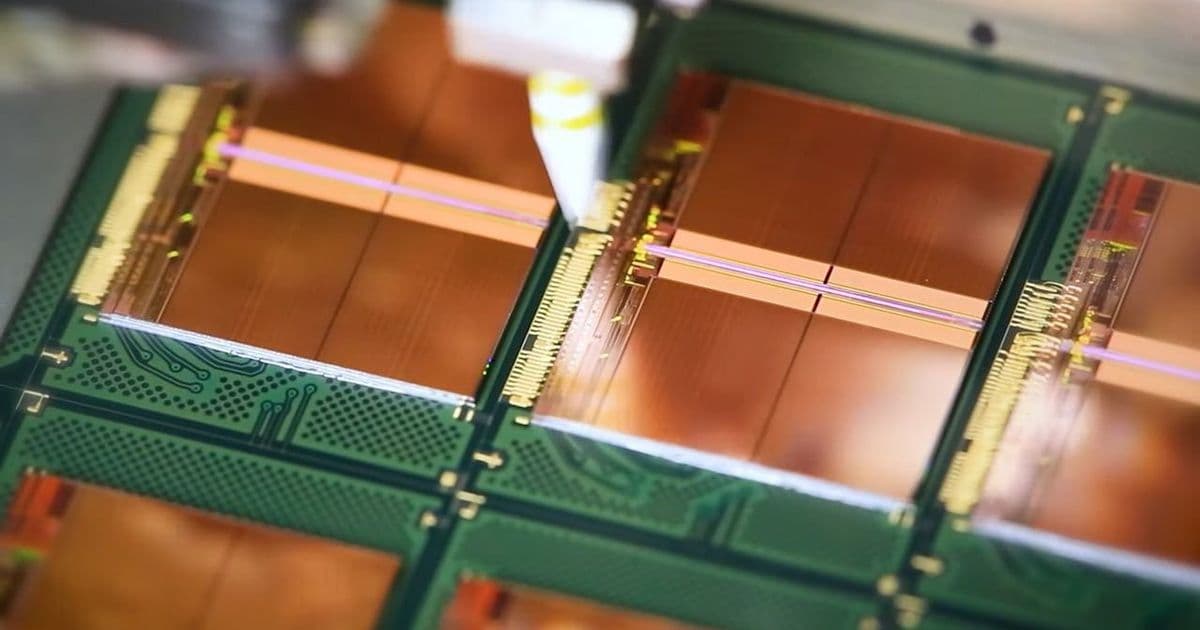
DRAM contract prices set to rise 58-63% in Q2 2026, while NAND Flash jumps 70-75% as AI server demand and cloud provider stockpiling create severe supply constraints.
The memory market is experiencing unprecedented price pressure as AI server demand continues to reshape supply chains and manufacturing priorities. According to TrendForce's latest pricing survey, DRAM contract prices are projected to climb between 58% and 63% quarter-over-quarter in Q2 2026, while NAND Flash prices are expected to surge even higher at 70% to 75% QoQ increases.
These dramatic increases follow an already extraordinary Q1 2026, where DRAM contracts jumped by a record 90% to 95% QoQ. While the rate of DRAM price growth has moderated slightly, NAND Flash prices have accelerated sharply from the prior quarter's approximately 60% increase, marking the first time in the current cycle that NAND's price surge outpaces DRAM.
The underlying dynamics driving these price increases reveal a fundamental shift in memory production priorities. DRAM suppliers continue reallocating capacity toward AI-related applications, while NAND production increasingly focuses on enterprise SSDs. This reallocation reflects the higher margins and stronger demand signals from the server segment, particularly from North American cloud providers rapidly expanding AI inference infrastructure.
Cloud service providers have emerged as the dominant force in the memory market, securing the bulk of available supply through long-term agreements. These hyperscalers are willing to pay premium prices and commit to multi-quarter purchase agreements to guarantee allocation, effectively crowding out other market segments. TrendForce indicates that meaningful capacity expansion is not expected until late 2027 at the earliest, suggesting this supply constraint will persist for the foreseeable future.
The server segment's voracious appetite for high-capacity RDIMMs has created a cascading effect throughout the memory supply chain. Memory manufacturers are locking in multi-quarter supply deals with their largest customers to underwrite future capacity builds, prioritizing server products over other applications due to their superior margins.
PC DRAM demand has been revised downward, yet suppliers have simultaneously reduced shipments to PC OEMs and module makers. This creates a paradoxical situation where OEMs receiving lower allocation fulfillment are forced to procure at higher prices from suppliers or module vendors, keeping prices elevated despite softer system-level demand. The disconnect between reduced PC demand and sustained high prices highlights the severity of the supply constraints.
NAND Flash faces even more acute challenges, with enterprise SSD demand showing no signs of abating as large-scale generative AI deployments continue to absorb the lion's share of production capacity. TrendForce expects a pronounced shortage through 2026, with new fab capacity unlikely to come online in volume before late 2027 or 2028.
Client SSD buyers are responding to these constraints by restocking preemptively out of concern that server demand could absorb all available capacity. Suppliers are maintaining prices by continuing to limit supply to client SSDs, effectively rationing their output to maximize returns from the server market.
The eMMC/UFS segment faces the tightest supply gap of any NAND product category. This vulnerability stems from the overlap between process capacity for eMMC/UFS and enterprise SSD production, combined with significantly lower margins on consumer-oriented products. As a result, eMMC/UFS has become the lowest-priority allocation for suppliers, creating potential supply chain disruptions for smartphone and tablet manufacturers.
Despite process upgrades and higher QLC adoption, NAND flash bit output growth remains limited. PC and smartphone vendors are reducing product storage capacities to manage costs, while NAND flash wafers have become the lowest-priority shipment category for suppliers due to thin margins and ongoing inventory adjustments.
The current market dynamics represent a fundamental restructuring of the memory industry, where AI server demand has become the primary driver of production decisions and pricing. With capacity expansion not expected until late 2027, these supply constraints and price pressures are likely to persist, forcing device manufacturers to adapt their product strategies and potentially limiting consumer access to high-capacity memory solutions in the near term.
Comments
Please log in or register to join the discussion