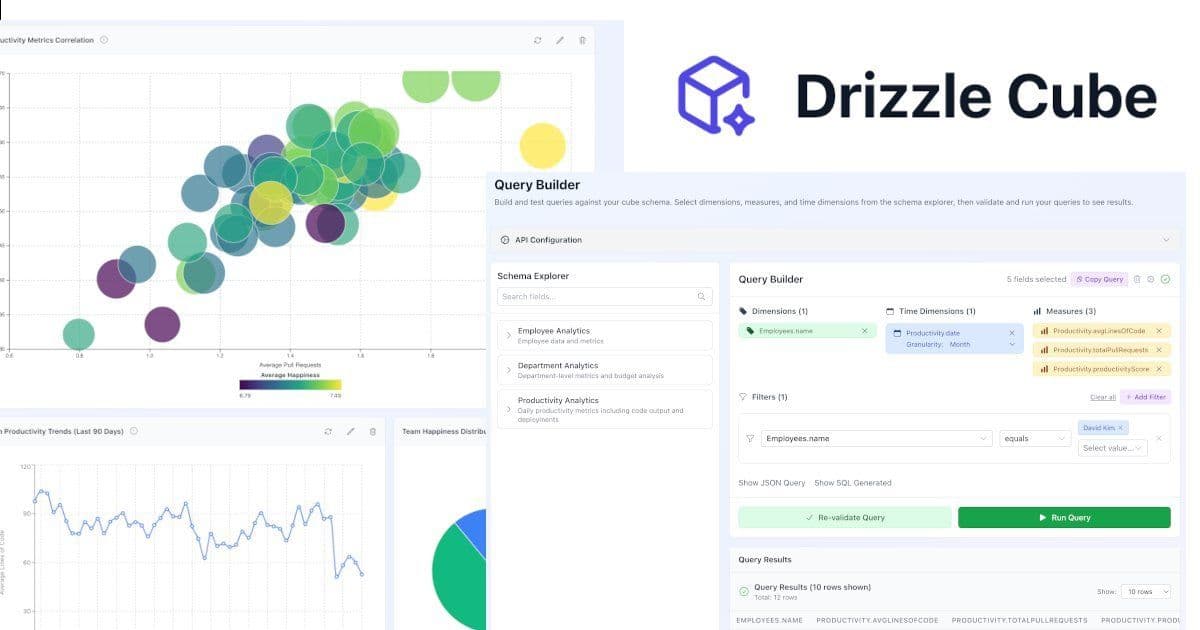
Drizzle ORM and Cube have launched an interactive demo showcasing their integration, allowing developers to query operational databases in real-time for analytical insights. This convergence addresses the traditional divide between transactional systems and analytics workloads without requiring complex ETL pipelines. The collaboration signals a shift toward unified data architectures for TypeScript developers.
For years, developers have navigated the chasm between operational databases powering applications and analytical systems used for business intelligence. A new interactive demo from Drizzle ORM and Cube aims to bridge this divide by showcasing how their integrated approach enables real-time analytics directly on operational data.
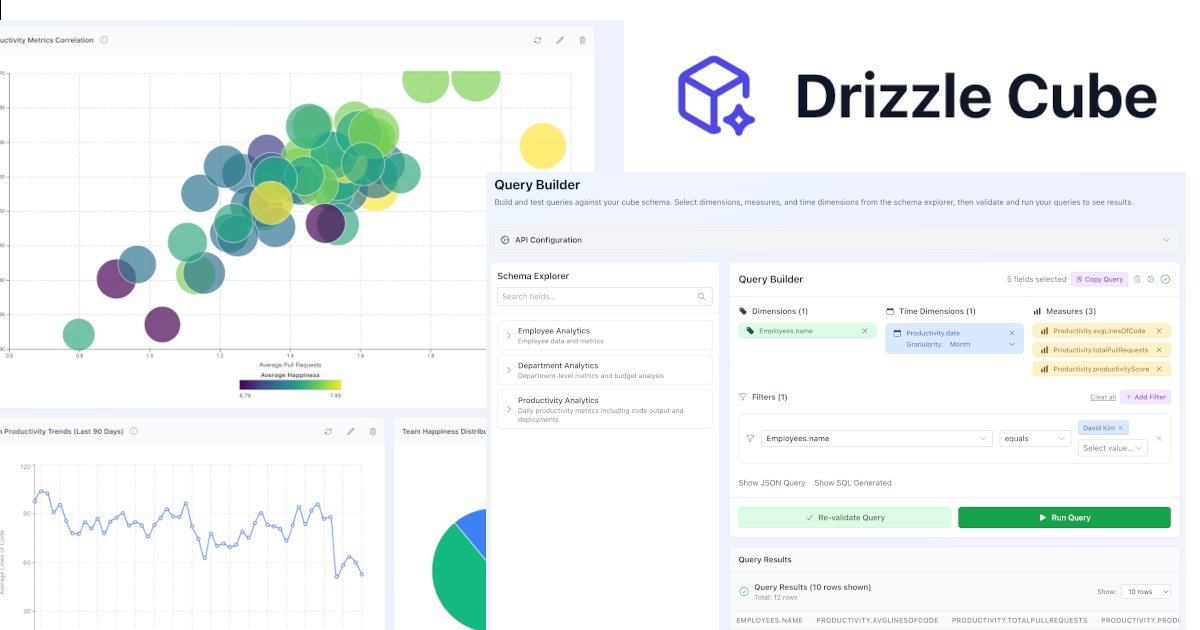
At the core of this integration is Drizzle ORM, a TypeScript-focused database toolkit known for its type safety and developer experience, working in tandem with Cube, an open-source semantic layer that structures data for analytical queries. Traditionally, moving data between these domains required cumbersome ETL processes, introducing latency and maintenance overhead.
"The Drizzle-Cube integration demonstrates how developers can define data models once and expose them for both application logic and analytical dashboards," explains a technical lead familiar with both projects. "It essentially eliminates the need for intermediary data pipelines in many use cases."
The live demo lets developers experiment with a PostgreSQL database schema modeled using Drizzle. Through Cube's API, they can then perform complex aggregations and filtering—typical analytical operations—directly against the same operational data store. This approach maintains data freshness crucial for real-time dashboards or personalized user analytics.
Key technical implications include:
- Unified Data Modeling: Define schemas in TypeScript with Drizzle, automatically leveraging Cube’s semantic layer for BI tools
- Reduced Infrastructure Complexity: Avoid maintaining separate data warehouses for simpler analytical needs
- Type-Safe Analytics: Extend TypeScript’s type safety to analytical query building
- Real-Time Capabilities: Enable sub-second analytics on live application data without batch processing delays
While not a replacement for dedicated data warehouses at massive scale, this integration offers a compelling option for startups and mid-size applications seeking to minimize system complexity. As one developer testing the platform noted: "Having my ORM and analytics layer speaking the same language changes how I design data-intensive features."
The collaboration reflects a growing trend toward consolidating data tooling in the TypeScript ecosystem. As applications demand increasingly real-time insights, solutions that gracefully blend operational and analytical workloads will become essential—making this more than just a demo, but a glimpse into the future of full-stack data management.
Comments
Please log in or register to join the discussion