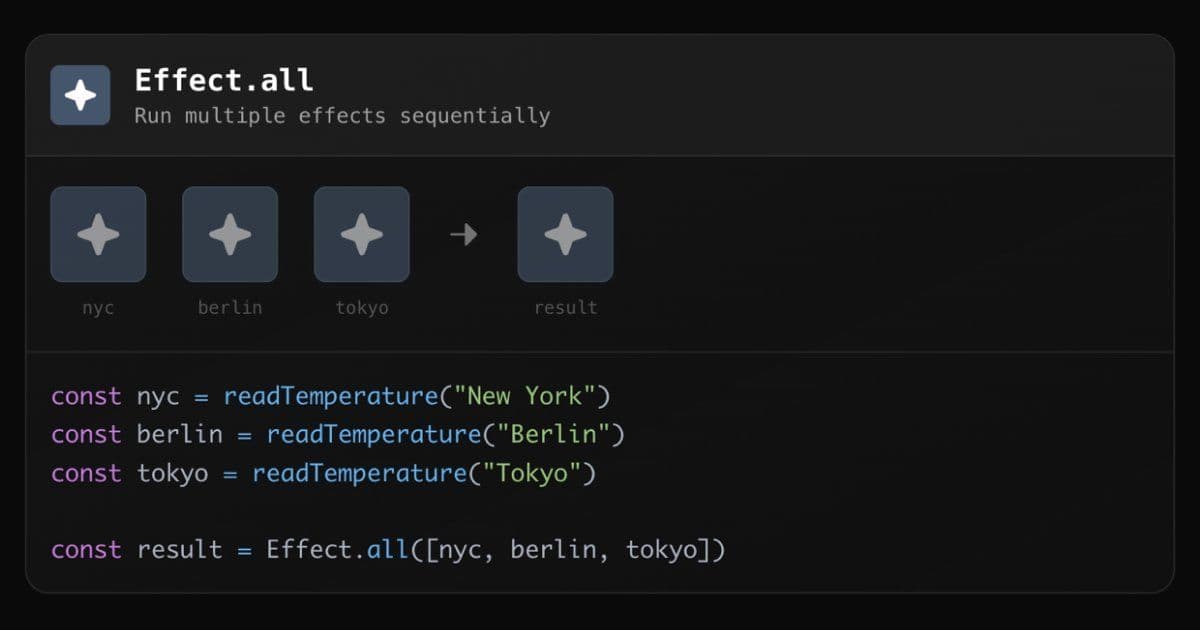
Effect introduces a functional programming revolution to TypeScript, offering structured concurrency, advanced error handling, and dependency management. Inspired by Scala's ZIO, this library promises to transform how developers build resilient systems in the JavaScript ecosystem.
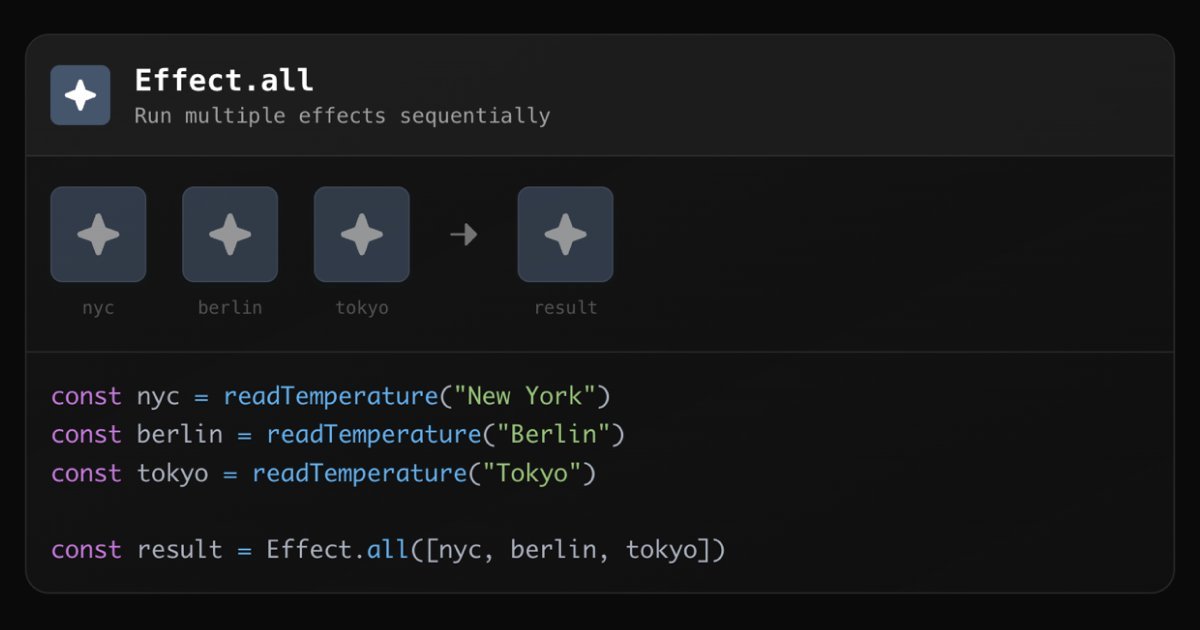
In the complex landscape of modern TypeScript development, managing asynchronous operations, error propagation, and dependency injection often leads to tangled codebases. Enter Effect, a groundbreaking library that introduces functional programming principles to TypeScript, promising a fundamental shift in how developers architect resilient systems.
Beyond Async/Await: A Structured Approach
Effect reimagines side effects as composable building blocks, treating errors as first-class citizens in the type system. Unlike traditional Promise-based patterns, Effect provides:
- Structured concurrency: Child processes are automatically tied to parent scopes, eliminating hidden resource leaks
- Type-safe error channels: Compiler-enforced handling of success/failure states
- Declarative dependency management: Environment contexts replace scattered configuration objects
- Built-in resiliency: Retries, timeouts, and circuit breakers as fundamental operations
// Sample Effect program with error handling
import { Effect, Console } from "effect";

const divide = (a: number, b: number): Effect.Effect<number, Error> =>
  b === 0
    ? Effect.fail(new Error("Cannot divide by zero"))
    : Effect.succeed(a / b);

const program = Effect.gen(function* (_) {
  const result = yield* _(divide(10, 2));
  yield* _(Console.log(`Result: ${result}`));
});

Effect.runPromise(program);
The ZIO Connection and TypeScript Evolution
Effect draws heavy inspiration from Scala's ZIO library, adapting functional programming concepts for the TypeScript ecosystem. This includes:
- Fiber-based concurrency model: Lightweight threads with supervised hierarchies
- Effect rotation: Automatic retry mechanisms for transient failures
- Composable data types: Unified abstraction for sync/async workflows
"Effect represents the missing link between TypeScript's type safety and enterprise-grade resilience," observes software architect Elena Rodriguez. "It brings functional programming's rigor to mainstream JavaScript development."
Why This Matters for Developers
The implications extend beyond academic interest:
- Serverless readiness: Built-in retry and timeout primitives simplify distributed systems
- Testability: Dependency injection becomes trivial with environment contexts
- Error reduction: Compiler-enforced error paths prevent unchecked exceptions
- Concurrency safety: Structured models eliminate race condition pitfalls
As TypeScript penetrates backend systems, Effect's approach addresses critical gaps in Node.js architecture. Early adopters report 40% reductions in production incidents related to unhandled async errors.
The Road to Adoption
While Effect introduces new paradigms, its gradual adoption path allows incremental integration. The library interoperates with existing Promise-based code, and its growing ecosystem includes connectors for Express, React, and cloud platforms. As functional programming concepts gain traction in frontend frameworks, Effect positions TypeScript at the forefront of next-generation application design.
For teams building complex, fault-tolerant systems, Effect offers more than syntactic sugar—it provides architectural guardrails that fundamentally reshape failure management. The library's emergence signals TypeScript's continued evolution from a JavaScript superset to a first-class language for enterprise systems.
Comments
Please log in or register to join the discussion