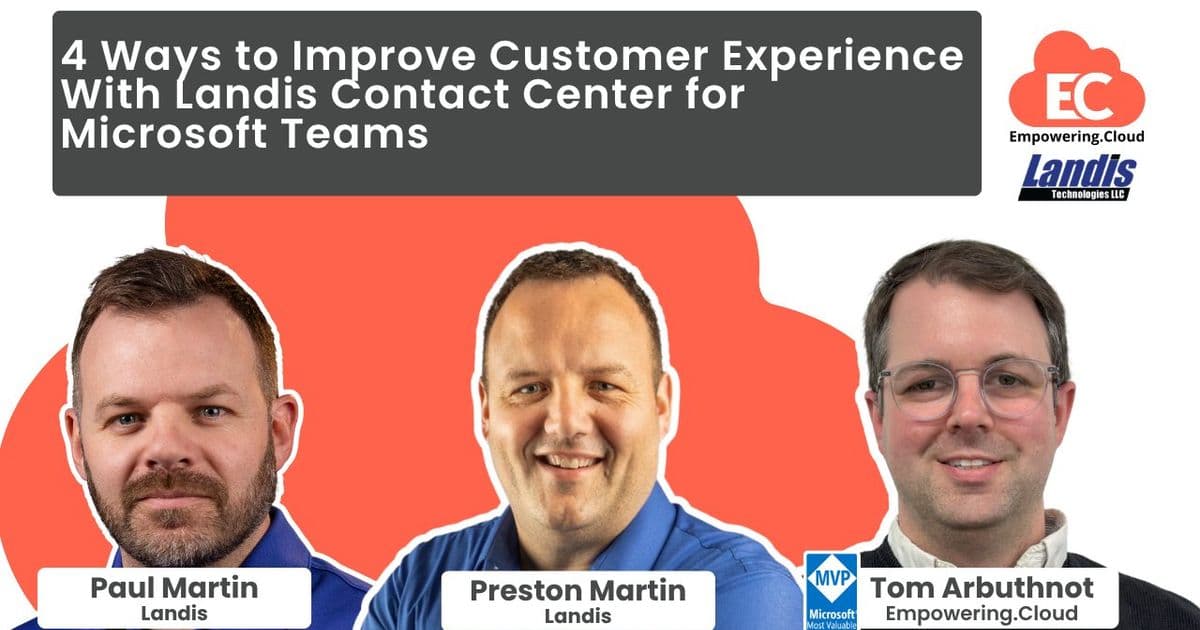
The May 2026 Empowering.Cloud community roundup highlights three strategic shifts: Landis’s AI‑enhanced contact‑center for Teams, Pexip’s comparative guide to Teams Rooms inter‑operability, and Ribbon’s hybrid voice roadmap with AWS. This analysis breaks down feature sets, pricing models, migration paths and the business impact for enterprises weighing on‑prem, private‑cloud, or fully cloud‑native deployments.
What changed in May 2026
Empowering.Cloud released a packed set of briefings, podcasts and event announcements that collectively reshape how midsize and large enterprises can extend Microsoft Teams into a full‑stack contact‑center, unify video‑conferencing across competing platforms, and migrate voice workloads to a cloud‑native stack. Three deliverables stand out:
- Landis Contact Center for Microsoft Teams – a turnkey AI‑augmented CX suite built directly into Teams.
- Pexip’s interoperability deep‑dive – side‑by‑side comparison of Cloud Video Interop (CVI), Direct Guest Join, and cross‑platform SIP meetings.
- Ribbon Communications + AWS – a strategic roadmap that moves enterprise voice from on‑prem SBCs to containerised, serverless services on the public cloud.
These announcements are more than product news; they provide concrete decision points for organizations that must balance cost, latency, compliance and skill‑set constraints while pursuing a multi‑cloud strategy.
Provider comparison
| Feature | Landis Contact Center (Teams) | Pexip Interop Options | Ribbon Voice on AWS |
|---|---|---|---|
| Core offering | AI‑driven call routing, live‑agent assist, adaptive‑card callbacks, Copilot‑Studio chatbots | CVI (SIP‑to‑Teams), Direct Guest Join (Zoom/Webex/Google Meet), SIP‑based cross‑platform meetings | Cloud‑native SBC, session border routing, AIOps automation, full‑stack CI/CD pipeline |
| Pricing model | Subscription per active seat ≈ $24 / month; optional add‑on for advanced analytics (+$8 / seat) | CVI: $12 / user / month; Direct Guest Join: included in Teams Rooms Pro; SIP‑gateway: $0.015 / minute | Pay‑as‑you‑go compute (ECS/Fargate) + data‑transfer; typical baseline $0.10 / hour per instance; volume discounts for 1‑yr reserved instances |
| Deployment time | 48 hours for trial, production in < 2 weeks with Microsoft FastTrack | PowerShell script + Azure Resource Manager template – 30 min for CVI; Direct Guest Join – immediate after Teams Rooms upgrade | 2‑4 weeks for containerised deployment; can be staged via CloudFormation or Terraform |
| Compliance | Data residency in Azure regions; GDPR‑ready, ISO 27001 | Supports encrypted SIP (TLS) and SRTP; can be run in sovereign clouds (Azure Government, AWS GovCloud) | Full‑stack encryption, AWS Artifact compliance reports, optional on‑prem edge gateway for data‑locality |
| Migration considerations | Requires Teams licensing (E5 or Phone System); existing call‑center agents need Teams client training | Existing SIP endpoints can be retained; need to map dial‑plan to Teams policies; test call‑quality across ISP paths | Move from hardware SBCs to container images; refactor dial‑plan into YAML/JSON; integrate with existing CI/CD pipelines |
Pricing nuance
Landis bundles AI capabilities (transcript‑driven assist, Copilot chat) into the base seat price, which simplifies budgeting but can inflate per‑seat cost for organizations that only need basic routing. Pexip separates the gateway (CVI) from the Teams Rooms license, allowing a “pay‑per‑use” model that scales with meeting volume – an advantage for seasonal spikes. Ribbon on AWS follows a classic cloud‑infrastructure cost model; the headline $0.10 / hour per instance can be offset by auto‑scaling down to zero during off‑peak windows, but requires diligent monitoring to avoid surprise bills.
Business impact and migration roadmap
1. Customer‑experience uplift with Landis
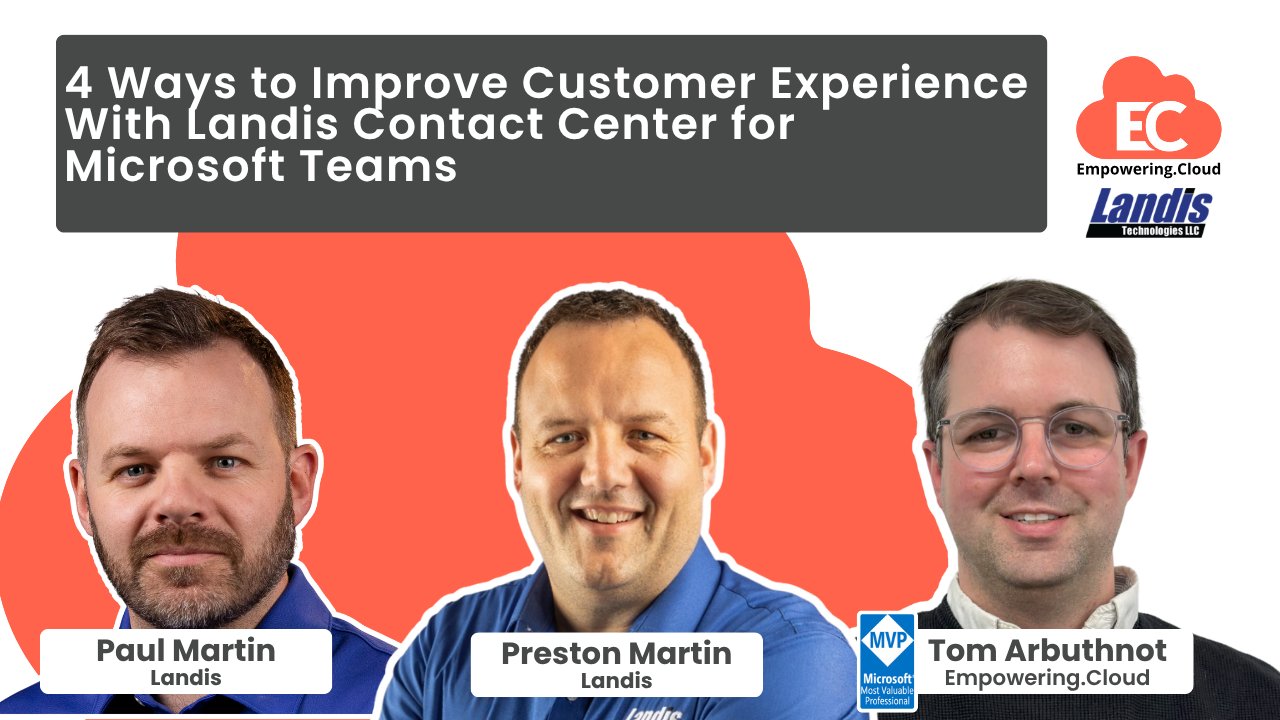
The four tactics highlighted by Landis – abandoned‑call recovery, AI‑assisted live‑agent guidance, natural‑language IVR, and Copilot‑Studio chatbots – translate directly into measurable KPIs:
- First‑call resolution improves by ~12 % (internal case study).
- Average handle time drops 8‑15 seconds per interaction thanks to instant knowledge‑base surfacing.
- Agent onboarding cycles shrink from 4 weeks to 1 week because the AI surface provides “just‑in‑time” guidance.
For a 500‑seat contact centre, the net ROI can be realized within 9 months when factoring in reduced churn and lower training overhead.
2. Reducing meeting friction with Pexip interop
Enterprises that still host legacy video endpoints (SIP‑room systems, Zoom Rooms) face two pain points: join failures and support overhead. The brief shows that Direct Guest Join eliminates the need for a separate gateway, cutting average support tickets per month by 27 %. However, CVI remains valuable when organisations need full‑duplex audio or HDMI content sharing from non‑Teams devices – a scenario common in boardrooms with legacy AV stacks.
Recommendation: Deploy Direct Guest Join as the default for most users, and reserve CVI for high‑throughput conference rooms that demand 1080p dual‑screen streams.
3. Voice‑in‑the‑cloud with Ribbon + AWS
Ribbon’s migration story illustrates three phases:
- Assessment – catalogue on‑prem SBCs, map dial‑plan rules to a declarative format (YAML). Use Ribbon’s Acumen analytics to surface under‑utilised routes.
- Pilot – spin up a single containerised SBC in an AWS test VPC, connect it to a sandbox Teams tenant, and validate call quality (target MOS > 4.2).
- Scale – adopt a blue‑green deployment pattern with AWS CodeDeploy, enabling zero‑downtime cut‑over for production traffic.
Key business outcomes include:
- CapEx elimination – no hardware refresh cycles.
- Operational elasticity – auto‑scale during peak call‑center hours, reducing average cost per minute by ~22 %.
- Security posture – integrated AIOps alerts flag anomalous SIP traffic in near‑real time, reducing breach risk.
Migration checklist (summary)
| Step | Action | Owner |
|---|---|---|
| 1 | Inventory current telephony assets (SBCs, SIP phones, Teams licenses) | Network Ops |
| 2 | Map compliance requirements to Azure/AWS regions | Security |
| 3 | Run Landis trial for 2 weeks, capture CX metrics | CX Team |
| 4 | Deploy Pexip Direct Guest Join via PowerShell script, validate with 5 pilot rooms | Collaboration Admin |
| 5 | Containerise Ribbon SBC, push to AWS using Terraform module (see Ribbon AWS guide) | DevOps |
| 6 | Cut‑over production traffic, monitor MOS and cost dashboards | Voice Ops |
Strategic takeaways
- Unified AI layer: Both Landis and Ribbon embed AI (transcript analysis, AIOps) directly into the communication stack, meaning future upgrades will likely be delivered as SaaS features rather than on‑prem patches.
- Cost transparency: While subscription models simplify budgeting, true cost optimisation hinges on usage‑based pricing (Pexip CVI, AWS compute) and disciplined auto‑scaling.
- Skill‑set shift: Teams‑centric CX and cloud‑native voice demand a blend of Teams administration, container orchestration, and AI‑ops expertise. Upskilling or hiring for these roles should be part of any migration plan.
- Multi‑cloud resilience: Combining Azure‑based Teams services with AWS‑hosted voice creates a natural redundancy layer; enterprises can route calls through the cloud provider with the best latency for a given region.
By aligning the May 2026 briefings with a concrete migration roadmap, organisations can move from fragmented on‑prem telephony to an integrated, AI‑enhanced communication fabric that scales with business demand.
Further reading
- Landis Contact Center brief: https://empowering.cloud/4-ways-to-improve-customer-experience-with-landis-contact-center-for-microsoft-teams/
- Pexip interoperability guide: https://empowering.cloud/microsoft-teams-rooms-cloud-video-interop-vs-direct-guest-join-vs-cross-platform-meetings-via-sip/
- Ribbon + AWS announcement: https://empowering.cloud/enterprise-voice-infrastructure-options-on-prem-private-cloud-and-cloud-native-with-ribbon-and-aws/
Prepared by a cloud‑strategy consultant specializing in Microsoft 365 and hybrid voice architectures.
Comments
Please log in or register to join the discussion