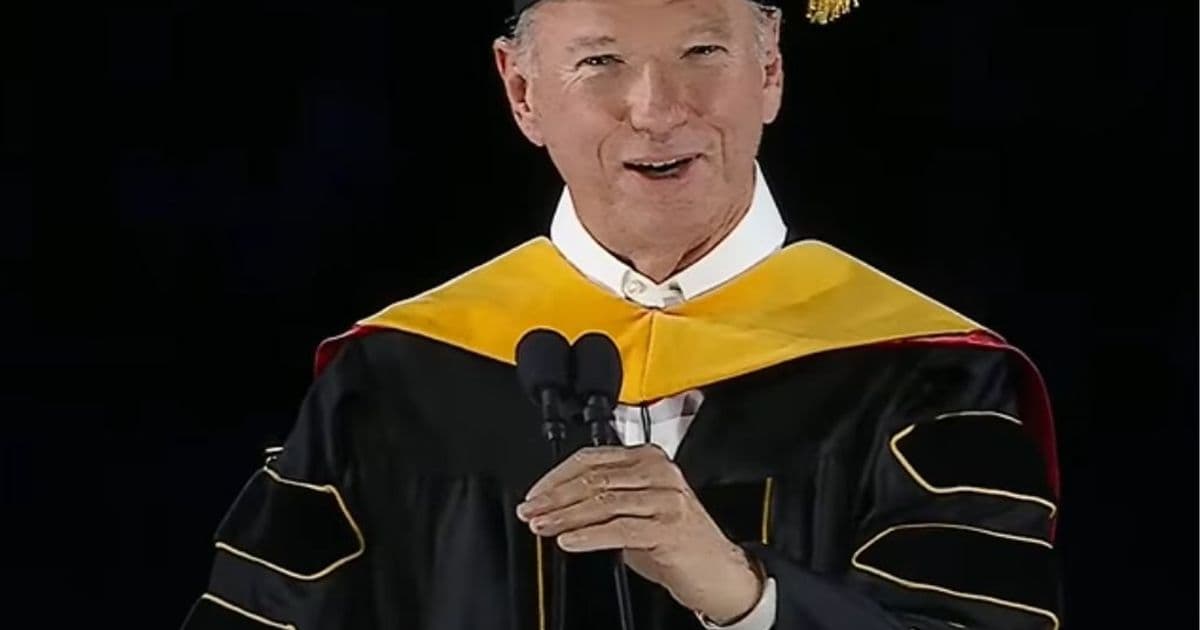
Former Google CEO Eric Schmidt faced significant backlash at University of Arizona's commencement ceremony when discussing artificial intelligence, reflecting growing concerns about AI's impact on future job markets and technological development.
The former Google CEO, Eric Schmidt, who led the company from 2001 to 2011, encountered an unexpectedly hostile reception during the University of Arizona's 162nd commencement ceremony last Friday. Thousands of graduates packed into the Casino Del Sol stadium expressed their disapproval when Schmidt began discussing artificial intelligence, with booing intensifying each time he mentioned the technology.
Schmidt opened his speech by reflecting on how past technological breakthroughs created what he termed a "cathedral of knowledge," an analogy that resonated with some audience members. However, the mood shifted dramatically when he transitioned to AI-related topics. "Last December, Time magazine selected its Person of the Year for 2025, and this time it was the architects of artificial intelligence," Schmidt stated, provoking immediate jeering from the crowd.
The negative reaction highlights a significant divide between tech industry leaders and younger generations entering the workforce. Many graduates expressed fears that AI could eliminate entry-level positions across multiple industries, creating uncertainty about their career prospects in an increasingly automated world.
"I know what many of you are feeling about that. I can hear you. There is a fear in your generation that the future has already been written, that the machines are coming, that jobs are evaporating, that the climate is breaking, that politics is fractured, and that you are inheriting a mess that you did not create. And I understand that fear," Schmidt acknowledged in response to the crowd's reaction.
The former CEO described these concerns as "rational" and attributed their intensification to social media algorithms that amplify fears rather than addressing them constructively. "The question is not whether AI will shape the world. It will. The question is whether you will help shape artificial intelligence," Schmidt attempted to reframe the conversation.
This incident raises important questions about the future relationship between AI development and employment markets. For students graduating with degrees in computer science, engineering, and related fields, the message is clear: technical skills alone may not guarantee career stability in an AI-driven economy. The ability to understand, adapt to, and potentially shape AI technologies will become increasingly valuable.
For hardware manufacturers, this public sentiment could influence development priorities. Companies producing AI accelerators, GPUs, and specialized computing hardware may need to address ethical concerns more directly while continuing to innovate performance capabilities. The balance between computational power and responsible AI development will become a key differentiator in the competitive hardware market.
Schmidt's final message to graduates emphasized agency in shaping the future: "The future is not yet finished. It is now your turn to shape it." This perspective suggests that while AI will undoubtedly transform industries, human influence on its development trajectory remains significant.
For those entering the tech workforce, the incident serves as a reminder that technical proficiency must be complemented by ethical awareness and adaptability. The hardware and software industries will continue to evolve rapidly, creating both challenges and opportunities for prepared professionals.
The University of Arizona commencement ceremony, captured in official YouTube footage, provides a valuable case study in public perception of AI technologies and their potential societal impacts. As AI becomes increasingly integrated into everyday technologies and workflows, understanding these perspectives will be crucial for developers, manufacturers, and policymakers alike.
Comments
Please log in or register to join the discussion