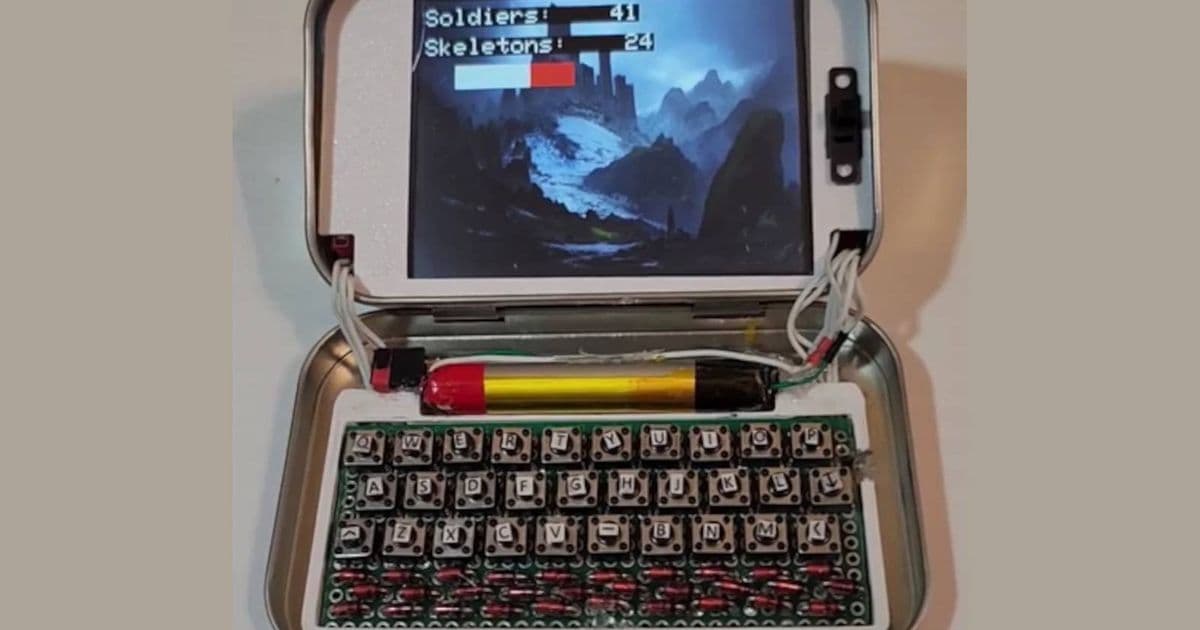
A maker has created a fully functional computer inside an Altoids tin, complete with a keyboard and the ability to run DOOM, demonstrating the incredible capabilities of modern microcontrollers.
The world of DIY electronics continues to push boundaries with a remarkable new project: a fully functional computer housed inside an Altoids tin, complete with an integrated keyboard and the ability to run DOOM. This project showcases the impressive processing power of modern microcontrollers and the creativity of makers who continue to find innovative uses for everyday objects.
At the heart of this project is the ESP32, a powerful microcontroller that has become a favorite among DIY enthusiasts and professional developers alike. The ESP32 combines Wi-Fi and Bluetooth connectivity with substantial processing power, making it ideal for projects that require more than just basic microcontroller functionality.
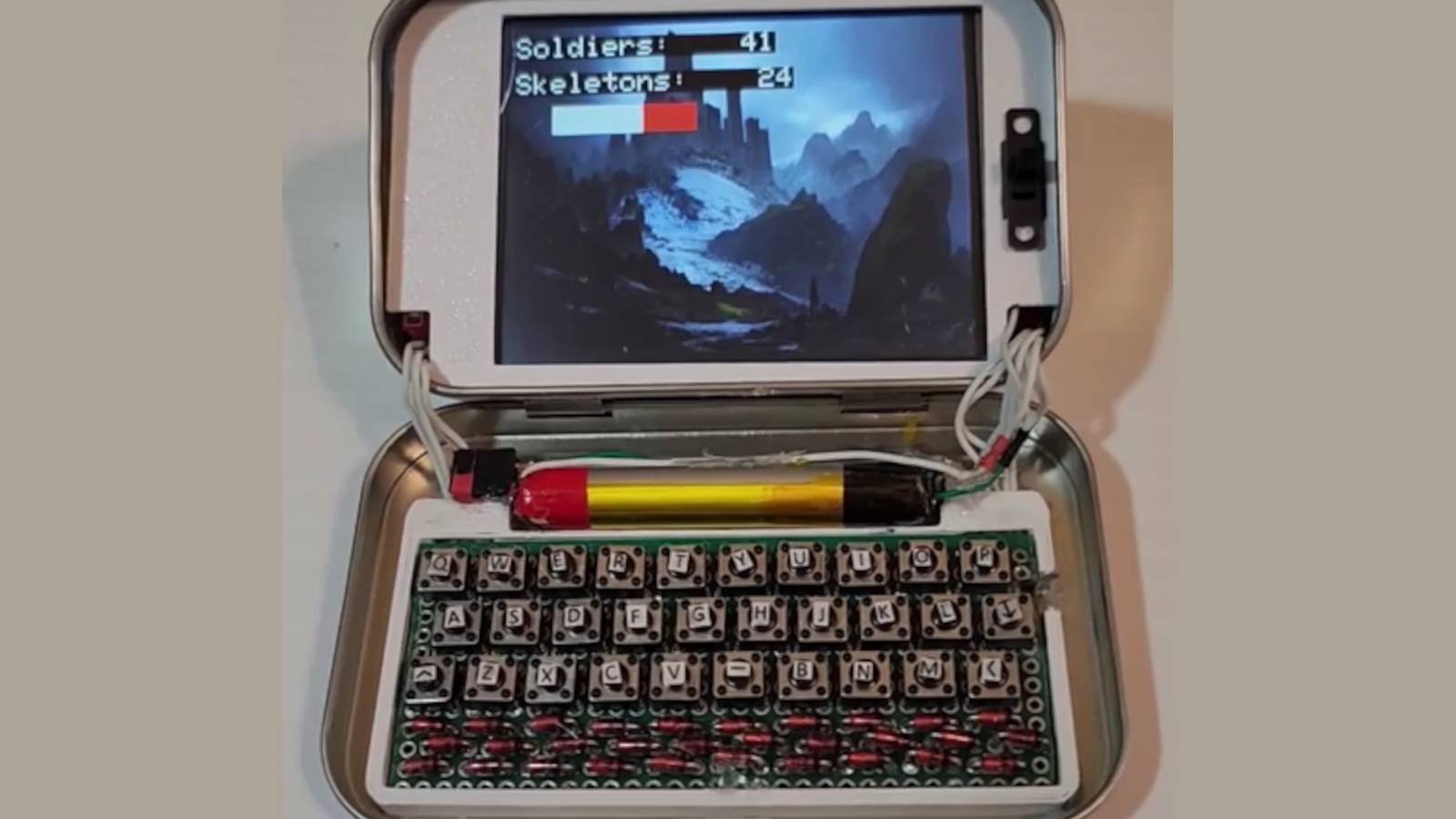
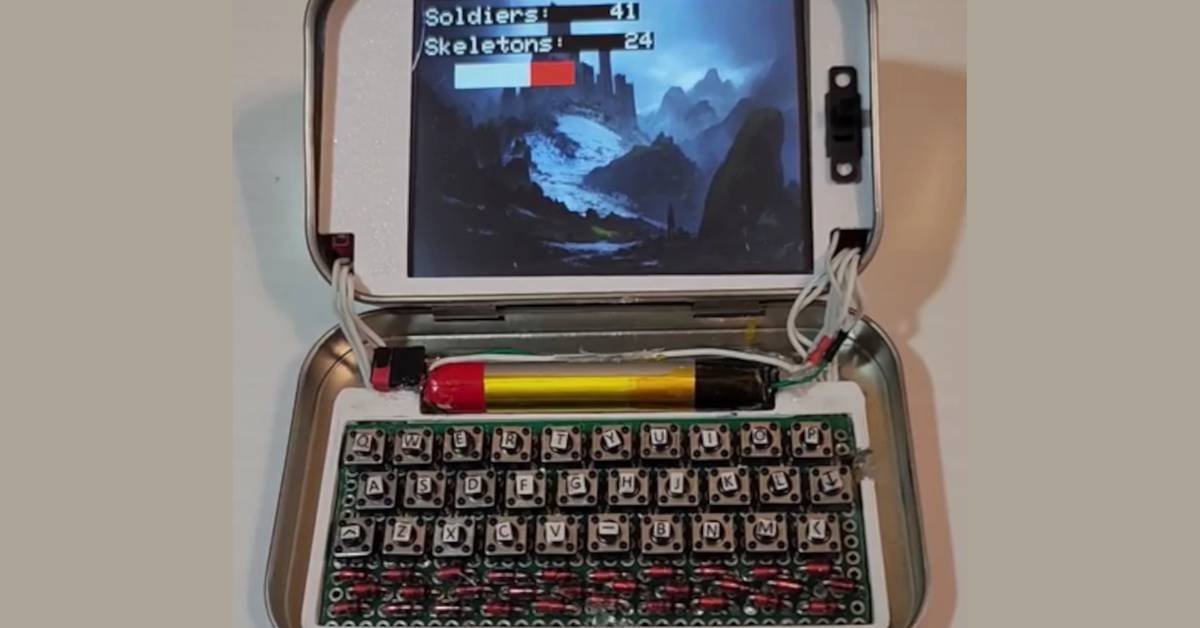
The choice of an Altoids tin as the enclosure is both practical and nostalgic. These tins are durable, readily available, and provide a compact form factor that perfectly houses the electronic components. The maker has carefully arranged the ESP32 development board, a small OLED display, and a custom keyboard circuitry to fit within the limited space while maintaining accessibility and functionality.
One of the most impressive aspects of this project is the keyboard integration. Rather than relying on external peripherals, the maker has designed a custom keyboard that fits within the Altoids tin itself. This likely involved either repurposing a small membrane keyboard or creating a custom matrix using individual switches and connecting them directly to the ESP32's GPIO pins. The result is a truly portable all-in-one computing experience.
Running DOOM on such a limited platform is where this project truly shines. DOOM, a classic first-person shooter game originally released in 1993, was known for pushing the boundaries of gaming technology in its era. The fact that it can now run on a microcontroller the size of a postage stamp demonstrates just how far technology has come.
The technical implementation involves using the DOOM source code, which was released under the GPL license in 1997. Makers have ported DOOM to numerous platforms over the years, including microcontrollers like the ESP32. This particular implementation likely uses a software renderer to generate the game graphics on the small OLED display, with the ESP32 handling both the game logic and rendering in real-time.
For developers interested in creating similar projects, the ESP32 offers several advantages. It includes dual-core processors running at up to 240MHz, with up to 520KB of SRAM and various storage options. The Wi-Fi and Bluetooth capabilities open up possibilities for networked applications, remote control, or even multiplayer gaming functionality.
The development environment for ESP32 projects typically involves the Arduino IDE or ESP-IDF, Espressif's official development framework. Both options provide libraries and tools specifically designed for ESP32 development, making it easier to implement complex features like graphics rendering and input handling.
From a practical standpoint, this project demonstrates several important concepts in embedded systems development:
Resource optimization: Running a complex game like DOOM on a microcontroller requires careful memory management and efficient code optimization.
Hardware abstraction: The project likely uses libraries that abstract the low-level hardware details, allowing developers to focus on the application logic.
Power considerations: The ESP32 is designed for low-power operation, making it suitable for battery-powered projects like this one.
For those interested in building their own version, the project would require several key components:
- ESP32 development board (such as the ESP32 DevKitC)
- Small OLED display (SSD1306 or similar)
- Custom keyboard matrix or small membrane keyboard
- Battery for portable operation
- Various electronic components (resistors, capacitors, etc.)
- Altoids tin for enclosure
The project's creator has likely shared detailed instructions and code on platforms like GitHub or Instructables, though specific details aren't provided in the initial announcement. For makers looking to explore similar projects, resources like the ESP32 Community Forum and Instructables offer extensive tutorials and project ideas.
This Altoids tin ESP32 computer represents more than just a novelty project. It demonstrates the incredible capabilities of modern microcontrollers and the ingenuity of makers who continue to push the boundaries of what's possible with accessible technology. As microcontrollers become increasingly powerful, we can expect to see even more ambitious projects that blur the line between embedded systems and traditional computing.
For developers and hobbyists, projects like this serve as both inspiration and educational tools, showcasing how to maximize the potential of limited hardware resources while creating engaging, functional applications. The ability to run DOOM—a game that once required high-end hardware—on a microcontroller in an Altoids tin is a testament to the rapid advancement of technology and the creativity of the maker community.
Comments
Please log in or register to join the discussion