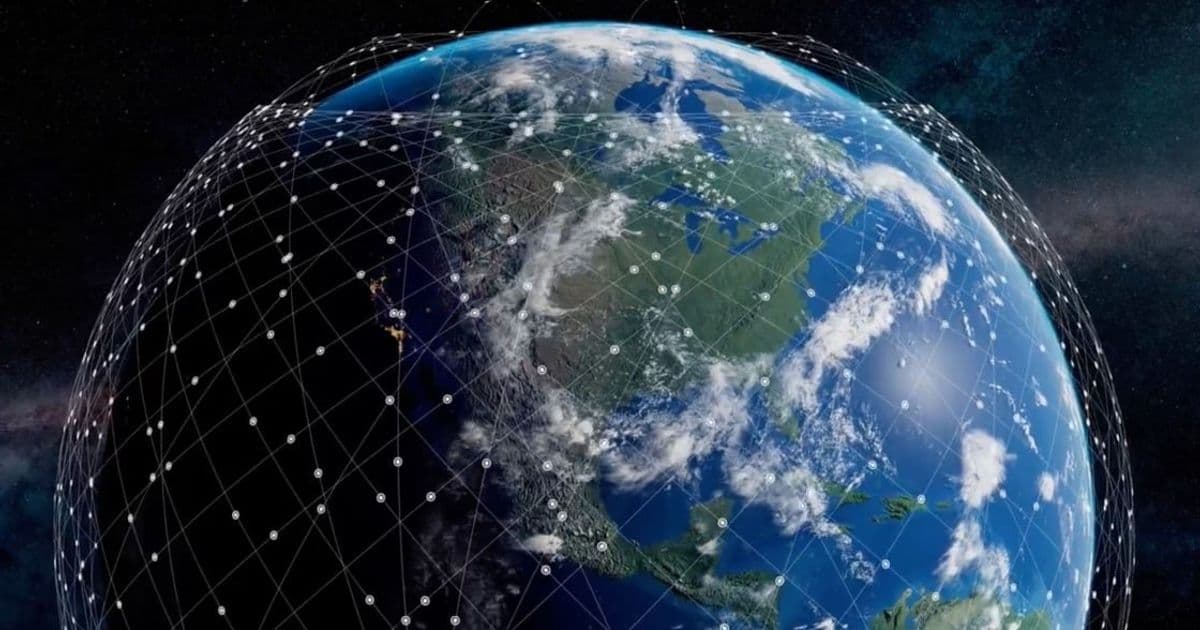
The FCC has granted Amazon approval to launch 4,504 additional satellites for its Project Kuiper constellation, advancing its challenge to SpaceX's Starlink but facing significant technical and regulatory hurdles.
The Federal Communications Commission has authorized Amazon's Project Kuiper to deploy 4,504 second-generation satellites for its low Earth orbit (LEO) broadband network. This decision (FCC filing) significantly expands Amazon's original 3,236-satellite license and marks a critical step in the company's $10 billion effort to compete with SpaceX's Starlink. Unlike typical regulatory approvals, this authorization comes with stringent conditions requiring collision avoidance systems and post-mission disposal reliability exceeding 99%.
Technical Specifications and Improvements
The Gen2 satellites differ substantially from Amazon's first-generation design:
- Frequency Optimization: Utilizes Ka-band (26.5-40 GHz) spectrum with phased-array antennas for dynamic beamforming
- Throughput Gains: Each satellite now supports ~1 Gbps throughput (vs. ~400 Mbps in Gen1) through improved inter-satellite laser links
- Orbital Architecture: Deployment across three altitude shells (590km, 610km, 630km) to minimize signal latency below 50ms
- Mass Reduction: 20% lighter than Gen1 at ~500kg through compact Ka-band antenna designs
The FCC's approval requires Amazon to launch 50% of the constellation by July 2026 and the full system by July 2029 – an aggressive timeline given Amazon's current launch cadence. Only two prototype satellites have reached orbit thus far aboard ULA's Atlas V, with full-scale production yet to begin.
Strategic Challenges
Amazon faces multiple substantive hurdles:
Launch Capacity: With SpaceX dominating commercial launches, Amazon must rely on its Project Kuiper Launch Agreements with Blue Origin (12 New Glenn launches), ULA (38 Vulcan launches), and Arianespace (18 Ariane 6 launches). These unproven rockets have limited flight heritage.
Orbital Debris Mitigation: The FCC's 99% reliability requirement for deorbiting places extraordinary demands on satellite propulsion and redundancy systems. Current industry standards hover at 95%.
Spectrum Coordination: Amazon must prevent interference with existing Ku-band systems like Viasat and OneWeb through precise frequency filtering – a challenge given the proximity of Ka/Ku bands.
Economic Viability: At an estimated $2 million per satellite (production + launch), the constellation requires $9 billion just for deployment, excluding ground station infrastructure. This dwarfs Amazon's current $1.7 billion investment in the project.
Comparative Landscape
When operational, Project Kuiper would become the second-largest LEO network after Starlink's 5,400+ satellites. However, technological differences remain significant:
| Parameter | Starlink Gen2 | Kuiper Gen2 |
|---|---|---|
| Satellite Mass | ~800kg | ~500kg |
| Frequency | Ku/Ka-band | Ka-band |
| Inter-sat Links | Laser (partial) | Laser (full mesh) |
| Production Rate | 6/day | Projected 3/day |
| User Terminal Cost | $599 | $400 (projected) |
Regulatory Hurdles Ahead
The FCC's approval explicitly states that Amazon must secure separate authorization for its user terminals – a process that proved contentious during Starlink's approval. Additionally, the International Telecommunication Union requires coordination filings for frequency use across 192 member states, which could delay international service rollout.
Amazon's satellite team, led by former SpaceX VP Rajeev Badyal, now faces the monumental task of transforming paper approvals into orbital infrastructure. With SpaceX launching satellites at 20x Amazon's current rate, Project Kuiper's technical ambitions must rapidly translate to operational reality to avoid becoming a multibillion-dollar footnote in the LEO broadband race.
Comments
Please log in or register to join the discussion