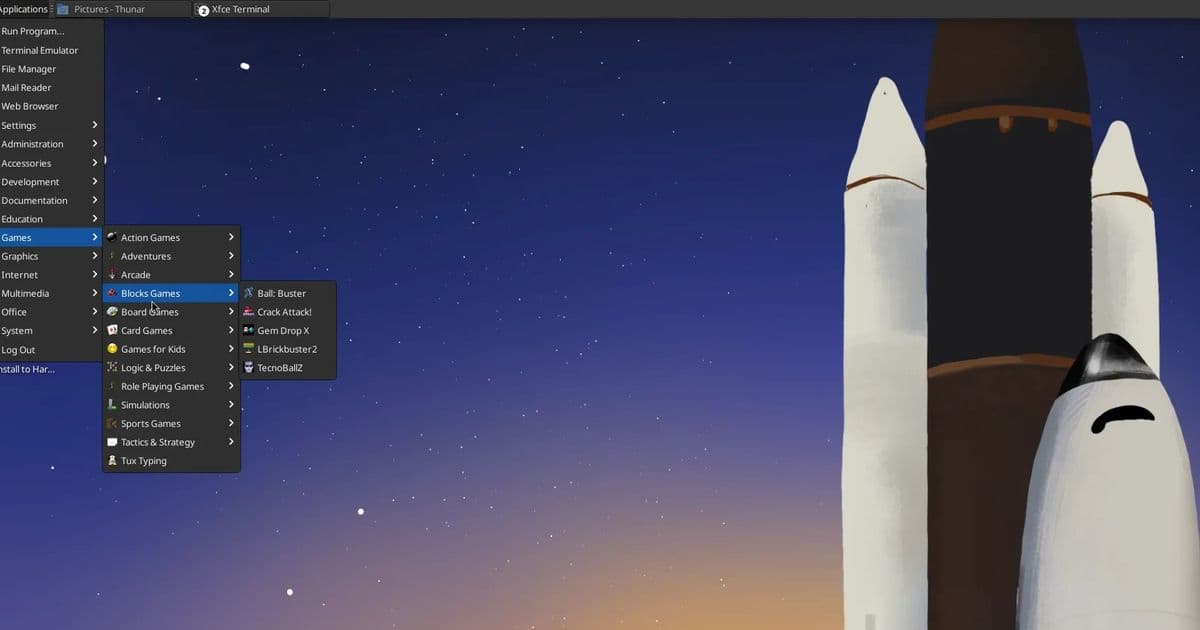
Fedora's gaming-focused spin is getting a complete refresh for Fedora 44, switching from Xfce to KDE Plasma 6.6 to better showcase modern Linux gaming technologies like Wayland, HDR, and VRR.
The Fedora Engineering and Steering Committee (FESCo) has officially approved a fundamental change to Fedora Games Lab that will transform it from a minimal-maintenance spin into a modern Linux gaming showcase. Starting with Fedora 44, the project will abandon its long-standing Xfce desktop environment in favor of KDE Plasma 6.6.
This move represents more than just a desktop swap—it's a strategic response to the dramatic evolution of Linux gaming over the past five years. The original Games Lab had dwindled to near-zero maintenance with most contributors gone, while the Linux gaming ecosystem exploded with innovations that the spin never incorporated.
Why KDE Plasma?
The choice of KDE Plasma 6.6 isn't arbitrary. Valve's substantial contributions to the desktop environment have made it the most gaming-friendly option available. Plasma offers superior Wayland support compared to Xfce, which is critical for accessing modern gaming features like HDR (High Dynamic Range) and VRR (Variable Refresh Rate).
These technologies have matured from experimental to essential. PipeWire integration, Wayland protocol improvements, and direct rendering advancements all work more seamlessly within Plasma's architecture. For gamers who want to push their hardware to its limits, the desktop environment can no longer be an afterthought.
The Fedora 44 Transformation Plan
The approved change proposal outlines a comprehensive revitalization strategy:
Documentation Overhaul: Fedora's gaming documentation will be completely refreshed to reflect current capabilities. This includes practical guides for game installation, emulation setup, development workflows, and performance optimization techniques.
Upstream Collaboration: The new Games Lab will serve as a staging ground for gaming patches that benefit handhelds and other gaming hardware. Many of these patches currently live in downstream distributions like Bazzite or ChimeraOS. By bringing them into Fedora proper, the project can contribute improvements back upstream.
Open Source Showcase: Rather than just providing a platform for proprietary games, the spin will highlight what open-source gaming stacks can achieve. This includes game engines, creation tools, and indie titles that demonstrate Linux's native gaming capabilities.
Downstream Synergy: The proposal explicitly acknowledges the role of gaming-focused downstreams. Distributions like Bazzite have built sophisticated gaming experiences on Fedora's foundation. The new Games Lab aims to create a commons where these projects can collaborate on shared infrastructure rather than maintaining parallel patches.
Technical Implications
For users, this switch means immediate access to features that Xfce simply can't provide:
- Native Wayland session with proper fractional scaling for high-DPI gaming monitors
- Integrated VRR support without requiring manual xorg.conf tweaks
- PipeWire audio with low-latency capture for streaming and voice chat
- Better HDR preview support as the ecosystem matures
- Plasma's gaming-specific widgets like frame rate monitors and system overlays
The KDE Plasma 6.6 base also means access to the latest KDE frameworks and Qt improvements that have been optimized for modern hardware.
Community Context
This decision comes at a time when Linux gaming has reached unprecedented adoption. Steam's monthly hardware surveys show Linux users consistently above 2%, with Arch Linux and Fedora-based distributions leading the charge. The Steam Deck's success has validated Linux as a gaming platform, and downstream projects have proven that Fedora's infrastructure can support sophisticated gaming use cases.
The old Games Lab was essentially frozen in time while the rest of the ecosystem sprinted forward. By adopting Plasma and actively maintaining gaming-specific packages, Fedora aims to create a reference implementation that showcases the best of what's possible.
What Changes for Users
Current Games Lab users will see a completely different desktop experience. The transition should be smooth since both environments can coexist on the same system, but the workflow differences are significant:
- Xfce's traditional menu → Plasma's application launcher with search
- Manual configuration files → System Settings GUI for most tweaks
- Limited compositing → Full compositing with gaming-specific optimizations
- Separate audio/pipewire setup → Integrated PipeWire management
The Games Lab will also likely include gaming-specific defaults: pre-configured Steam, Lutris, Heroic Games Launcher, and emulators. Documentation will guide users through optimizing their setup for different gaming scenarios—competitive multiplayer, single-player AAA titles, retro gaming, and indie development.
Looking Ahead
With FESCo approval secured, the Fedora 44 cycle will bring these changes to life. The project's success will likely depend on community engagement—both from gamers willing to test and report issues, and from developers who can help upstream patches.
For the broader Linux gaming ecosystem, this represents an important step toward standardization. Instead of each downstream reinventing the wheel, Fedora Games Lab could become the common foundation that reduces fragmentation and accelerates development.
The transformation from minimal-maintenance spin to active gaming showcase reflects Linux gaming's own journey from hobbyist curiosity to serious platform. Fedora's decision to invest in this space signals confidence that Linux gaming isn't just viable—it's worth showcasing.
Fedora Games Lab's new KDE Plasma direction aims to leverage years of community development in Linux gaming.
Comments
Please log in or register to join the discussion