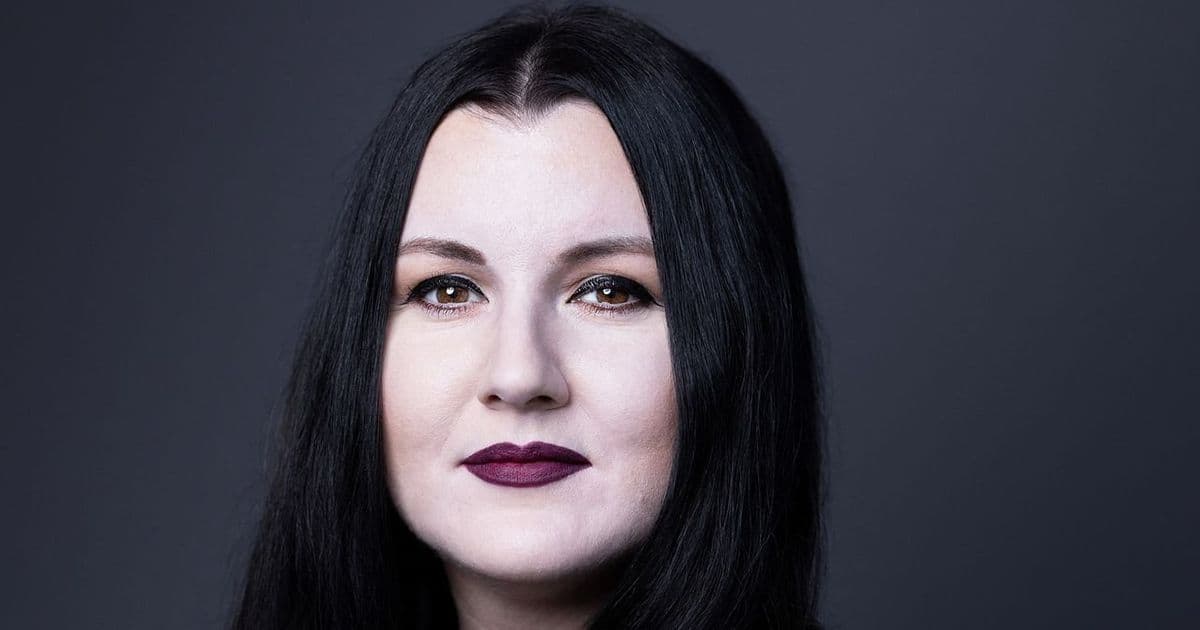
OpenAI's incoming CEO of applications Fidji Simo declared in her first staff memo that AI will 'unlock more opportunities than any technology in history,' outlining a future of personalized coaching, democratized education, and emotional support. The Instacart and Meta veteran positioned OpenAI's tools as society's great equalizer while hinting at emotionally intelligent companions aligned with rumored hardware projects. Her ambitious vision sets the stage for translating cutting-edge research i
Fidji Simo, OpenAI's newly appointed CEO of applications, has framed artificial intelligence as humanity's ultimate empowerment tool in her inaugural memo to staff—a document radiating Silicon Valley optimism while hinting at the company's controversial ambitions. Drawing from her experience as Instacart's CEO and Meta's head of Facebook product, Simo declared OpenAI's technology will "unlock more opportunities for more people than any other technology in history," positioning it as a catalyst for dismantling barriers to knowledge, economic mobility, and personal growth.
The Democratization Blueprint
Simo's vision rests on six transformational pillars where AI could reshape society:
- Knowledge: Compressing "thousands of hours of learning into personalized insights" via adaptive tutors
- Health: Enabling data-driven wellness optimization
- Creative Expression: Lowering barriers to artistic and professional creation
- Economic Freedom: Automating drudgery to unlock human potential
- Time: Reclaiming hours lost to administrative tasks
- Support: Providing always-available AI coaching that "brings subconscious patterns to consciousness"
Central to her thesis is hyper-personalization. "Everyone needs a 'Katia in their pocket,'" Simo wrote, referencing her exclusive business coach—a privilege she claims ChatGPT can democratize. "It doesn’t just answer questions—it teaches us to ask better ones," she asserted, framing AI as both instructor and emotional scaffold.
The "Her" Ambition and Operational Reality
Simo's emphasis on AI companionship aligns with OpenAI's rumored hardware venture with Jony Ive—reportedly a context-aware device that could manifest Altman's oft-cited inspiration from the film Her. Yet this vision remains contentious; where Simo sees emotional clarity, critics see dependency risks from algorithmically mediated relationships. Her memo notably sidesteps these ethical debates, focusing instead on the transformative potential.
As the executive tasked with productizing OpenAI's research—including ChatGPT, enterprise APIs, and partnerships—Simo must bridge the gap between aspirational rhetoric and technical delivery. Her mandate extends beyond feature development to embedding AI as what she calls "the great equalizer" in daily life. This requires overcoming formidable challenges in personalization accuracy, privacy preservation, and avoiding the very inequalities the technology promises to solve.
The Optimism Gap
Simo's arrival signals OpenAI's intensified consumer focus, but her utopian framing contrasts sharply with ongoing AI limitations:
# Current AI coaching limitations vs. Simo's vision
vision = {
    "Personalized tutoring": "Adaptive learning paths at individual pace",
    "Emotional support": "Context-aware companionship",
    "Economic empowerment": "Automated income-generating workflows"
}
reality_check = ["Hallucinations", "Data privacy risks", "Algorithmic bias amplification"]
The memo's hyper-optimism mirrors Altman's playbook for rallying talent and investment behind moonshots like artificial general intelligence (AGI) and the rumored $100 billion Stargate supercomputer project. Yet for developers building atop OpenAI's APIs, Simo's vision underscores a critical question: Can large language models evolve from pattern-matching engines into genuine understanding systems capable of the profound personal growth she describes?
Simo's closing line—"If AI can help people truly understand themselves, it could be one of the biggest gifts we could ever receive"—encapsulates OpenAI's high-stakes gamble. The tools she'll oversee could either democratize elite services or create new dependencies, making her product execution as consequential as her rhetoric.
Source: WIRED
Comments
Please log in or register to join the discussion