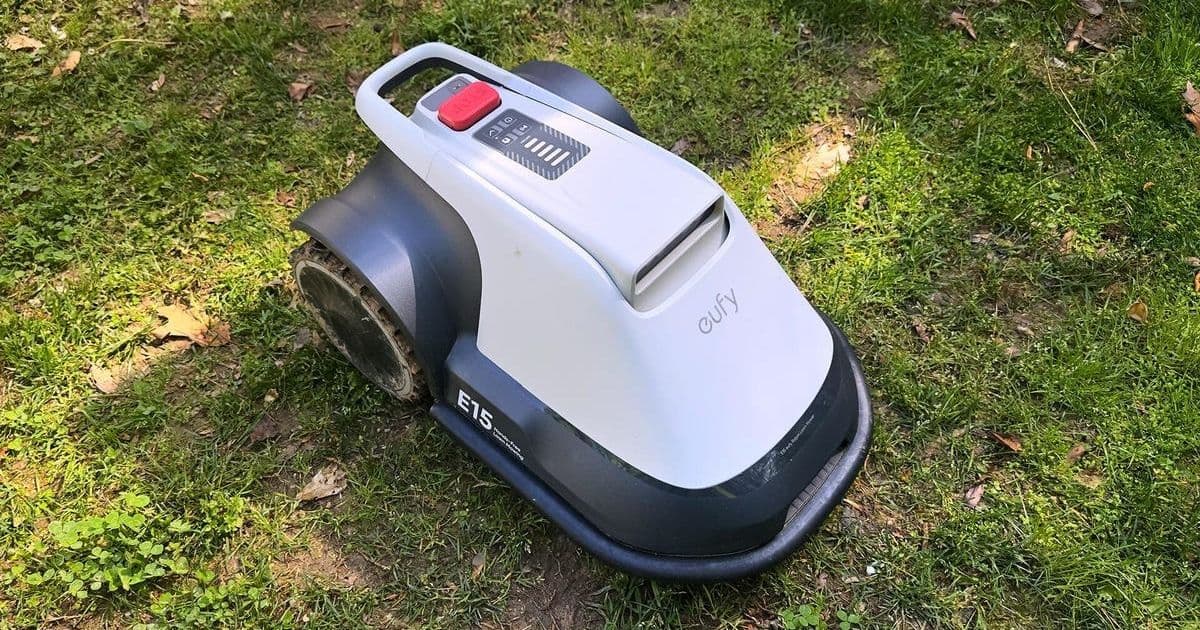
Eufy's E15 Robot Mower leverages visual recognition and AI algorithms to navigate lawns without boundary wires or RTK antennas, promising a simpler setup. In ZDNET testing, it excelled in flat, fenced yards but struggled on uneven terrain. This innovation highlights the push toward more autonomous, user-friendly smart home devices.
Eufy's Wire-Free Robot Mower: Testing the Future of Autonomous Lawn Care
For homeowners, the chore of lawn mowing often feels like a relentless battle—until robotics enter the fray. Eufy's E15 Robot Mower ($1,400 on sale, down from $2,300) aims to revolutionize this space by eliminating the most cumbersome aspect of robotic lawn care: the need for buried boundary wires or precisely positioned antennas. Instead, it relies on a combination of Visual Fusion Sensing and Decision (V-FSD) technology, 3D sensors, and AI algorithms to map and navigate yards autonomously. According to a ZDNET review by Maria Diaz, this approach represents a significant leap in accessibility, though it comes with terrain-dependent limitations.
How the Tech Works: Vision and AI Replace Physical Boundaries
The E15’s core innovation lies in its wire-free navigation system. Unlike traditional robot mowers that require perimeter wires or RTK/GNSS antennas for GPS-based guidance, the E15 uses onboard cameras and sensors to scan its environment in real-time. During a two-hour mapping phase, it traverses the lawn, employing AI to distinguish grass from obstacles like garden beds, decks, or slopes. This data builds a digital map within the Eufy app (shared with Eufy’s security ecosystem), where users can set virtual no-go zones and adjust mowing parameters. Key technical features include:
- Real-time obstacle avoidance: The AI detects dynamic objects, like pets or toys, adjusting paths on the fly.
- Customizable mowing patterns: Users control grass height, blade speed, and scheduling via the app, with options for edge trimming and manual RC-style steering.
- Rain detection: Automatically pauses mowing during wet conditions to protect the device and lawn.
"This robot mower navigates much like a robot vacuum. I believe this is the future of the technology—less invasiveness, more autonomy," notes Diaz. Yet, as with all AI-driven systems, accuracy depends on environmental consistency.
Real-World Testing: Triumphs and Pitfalls
In ZDNET’s hands-on evaluation, the E15 proved ideal for small, flat yards (up to 0.2 acres) with clear boundaries. It adeptly avoided predefined no-go zones and adapted to minor changes, such as new obstacles. However, testing revealed critical limitations:
- Uneven terrain challenges: On sloped or irregular lawns, the mower frequently got stuck, particularly on steep inclines or near poorly defined garden beds.
- Mapping inefficiencies: The initial scanning process is time-consuming, and the AI occasionally misidentified boundaries, leading to inadvertent flower-bed "trimming."
- Fenced dependency: While capable in open areas, unfenced front yards risked the mower drifting into neighboring properties—making physical barriers a practical necessity.
For complex landscapes, Diaz recommends alternatives like the AWD Mammotion Luba 2, emphasizing that the E15’s strength is its simplicity and reduced setup friction. "It’s perfect for even-terrained, fenced yards with concrete patios or trees," she concludes, highlighting its value for users prioritizing ease over versatility.
Why This Matters for Tech and Developers
The E15 isn’t just a convenience—it’s a case study in applying computer vision and AI to real-world navigation problems. For developers, its V-FSD system showcases how sensor fusion and machine learning can replace physical infrastructure, reducing installation costs and user effort. This aligns with broader trends in consumer robotics, where vacuum-like autonomy is expanding to outdoor tasks. Still, the terrain struggles underscore ongoing hurdles in environmental adaptability, signaling opportunities for innovation in sensor robustness and predictive algorithms.
As robot mowers evolve, Eufy’s approach could democratize smart lawn care, but its success hinges on advancing AI to handle nature’s unpredictability. For now, it’s a compelling step toward truly hands-off maintenance—so long as your yard plays by the rules.
Comments
Please log in or register to join the discussion