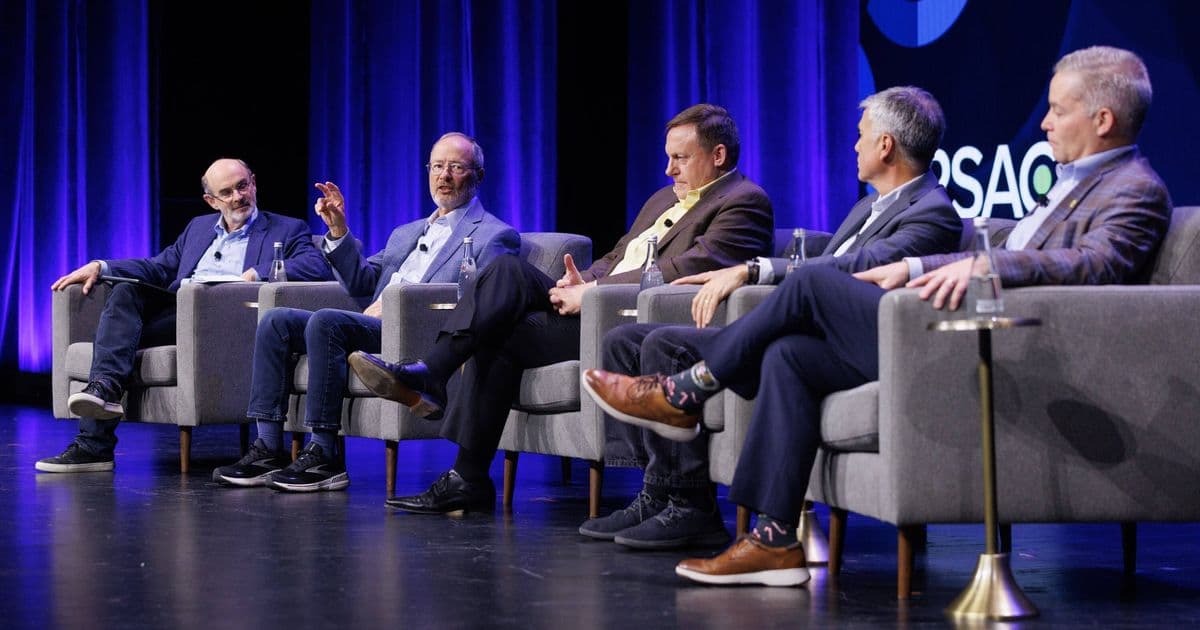
At RSA Conference 2026, four former NSA directors revealed there's no defined threshold for when cyber attacks trigger kinetic military responses, leaving that decision entirely to presidential discretion.
Former NSA directors warned at RSA Conference 2026 that the United States lacks a clear threshold for when cyber attacks escalate to kinetic military responses, with the decision ultimately resting entirely with presidential discretion.
Retired General Paul Nakasone, speaking alongside three other former NSA chiefs during a Wednesday keynote, argued that establishing a well-defined "red line" for cyber warfare would be counterproductive. "The president should have a lot of leeway in which he determines whether or not the nation's going to respond kinetically," Nakasone stated.
This position contrasts with retired Navy Admiral Mike Rogers, who advocated for minimum criteria such as loss of life or critical infrastructure damage before considering military responses to cyber attacks.
Rogers drew from his experience as NSA head under President Obama during the 2014 North Korean hack of Sony Pictures. "I remember sitting down with President Obama in the aftermath of Sony and North Korea doing a destructive attack against the US company and talking about the criteria for an offensive act," he recalled. "My concept was, sir, this is the beginning. You're going to see more of this over time. So what is the criteria we're going to use?"
The former directors acknowledged they "never could get to a well-defined red line" despite extensive discussions about appropriate responses to cyber attacks. This ambiguity means that President Trump, described as a convicted felon who claims to be guided by his "own morality" rather than international law, would have sole authority to determine when cyber attacks warrant military retaliation.
Nakasone expressed concern about American society becoming "numb" to the escalating cyber threat landscape. "I think we've become numb to it," he said, comparing today's situation to the 2008 discovery of Russian malware in classified US networks, which prompted an "all hands on deck" response.
The former NSA directors emphasized the need for enhanced public-private partnerships to address growing cyber threats, particularly as ransomware attacks increase in speed and cost, Chinese state-sponsored groups like Volt Typhoon maintain long-term network access, and America's lead cyber-defense agency operates without permanent leadership.
The keynote occurred amid notable absences of current federal government speakers at the conference, though the former directors nonetheless advocated for increased collaboration between government and private sector entities, especially regarding artificial intelligence development.
Retired General Keith Alexander framed AI as "a civilizational challenge that our nation be the lead," warning that leadership in AI, robotics, drones, biotech, and cybersecurity will determine future superpower status. "It's the public and private sector working together," Alexander said. "It will be both the government and you all helping to protect this country, to ensure that we live through it, and AI will be a big part."
The lack of clear cyber warfare thresholds raises significant concerns about potential escalation and the concentration of decision-making power in determining responses to digital attacks that could have devastating real-world consequences.
Comments
Please log in or register to join the discussion