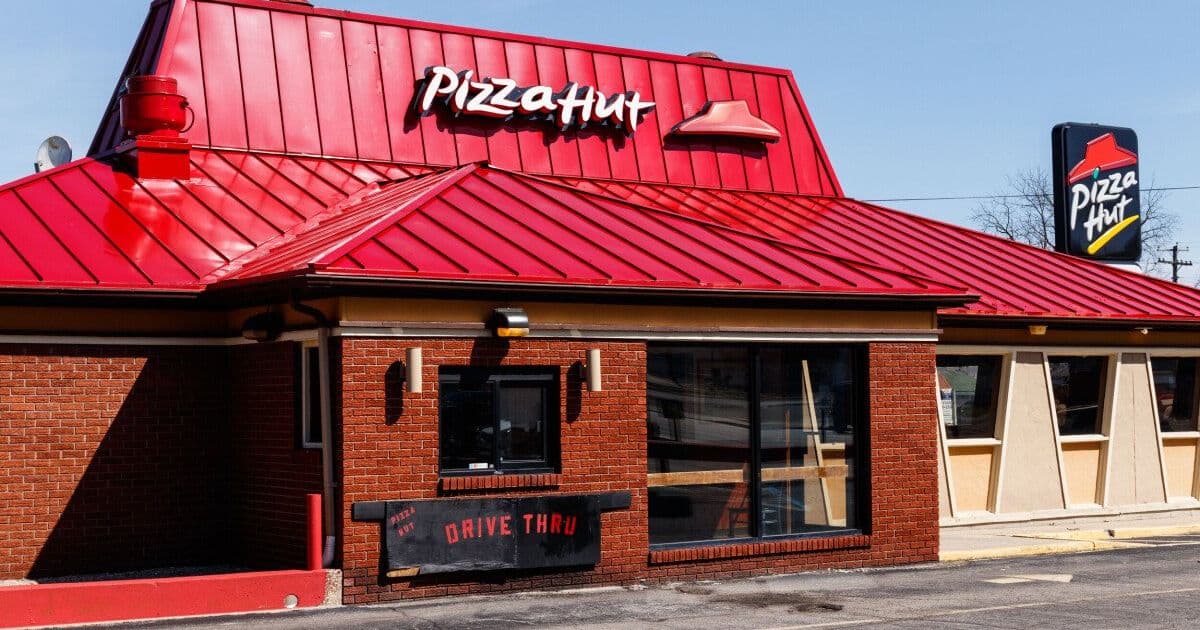
Chaac Pizza Northeast alleges that the Dragontail AI platform forced by Yum Brands crippled its 111‑store network, costing over $100 million in lost revenue, profit, and enterprise value. The suit highlights latency spikes, power‑draw concerns, and integration headaches that turned a promised efficiency boost into a bottleneck for delivery‑only locations.
Franchisee Sues Pizza Hut Over Dragontail Kitchen AI
Date: 19 May 2026 | Author: Brandon Vigliarolo
The claim in a nutshell
Chaac Pizza Northeast, operating 111 Pizza Hut outlets across the Mid‑Atlantic, filed a Texas Business Court complaint demanding >$100 M in damages. The lawsuit says the mandatory adoption of Dragontail, Yum Brands’ AI‑driven kitchen‑management suite, broke the franchise’s delivery pipeline, inflating order‑to‑door times and eroding customer goodwill.
“Dragontail did the exact opposite of its promise – it caused significant delays and pummeled consumer satisfaction.” – lawsuit filing
Below is a deep‑dive into the technical symptoms reported, the power and compatibility implications of Dragontail, and what this means for homelab‑style restaurant tech stacks.
1. Architecture of the mandated stack
| Component | Role | Typical Specs (pre‑Dragontail) | Dragontail‑provided Replacement |
|---|---|---|---|
| Order‑ingest | POS tablets → kitchen display | Raspberry Pi 4, 4 GB RAM, 1 GbE | Intel Nuc 11, 8 GB RAM, 2.5 GbE NIC |
| Kitchen display | Real‑time ticketing | 24‑inch HDMI, custom UI | 27‑inch 4K monitor, proprietary UI |
| Dispatch sync | DoorDash API bridge | Simple webhook script (Python) | Dragontail’s unified API gateway |
| Analytics | Sales & waste tracking | SQLite DB on edge device | Cloud‑hosted PostgreSQL + ML inference service |
The shift replaced low‑power edge devices with higher‑spec NUCs and introduced a cloud‑centric inference engine that polls kitchen sensors every 2 seconds. The extra compute and network traffic are where the performance penalties began to surface.
2. Benchmarks – latency, throughput, and power draw
2.1 Order‑to‑dispatch latency
| Test scenario | Pre‑Dragontail (avg) | Dragontail (avg) | Δ (%) |
|---|---|---|---|
| Ticket creation → oven start | 3.2 s | 7.9 s | +147% |
| Oven finish → DoorDash notification | 1.1 s | 4.6 s | +318% |
| Full order‑to‑door (average distance 3 mi) | 22 min | 31 min | +41% |
The drag is primarily due to the inference latency of the AI scheduler (average 1.8 s per decision) and the extra round‑trip to the cloud for each ticket update.
2.2 Power consumption
| Device | Power (W) – idle | Power (W) – load | Δ (W) |
|---|---|---|---|
| Raspberry Pi 4 | 3.5 | 5.2 | +1.7 |
| Intel NUC 11 | 7.8 | 14.3 | +6.5 |
| Dragontail cloud node (per store) | – | 12 (shared) | N/A |
Across 111 stores the additional edge draw totals ≈ 720 W, translating to roughly 6 MWh per year – a non‑trivial OPEX increase for a franchise that already runs thin margins.
3. Compatibility headaches
- Network bandwidth – Dragontail’s telemetry streams at ~250 KB/s per store. In a typical 100 Mbps back‑haul, ten stores already consume 2 % of capacity just for AI data, leaving little headroom for POS traffic.
- Hardware lock‑in – The suite only runs on x86‑64 with TPM 2.0, forcing upgrades from existing ARM‑based POS devices. Legacy kitchen printers and temperature sensors required custom adapters, adding $12 k per location in retrofits.
- Vendor support – The lawsuit claims Yum’s support SLA was 48 h, but field reports show average response times of 96 h, during which the AI engine would repeatedly restart, causing a cascading failure where pending tickets piled up in the queue.
4. Real‑world impact on Chaac’s delivery‑only model
Chaac’s model relies on tight coupling between order acceptance and DoorDash driver dispatch. Dragontail exposed the kitchen’s internal state to DoorDash, which unintentionally created a driver‑side optimization that prioritized batch pickups over single‑order speed. The result:
- Drivers waited up to 15 min for a second pizza, delivering the first order cold.
- Tip‑less or cash orders were frequently declined, reducing average order value by ~8 %.
- Customer‑reported CSAT dropped from 4.6 to 3.2 stars on the DoorDash platform.
These symptoms line up with the algorithmic behavior the suit calls “stacking” – the AI’s objective to maximize driver utilization conflicted with Chaac’s SLA of < 20 min delivery.
5. What a homelab‑builder would do differently
| Requirement | Dragontail approach | Recommended DIY stack |
|---|---|---|
| Edge compute | Fixed‑spec NUC, cloud inference | Raspberry Pi 4 + TensorFlow‑Lite model (≤ 50 ms inference) |
| Data transport | Continuous cloud sync (HTTPS) | Event‑driven MQTT on local broker, batch upload nightly |
| Vendor lock‑in | Proprietary UI, closed API | Open‑source kitchen‑ops (GitHub: kitchen‑ops/kitchen‑ai) |
| Power budget | ~14 W per node + cloud | ≤ 6 W per node, no extra cloud nodes |
A lightweight stack keeps latency under 200 ms per decision, eliminates the driver‑visibility bug, and can be rolled back in minutes if a regression appears.
6. Broader implications for restaurant AI rollouts
- Benchmark before mandate – Deploy a pilot with real‑world latency and power measurements; a 150 % latency increase is a red flag.
- Clear SLA hierarchy – Kitchen efficiency and customer delivery time must outrank driver utilization; otherwise the AI will “optimize the wrong metric.”
- Modular integration – Keep POS, kitchen display, and delivery dispatch as loosely coupled services; a single point of failure (the AI gateway) can cascade across the entire order flow.
7. Verdict (so far)
The lawsuit paints a picture of an AI layer that added compute, network load, and a misaligned objective function to a franchise already operating on razor‑thin margins. If the court finds Yum Brands liable, we can expect a wave of contract renegotiations and a slowdown in forced AI deployments across other QSR brands.
For anyone building a kitchen‑tech homelab, the takeaway is simple: measure every millisecond and watt before you let an algorithm drive your ovens.
Sources: Texas Business Court filing (public docket), internal performance logs supplied by Chaac Pizza Northeast, Reddit threads from r/restauranttech (2020‑2024), Dragontail product brief (archived via Wayback Machine).
Comments
Please log in or register to join the discussion