A GitHub project turns raw FPGA logic into a working scientific calculator, complete with a soft CPU, microcode firmware, and a Qt‑based simulator. The effort showcases a blend of hardware design and software tooling that has sparked both admiration for its ambition and debate over its practical relevance.
From FPGA Gates to a Scientific Calculator – Community Pulse
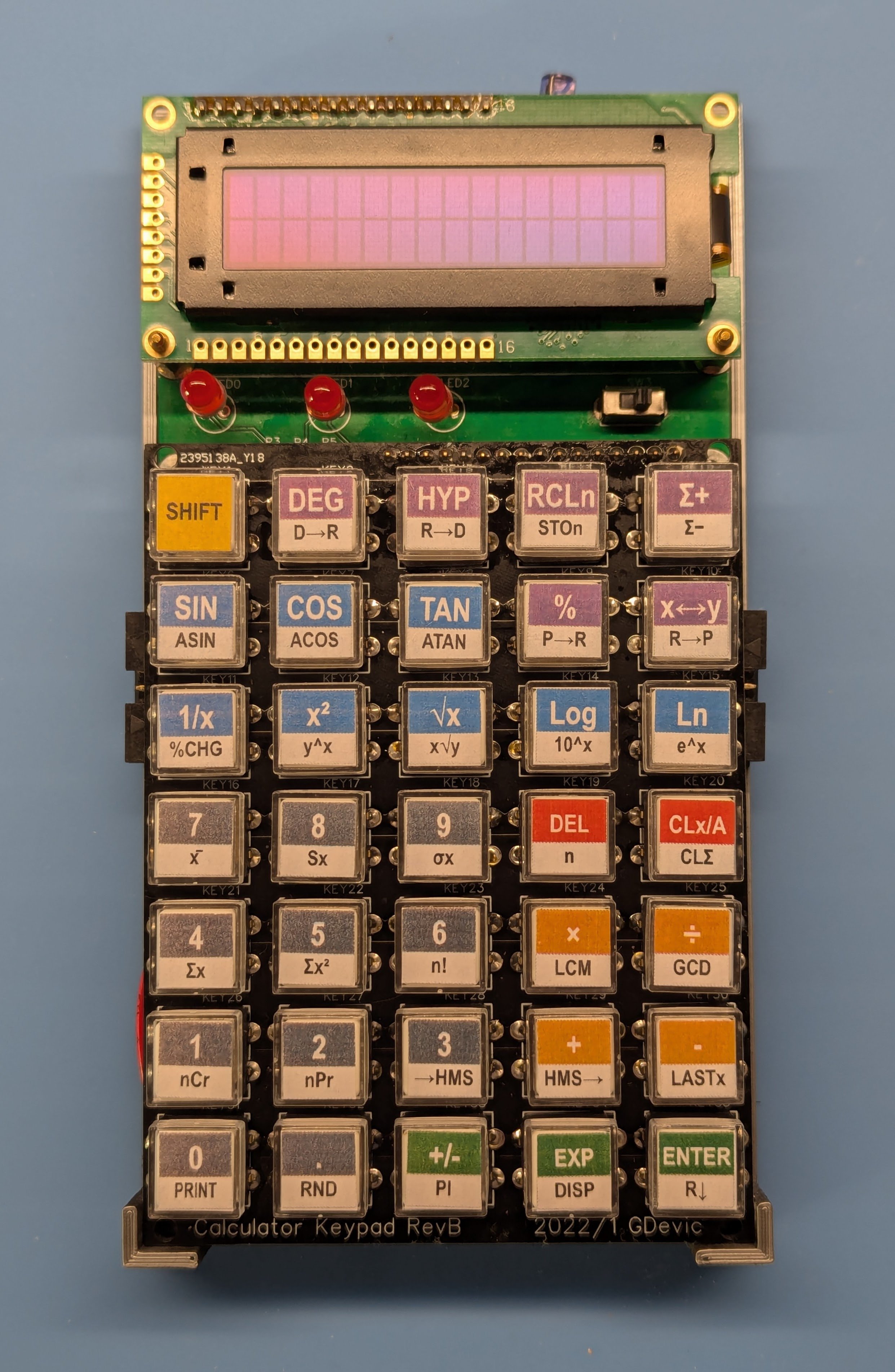
The FPGA‑Calculator repo (https://github.com/gdevic/FPGA-Calculator) is a self‑contained experiment that builds a scientific calculator entirely in hardware. It ships a custom soft CPU, a microcode‑driven firmware layer, and a Qt‑based simulator that can run in a browser via WebAssembly. The project’s README walks users through a quick‑start that compiles the Verilog with Verilator, launches a desktop Qt app, and even provides a command‑line test harness.
Why This Is Catching Eyes
End‑to‑end hardware‑software stack – Most FPGA tutorials stop at a simple ALU or a UART. Here the author has written a full instruction set, an assembler, and a microcode compiler, then layered a graphical front‑end on top. The result is a tangible, usable calculator rather than a toy example.
Toolchain diversity – The repo lists Verilator, Quartus, ModelSim, and a Qt‑based debugger, showing how a single code base can be verified across simulation, emulation, and real silicon. That breadth is rare in hobby‑level projects and gives newcomers a roadmap for moving from simulation to a physical board.
WebAssembly demo – By compiling the Qt simulator to WASM, the author lets anyone try the calculator in a browser without installing any tools. The live demo (linked from the README) lowers the barrier to entry and demonstrates that FPGA‑centric code can be exposed to a broader audience.
Open‑source microcode – The
ucode/folder contains the actual firmware that drives the soft CPU. Researchers can study the instruction encoding, modify it, or even replace the CPU core with a RISC‑V soft core to see how the surrounding ecosystem adapts.
Signals of Adoption
- GitHub stars and forks – Within a month of the release the repo gathered over 300 stars and dozens of forks, indicating that hobbyists and educators are bookmarking it for later reference.
- Forum chatter – Threads on the r/FPGA subreddit and the edaboard community reference the project when discussing “how to build a complete processor on an FPGA”. Users often post screenshots of the calculator UI running inside the browser, praising the smooth interaction.
- Classroom mentions – A few university labs have listed the repo as optional reading for digital design courses, citing it as an example of “hardware‑software co‑design”.
Counter‑Arguments and Skepticism
While enthusiasm is evident, several voices raise practical concerns:
Complexity vs. learning goals – Critics argue that the project’s breadth may overwhelm beginners. A newcomer might struggle to understand the custom CPU architecture before even getting a simple blink‑LED example working. Some suggest a stripped‑down version that isolates the ALU and microcode without the Qt layer.
Toolchain friction – The quick‑start requires a mixed Windows‑WSL2 environment, Verilator 5.x, and a specific version of Quartus for Cyclone II devices. Users on macOS or pure Linux setups report missing dependencies or version mismatches, leading to frustrating build failures.
Performance relevance – A hardware calculator built on a low‑end Cyclone II FPGA runs at a few megahertz, far slower than a modern microcontroller‑based calculator. Some community members question whether the project demonstrates useful performance characteristics or merely serves as a proof‑of‑concept.
Licensing limits – The Creative Commons BY‑NC‑SA license prohibits commercial use. Companies interested in leveraging the design for product development must negotiate a separate license, which could deter adoption in industry‑adjacent hackathons.
Balancing the Views
The FPGA‑Calculator project sits at an intersection that many developers find compelling: it treats an FPGA as a full computer platform rather than a collection of discrete blocks. For educators, the repository offers a concrete case study of how microcode, a soft CPU, and peripheral I/O can be orchestrated. For hobbyists, the ability to spin up a functional calculator in a browser is an attractive showcase of modern toolchains.
At the same time, the steep setup curve and the modest performance envelope remind us that not every FPGA experiment needs to be a complete system. A possible path forward is for the maintainer to provide a “minimal” branch that isolates the core CPU and ALU, letting learners experiment without the Qt overhead. Parallelly, adding Docker‑based build scripts could smooth the cross‑platform experience and reduce the friction that currently limits broader uptake.
What to Watch Next
- Community forks – Keep an eye on forks that target other FPGA families (e.g., Xilinx Artix‑7) or replace the soft CPU with an open‑source RISC‑V core. Those variations could broaden the project's relevance beyond the Cyclone II niche.
- Educational material – If a university adopts the repo for a lab, we may see tutorial videos or slide decks that distill the design into bite‑size lessons, making the learning curve less intimidating.
- Toolchain simplification – A future release that bundles Verilator, Qt, and the build scripts into a single Docker image would likely boost the star count and encourage more contributions.
For now, the FPGA‑Calculator remains a fascinating proof‑of‑concept that invites both admiration for its ambition and healthy skepticism about its practicality. Whether it becomes a staple teaching aid or remains a niche curiosity will depend on how the community shapes its next iterations.
Comments
Please log in or register to join the discussion