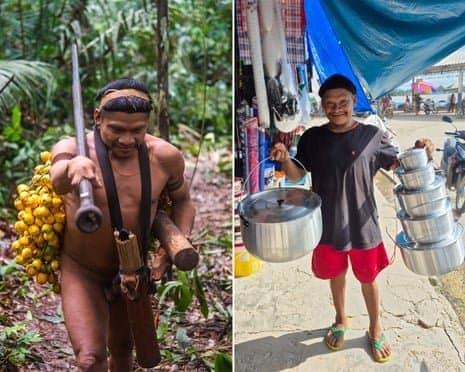
Once isolated in the Amazon, Brazil's Korubo people now actively seek Starlink internet, smartphones, and solar panels—tools reshaping their society but triggering health crises and cultural upheaval. Their journey reveals the double-edged sword of technology adoption for Indigenous groups, forcing urgent questions about connectivity ethics and preservation. This transformation serves as a critical case study for other uncontacted communities facing similar pressures.
Xuxu, a Korubo man from Brazil’s Javari valley, once defended his territory with a palm-wood club against armed loggers. Today, he navigates the bustling riverfront markets of Tabatinga, haggling over metal cooking pots and dreaming of a Starlink connection. His story encapsulates a seismic shift: a people who avoided outside contact for generations are now demanding high-speed internet, smartphones, and solar panels. But this rapid integration comes at a cost—disease outbreaks, vanishing traditions, and a growing dependency on the very world they long resisted. For developers and tech ethicists, the Korubo’s journey isn’t just an anthropological curiosity; it’s a live experiment in how technology reshapes vulnerable societies.
The Unseen Shield Collapses
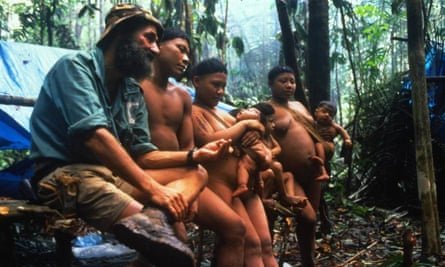
The Korubo, numbering just 127 across four villages, were among the last contacted Indigenous groups in the Amazon. For decades, their isolation acted as a bulwark against exploitation, with their formidable clubs deterring loggers and rubber tappers. Ethnologist Sydney Possuelo, who led the first contact in 1996, recalls their role: "They were like a shield for the territory." But violence escalated—25 non-Indigenous intruders were killed in retaliatory strikes between 1965 and 1997, prompting government intervention. That contact opened a Pandora’s box: manufactured goods like axes, lighters, and batteries flooded in, followed by boats, mobile phones, and cash economies. Now, the Korubo navigate currency using animal motifs on Brazilian real notes, where a jaguar symbolizes 50 reais (£6.70).
{{IMAGE:5}}
Connectivity Craved, Consequences Unfolding
Today, technology isn’t just trickling in—it’s a demand. Two villages already have internet access, with residents glued to screens late into the night. "We want Starlink," insists Txitxopi, Xuxu’s brother, explaining that phones are essential for tracking family members hospitalized in distant cities. Solar panels power devices, reducing reliance on sporadic generator fuel. Yet this connectivity breeds unintended fallout. Luisa Suriani, a teacher in the villages, observes youth abandoning hunting and farming: "They are naturally fascinated with everything that comes from outside." Health impacts are dire: four infants died in the past year from flu, pneumonia, and diarrhoea—diseases their immune systems lack the "memory" to combat, according to Dr. Lucas Albertoni, Brazil’s chief official for contacted peoples. He notes a troubling reversal: "I have to convince them of all the negative consequences of trips to the city," where exposure risks soar.
The Tightrope of Tech Integration
The Korubo’s embrace of modernity highlights a broader dilemma. While access to healthcare and communication offers lifelines, it erodes autonomy. Funai, Brazil’s Indigenous agency, once regulated goods to "essentials," but the Korubo now define needs expansively—buying biscuits, pasta, and drones. Seatvo, the first Korubo to live in Tabatinga, wears jeans and sunglasses while pursuing army or teaching jobs, symbolizing irreversible cultural drift. Suriani cautions against romanticizing their past: "Korubo day-to-day life is completely vibrant," with traditions like washing infants or brewing tatxi bark drink persisting. But even she acknowledges the strain: game scarcity forces villages to stay put, tethered by their new gadgets.
Possuelo, now 84, offers a stark warning: "The post-contact suffering is very great. They fall into dependency on those who formerly killed them." For tech leaders, this underscores a chilling reality: connectivity can empower but also enslave. As uncontacted groups dwindle globally, the Korubo’s story is a blueprint—or a cautionary tale—for balancing innovation with irreplaceable cultural integrity.
Source: Adapted from The Guardian's "‘We want Starlink’: from isolation to integration – what happened to the Korubo people after contact?" (July 28, 2025), supported by the Open Society Foundations.
Comments
Please log in or register to join the discussion