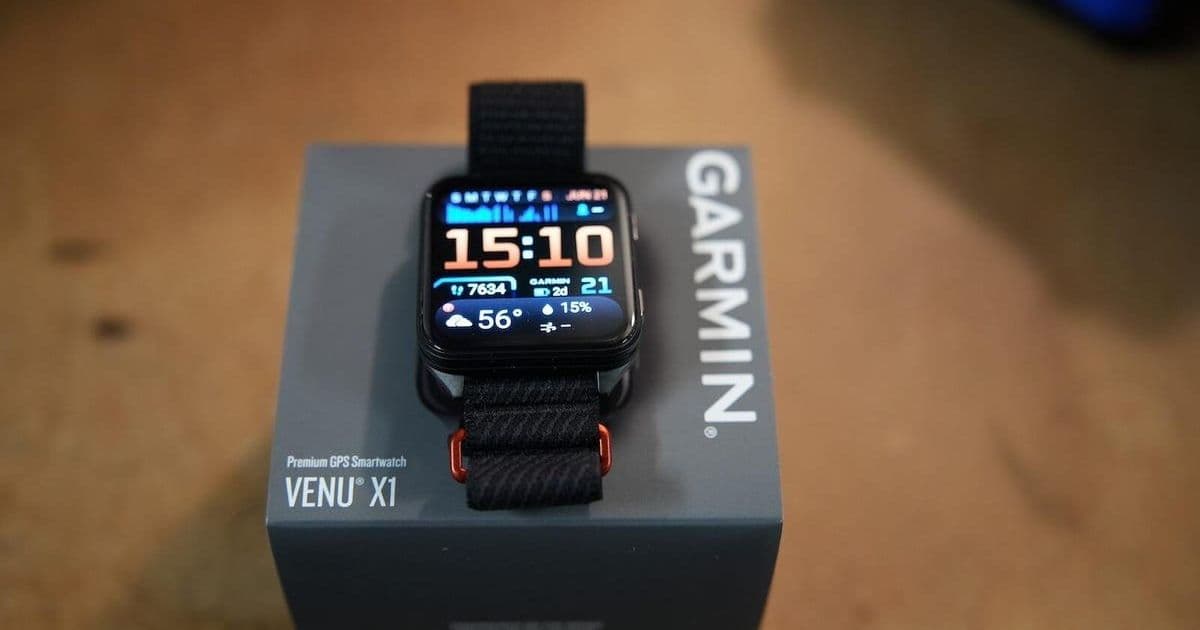
Garmin has launched a surprising contender in the premium smartwatch arena with the Venu X1. Featuring a massive 2-inch AMOLED display, a remarkably thin 7.9mm profile, and Garmin's robust sports tracking, it directly challenges the Apple Watch Ultra 2 on features while offering significantly better battery life. This deep dive explores whether this unique design represents the future of high-performance wearables.
Garmin, long revered by athletes for its dedicated sports watches, has made an unexpected and bold move with the launch of the Venu X1. Positioned as a direct competitor to the Apple Watch Ultra 2, the Venu X1 breaks from Garmin's traditional round Fenix/Forerunner mold with a large, almost square design centered around a stunning 2-inch AMOLED display – the largest ever on a Garmin watch. Priced at $799.99, it signals Garmin's ambition to capture users seeking premium features in a distinctly different form factor.
Beyond the Venu: A New Breed of Garmin
While bearing the Venu name, the X1 feels more like a radical evolution, blending the best of Garmin's sports heritage with a modern, display-focused approach:
- The Display Dominates: The vivid 2-inch screen offers substantially more real estate than the Apple Watch Ultra 2, allowing for up to eight data fields during workouts. This translates to crisper, easier-to-read metrics, a significant advantage during intense activity.
- Surprisingly Svelte: Defying expectations for a large-screen watch, the Venu X1 is remarkably thin at just 7.9mm and lightweight at 40 grams, largely thanks to its new ComfortFit fabric band. This makes it exceptionally comfortable for 24/7 wear, including sleep tracking.
- Feature-Packed Performance: Inheriting high-end features from the Fenix 8 series, the X1 includes a built-in speaker and microphone for calls and voice commands, an LED flashlight (with white and red levels, plus strobe for activities), and Garmin's comprehensive health and fitness tracking suite.
The Core Trade-Offs: Battery Life and Missing Specs
The large AMOLED display comes with a caveat familiar to Apple Watch users: battery life is heavily dependent on display settings.
- Battery Reality: With the always-on display disabled (relying on the responsive wrist-turn activation), users can expect up to 8 days of battery life – a massive improvement over the Apple Watch Ultra 2's typical 2-3 days. However, enabling the always-on display drastically reduces this to approximately 2 days. GPS tracking offers a solid 14-16 hours on a full charge.
- Notable Omissions: At this premium price point, the absence of multi-band GPS (for enhanced location accuracy in challenging environments) and ECG (electrocardiogram) functionality is noticeable. The thin form factor likely imposed space constraints, forcing Garmin to prioritize.
Positioning: The Athlete's Alternative to Apple?
ZDNET's testing reveals the Venu X1 excels as a dedicated sports watch compared to the Apple Watch Ultra 2:
"The Garmin Venu X1 is a better GPS sports watch than the Apple Watch Ultra 2 thanks to its customizable data fields, native support for more activities, and longer battery life," notes ZDNET's wearables expert Matthew Miller.
Its strengths lie in Garmin's deep activity profiles, highly configurable data screens, and the tangible utility of features like the LED flashlight during outdoor adventures. The inclusion of small, practical touches like a tip calculator button also eases the transition for former Apple Watch users. However, the lack of cellular connectivity (available on older Garmin models like the Forerunner 945 LTE) is a missed opportunity for safety features.
Verdict: A Compelling, If Polarizing, Power Play
The Garmin Venu X1 is more than just another smartwatch; it's a statement. It successfully packages Garmin's renowned athletic prowess and health tracking into a radically different, large-screen, ultra-thin design that prioritizes readability and comfort. While the compromises on multi-band GPS, ECG, and always-on battery life are real, the trade-off delivers a device that feels uniquely positioned. It offers die-hard Garmin fans a fresh, modern experience and presents Apple Watch Ultra users with a viable, feature-rich alternative focused squarely on performance and endurance. The Venu X1 doesn't just compete; it carves out a distinctive niche at the premium end of the wearable market, earning ZDNET's Editors' Choice award for its bold execution.
Source: Based on original reporting and review by Matthew Miller, ZDNET.
Comments
Please log in or register to join the discussion