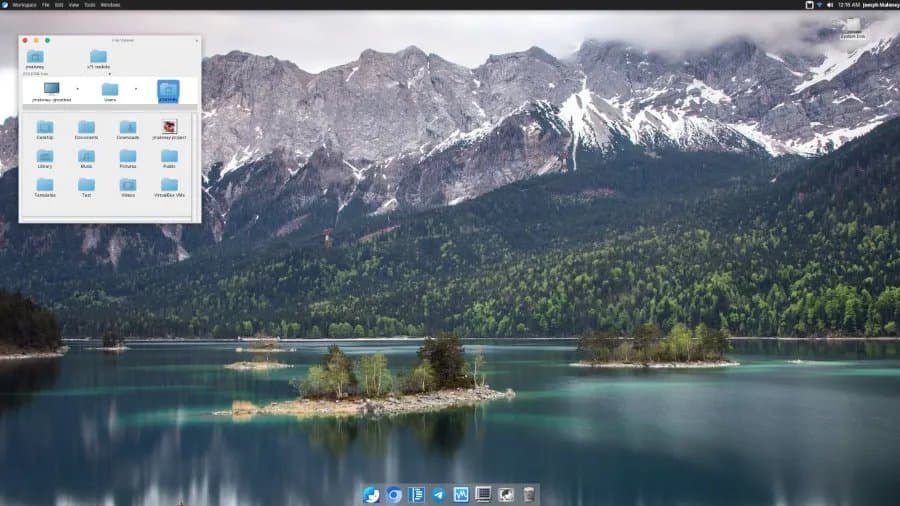
GhostBSD announces transition from X.Org Server to XLibre while evaluating Gershwin desktop environment as potential MATE replacement, citing technical limitations and development stagnation.
GhostBSD, the FreeBSD-derived desktop distribution, is charting a new course for its display server infrastructure while contemplating a significant shift in its desktop environment strategy. Lead developer Eric Turgeon has outlined plans to transition from the traditional X.Org Server to XLibre, while simultaneously evaluating the Gershwin desktop environment as a potential successor to the aging MATE desktop.
XLibre Adoption Driven by Technical Necessity
The decision to move to XLibre stems from growing concerns about the direction of the X.Org Server codebase. Turgeon explained that recent code reverts in the X.Org Server have raised red flags about its future viability, particularly for a distribution like GhostBSD that requires stability and forward momentum.
"I looked at XLibre's improvements and was impressed," Turgeon stated in his weekend update. "The change to XLibre is because GhostBSD is not ready for Wayland, and Wayland is not ready for GhostBSD."
This assessment reflects a pragmatic approach to display server technology. While acknowledging that Wayland functions adequately on Linux platforms, Turgeon emphasized that GhostBSD's unique position as a FreeBSD derivative presents distinct challenges. The MATE desktop environment, which serves as GhostBSD's default, lacks complete Wayland support, as do other desktop environments like XFCE and the emerging Gershwin project.
The Wayland Readiness Gap
The technical limitations preventing immediate Wayland adoption are multifaceted. MATE, despite being a mature and stable desktop environment, has not prioritized Wayland integration. This creates a significant barrier for GhostBSD, which depends on MATE's ecosystem for user experience consistency and application compatibility.
"Some could say that Wayland works. Yes, it does. I've used it on Linux and it works," Turgeon noted. "But GhostBSD is not Linux, and MATE is not ready for it yet."
This assessment extends beyond MATE to encompass the broader GhostBSD application ecosystem. The GNUstep framework, which underpins the Gershwin desktop environment, also lacks comprehensive Wayland support, further complicating any near-term transition to modern display protocols.
MATE's Stagnation Prompts Desktop Environment Reassessment
Beyond display server concerns, Turgeon revealed growing dissatisfaction with MATE's development trajectory. The desktop environment has experienced limited innovation in recent years, prompting consideration of alternatives that could provide a more dynamic and modern user experience.
Gershwin, with its macOS-inspired design philosophy, has emerged as a compelling candidate for GhostBSD's future desktop environment. The project offers a distinctive visual identity and architectural approach that aligns with GhostBSD's goal of providing a polished, user-friendly FreeBSD experience.
Gershwin's Promise and Challenges
The appeal of Gershwin lies in its GTK-based foundation, which provides versatility and extensive language support. Turgeon expressed enthusiasm for the project's potential, noting that it could evolve beyond its current macOS-like appearance to accommodate various desktop layout preferences.
"I see what Gershwin could become," Turgeon explained. "But I can't make up my mind about only having Objective-C to make software."
This language constraint represents a significant consideration for GhostBSD's development community. While Objective-C provides powerful capabilities for desktop application development, it lacks the widespread adoption and tooling support of more common languages like C, C++, or Python.
However, there may be hope on the horizon. Turgeon mentioned the possibility of Swift support being added to Gershwin in the near future, which could alleviate some of the language adoption concerns while maintaining the project's technical advantages.
Strategic Desktop Evolution
Prior to Gershwin's emergence, Turgeon had been pursuing a gradual replacement strategy for MATE components. The plan involved developing a new desktop environment incrementally, similar to how Cinnamon evolved from GNOME.
"Before Gershwin came on the horizon, I was planning to replace all software settings with Setting Station," Turgeon revealed. "That was the first stage to start making a new DE. I was looking to do what Cinnamon did with Gnome: slowly replacing MATE with an in-house-built DE."
The scale of GhostBSD, however, presents significant challenges to such an ambitious undertaking. The distribution's comprehensive nature and extensive user base make rapid, sweeping changes difficult to implement and maintain.
Balancing Innovation and Stability
GhostBSD's current strategy reflects a careful balance between innovation and stability. While the distribution continues its established trajectory with MATE as the default desktop environment, Gershwin remains under active consideration for future releases.
This approach allows GhostBSD to maintain compatibility and user familiarity while exploring more modern alternatives. The XLibre transition represents a more immediate change that addresses pressing technical concerns without disrupting the user experience.
Community Implications
The decisions outlined by Turgeon have significant implications for the GhostBSD community. Users can expect a smoother, more reliable display server experience with XLibre, while the potential desktop environment shift may appeal to those seeking a more contemporary and distinctive user interface.
Developers will need to adapt to new development paradigms if Gershwin becomes the default, particularly regarding Objective-C programming requirements. However, the possibility of Swift support could broaden the development community and accelerate application ecosystem growth.
Looking Forward
GhostBSD's evolution reflects broader trends in the BSD and Linux desktop space, where distributions must carefully navigate between maintaining stability and embracing innovation. The XLibre transition addresses immediate technical needs, while the Gershwin evaluation positions GhostBSD for potential long-term differentiation.
As these changes unfold, GhostBSD users and developers can follow the project's progress through official channels and community discussions. The distribution's commitment to providing a polished FreeBSD desktop experience remains unchanged, even as the technical foundations evolve.
For those interested in the technical details and ongoing discussions, Eric Turgeon's blog provides comprehensive updates on GhostBSD's development direction and decision-making processes.
The BSD desktop landscape continues to evolve, with GhostBSD positioning itself at the intersection of traditional stability and modern innovation. Whether through XLibre's enhanced display server capabilities or Gershwin's distinctive desktop environment, the distribution appears poised for an interesting period of technical advancement and user experience refinement.
Comments
Please log in or register to join the discussion